-
The Kakheti region—Sighnaghi for us. And getting there,
Nearly three-quarters of Georgia’s wine grapes are grown in the Kakheti region, including Sighnaghi, Telavi, and Tsinandali. Though there are many types of wine to try throughout the region, Rkatsiteli, a white grape, is the most celebrated — known for its granny smith apple taste and subtle spice. The main city of Kakheti is Telavi, facing the mighty Tsiv-Gombori Range, and the city itself boasts a history that features some of the region’s most important sites. First settled in the Paleolithic era, Sighnaghi holds the distinction of being one of Georgia’s smallest and most picturesque towns, complete with cobblestone streets and an outlook over the Alazani Valley.
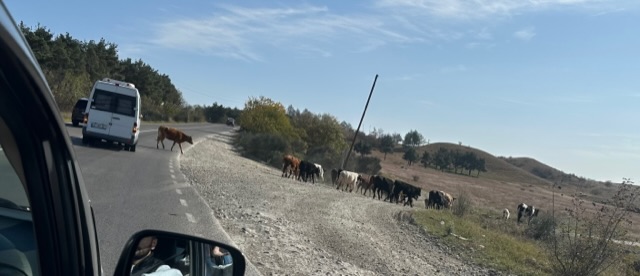
Cow crossing. And the sign warned us. : ) 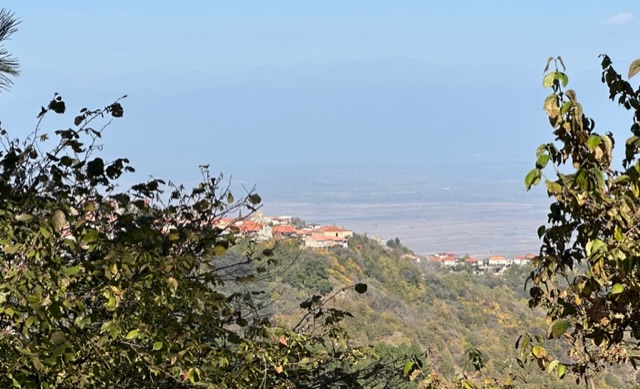
First glimpse of Sighnaghi. It is only about 90 minutes from Tbilisi. 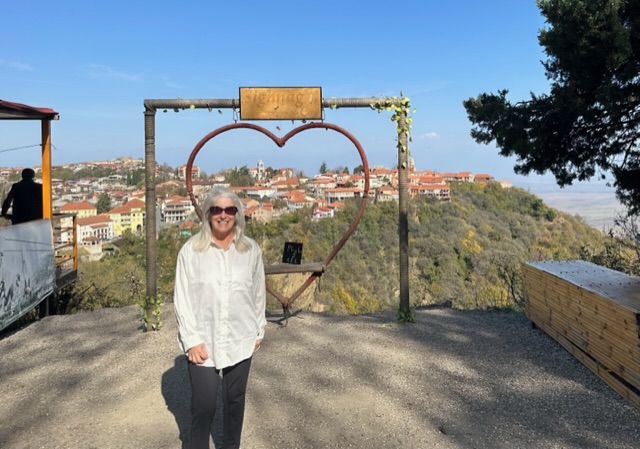
Sighnaghi is the city of love. The heart proves it.
And there is a wedding house where you can get married any day of the week, anytime of the day.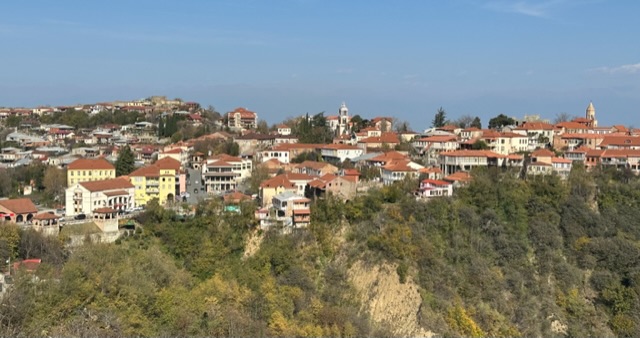
Almost there. 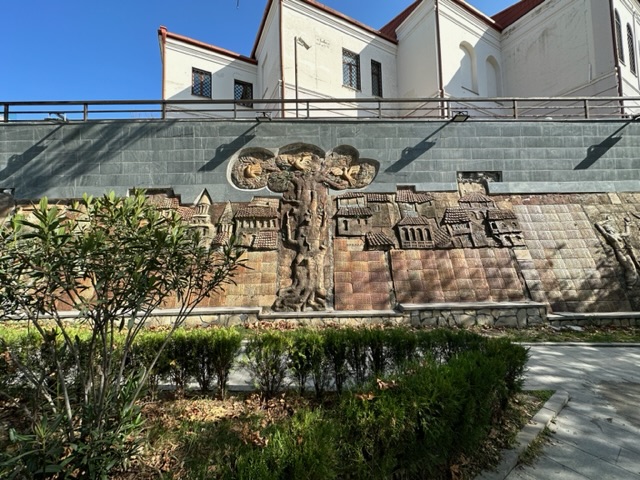
We made it.
Just about the first thing we saw, this WWII memorial. Approximately 300,000 Georgians lost their lives in WWII.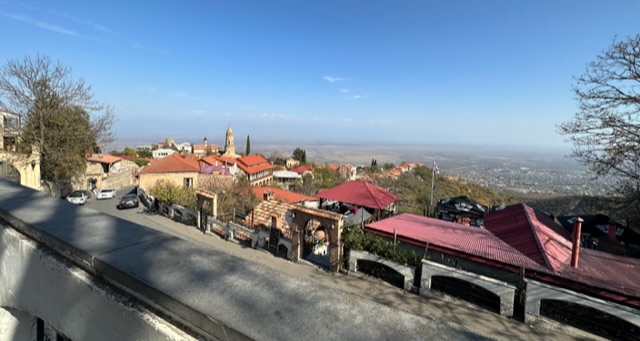
Stretching our legs. Lots of hills! 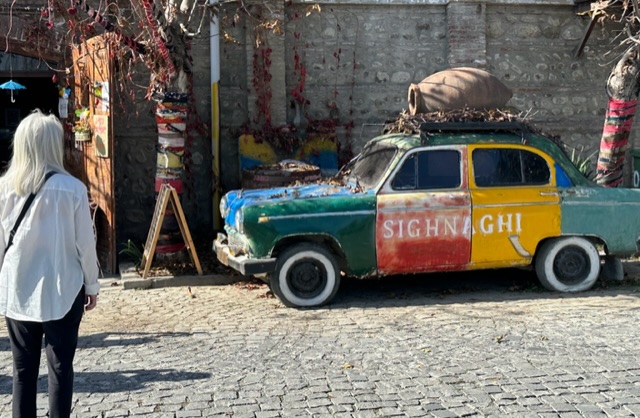
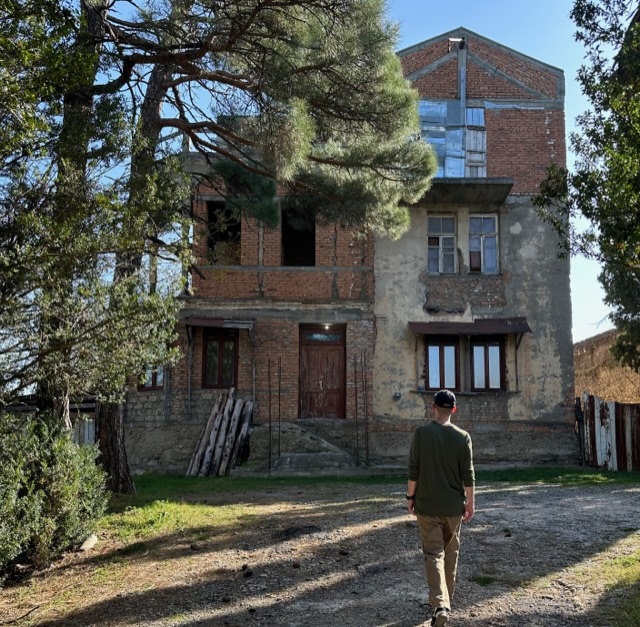
We’re still walking . . . 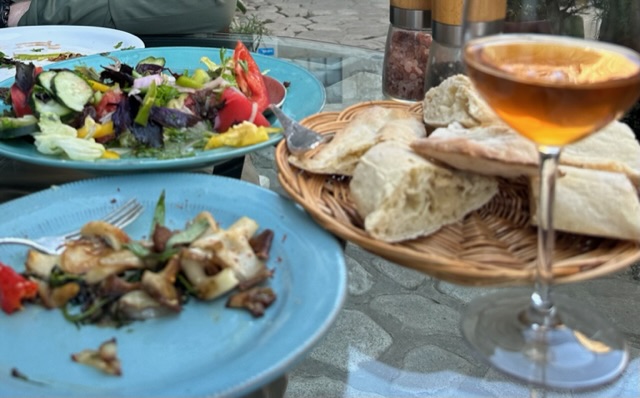
Lunch, we ate at Pheasant’s Tears. Georgian salad, wild mushroom dish, bread and amber, Rkatsiteli wine. The wild mushroom dish was delicious! I’ll be raving about the mushrooms for years. (For those who know and appreciate my love for mushrooms, think the Four Seasons and Suraya.) At Pheasant’s Tears they adapt the menu to what the forests, rivers and meadows are currently offering. Mike and I watched an Anthony Bourdain segment from this restaurant when we found out Georgia was his next assignment. Who knew at the time that we would be able to eat here too. Anthony gave it a thumbs up and it didn’t disappoint. All of the wines at Pheasant’s Tears are fermented and aged in qvevri, a unique Georgian vessel used to ferment and store wine. This method of fermenting wine dates back to 6000 BC. Qvevriare clay vessels lined with beeswax are completely buried under the ground where the temperature stays even throughout the year, allowing the wines to ferment in the natural coolness of the earth.
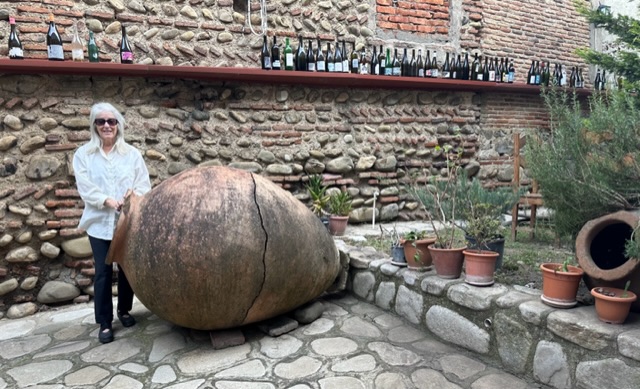
Qvevri. Wine tasting this evening.
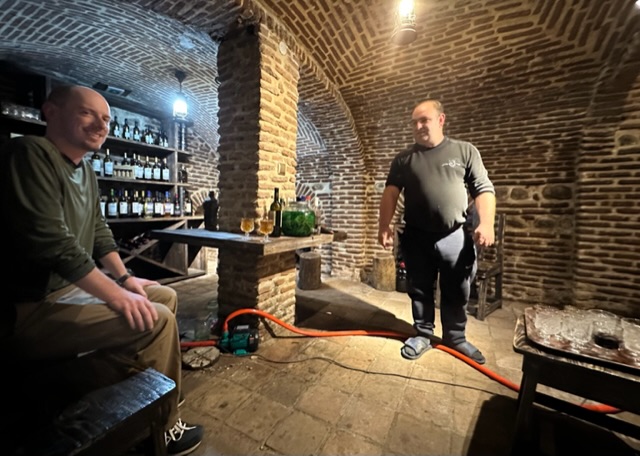
Wine tasting with Giorgi. Home made wine and chacha. The pours were very generous. Here is what I learned. The most well known white wine grape in Georgia is rkatsiteli, which produces a crisp, amber wine. The most famous red wine grape is Saperavi, a dark-skinned grape and one of the world’s few with a red interior. In Georgia, at least in Sighnaghi, wine is white or black. Even the amber rkatsiteli is called a white wine. Red wines are black.
In Georgia, wine is both an economic asset and source of identity and national pride. You find it everywhere: in designer glassware or homespun pitchers at formal affairs, in plastic water bottles! and always at casual gatherings. You even find it being sold by street vendors. I can vouch for this.
Sighnaghi overlooks Alazani Valley and faces the Caucasus mountains. It is these mountains (I think I got this correct) that help to create a tropical(ish) climate in the eastern part of the country, Kakheti, where most commercial wine production takes place. The extent of my Georgian wine knowledge. All of the wine—at least that we had, is very good.
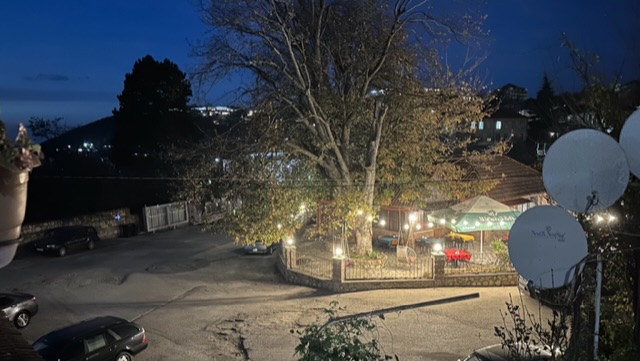
Evening view from our little balcony. I was finishing my wine from the generous wine tasting pours. PS wild dogs everywhere. And up all night!
Tomorrow, a couple of wineries.
-
Today Vero. Took yesterday off. Tomorrow, wine region.
So, not all of my photos reflect the most beautiful day. Sunny. 75 degrees. Picture perfect!
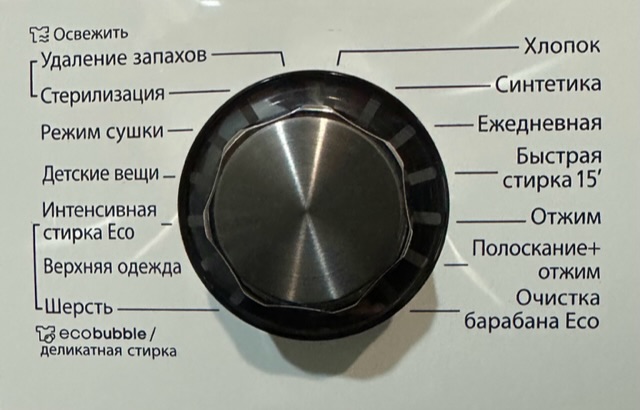
What is the delicate cycle?? Doing laundry, getting ready to go to wine region. 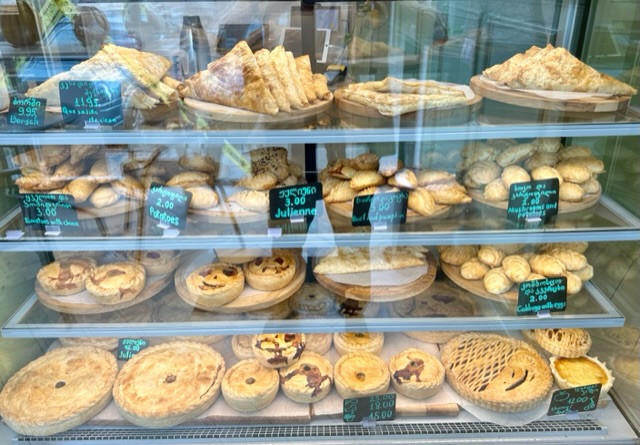
My new go-to morning coffee spot. 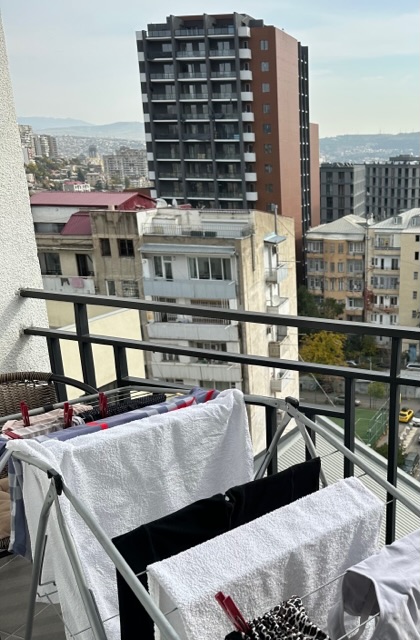
Dryer! Towels are practically loofah sponges when air dried. 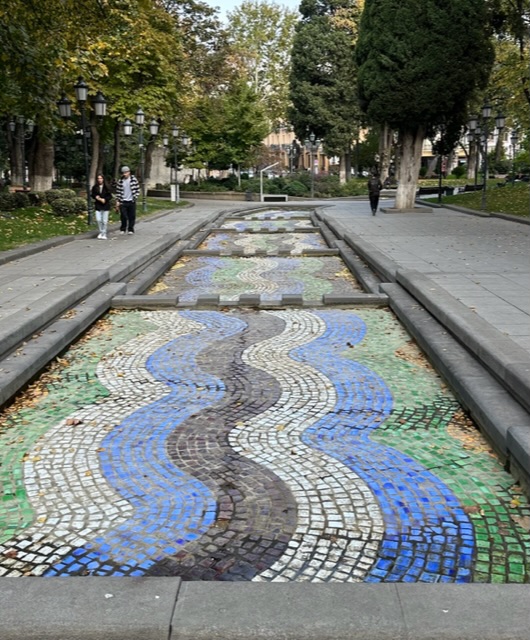
Park on our way to food festival. Mike’s neighborhood. 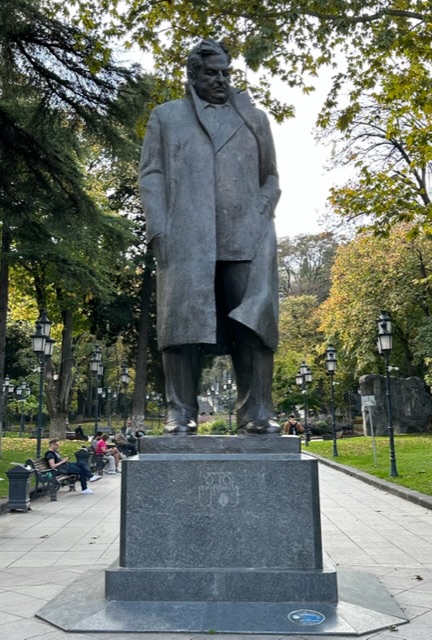
Not really sure who he is . . . But, impressive! 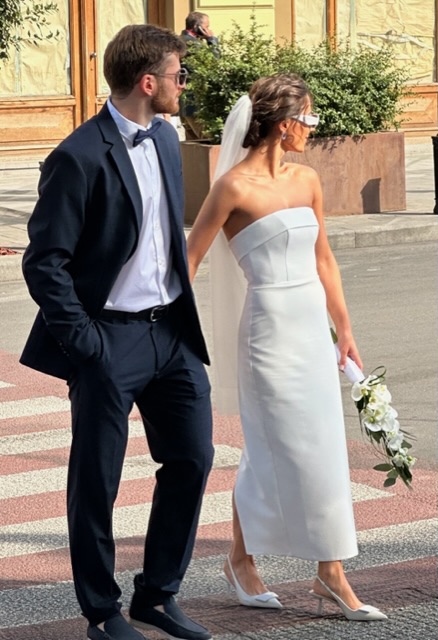
My bridal photo shoot in Tbilisi. Again, Alex, you are going to make at STUNNING, EXQUISITE bride. 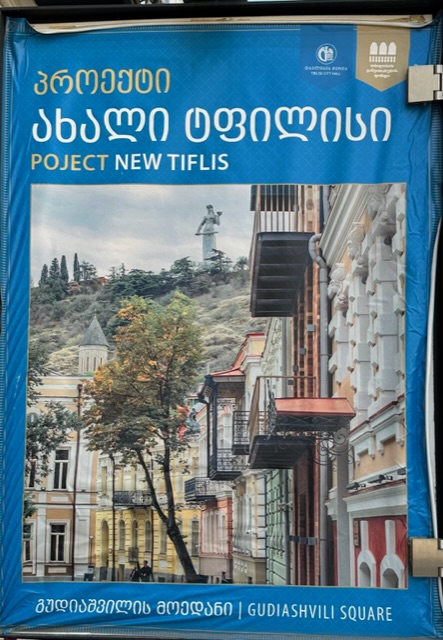
Mother of Georgia symbolizes the Georgian national character: in her left hand she holds a bowl of wine to greet those who come as friends, and in her right hand is a sword for those who come as enemies.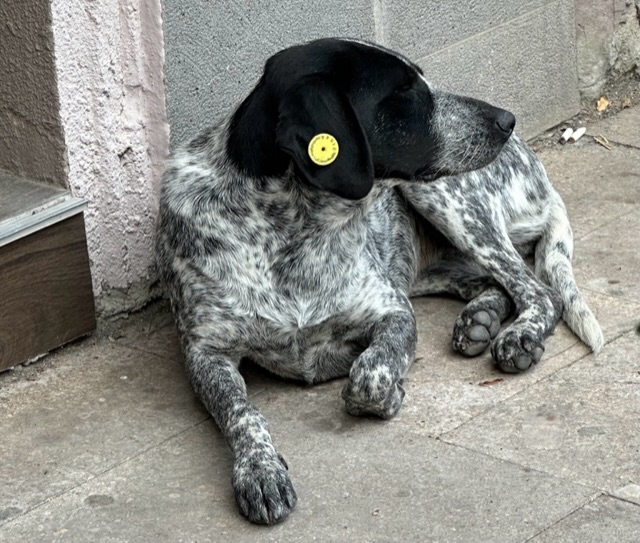
So the wild dogs are tagged this way you know that they have been spayed/neutered and vaccinated. 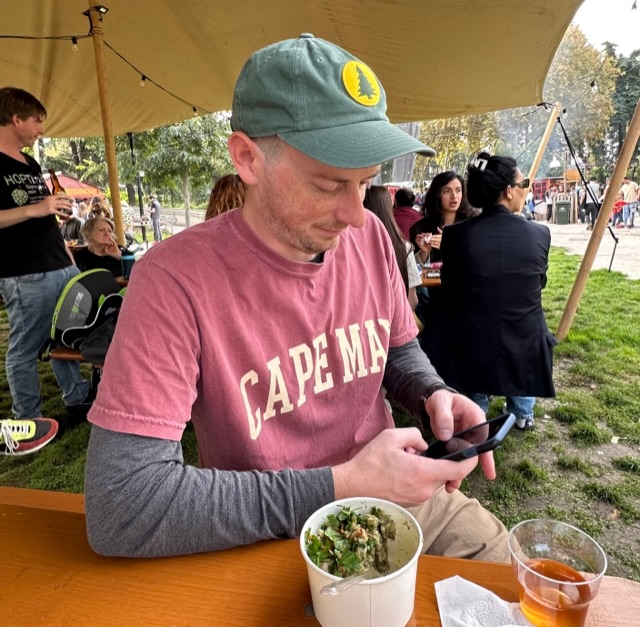
Mike connecting with friends at the food festival. Check out the Cape May t-shirt!! 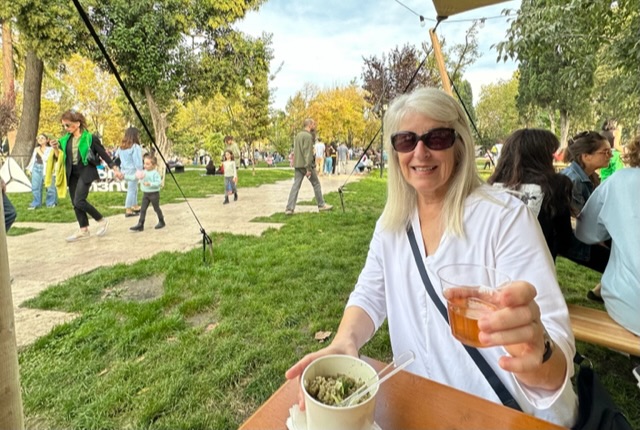
Food festival at Dry Bridge. YUM! 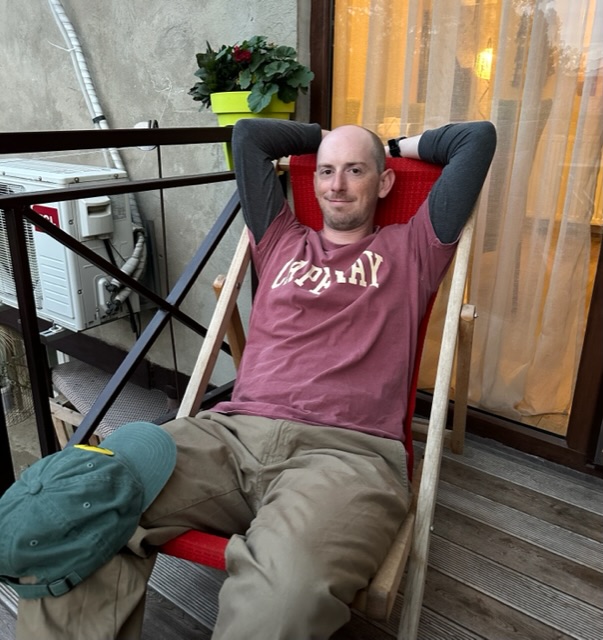
Mike on his balcony. 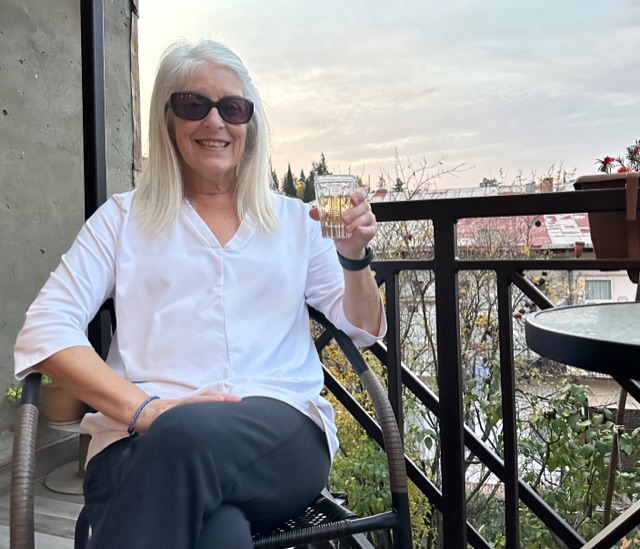
Mike’s balcony. Can you see the pomegranate trees and fruit behind me? 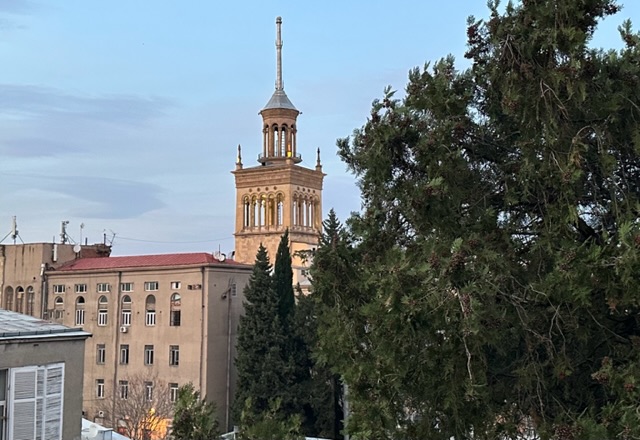
From Mike’s balcony. 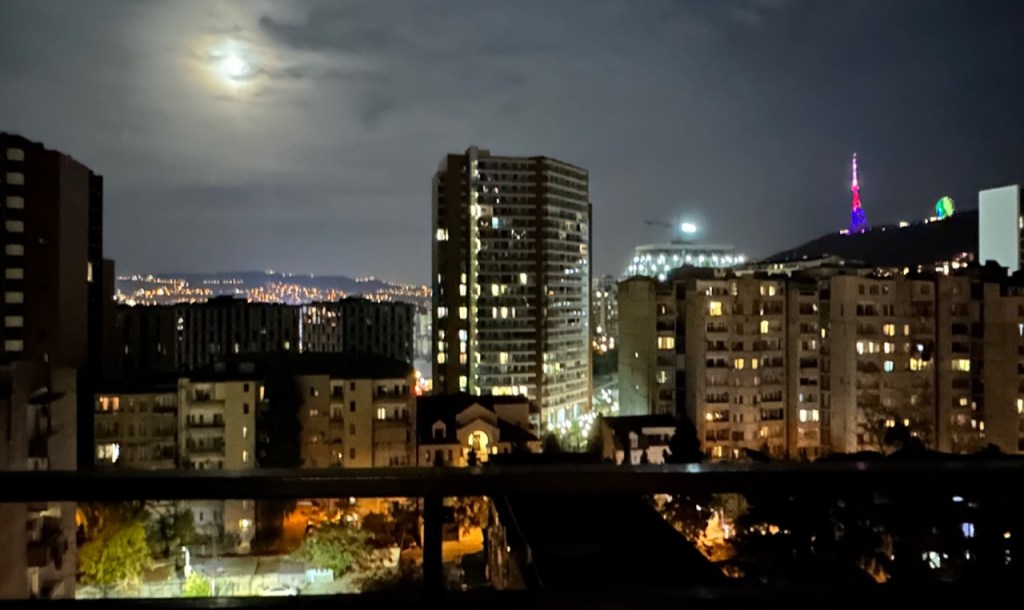
Full moon. From my balcony. Hard to tell it’s a full moon. -
Kus Tba or Turtle Lake,
Turtle Lake is a small lake up a very large hill from Vake Park which is one of the beautiful parks in Tbilisi. It can be reached via cable car (1 gel) or zipline (20 gel) from Vake Park. We took the cable car. ; ) The cable car only holds seven or eight people.
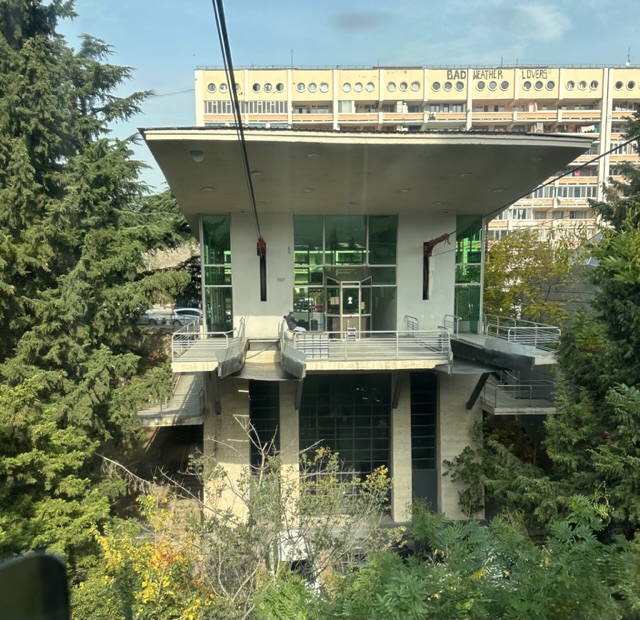
Going up. 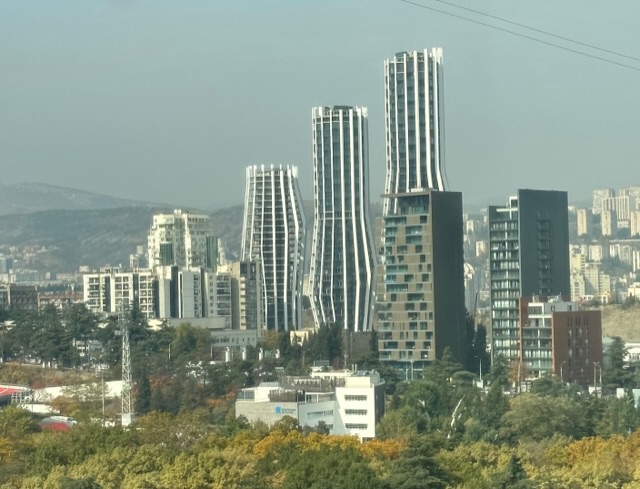
Going up. Taken from the cable car. 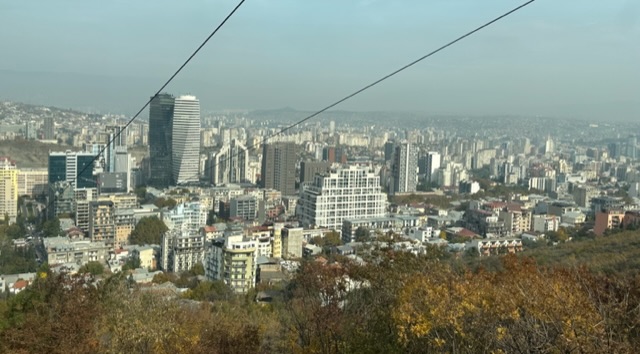
Going up . . . 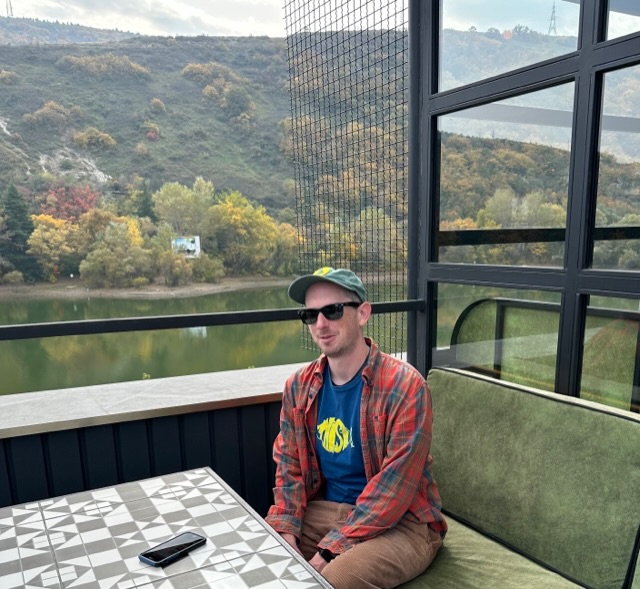
Turtle Lake. We walked the loop. Just sat down for lunch. 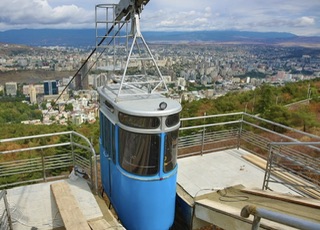
This cable car picture was taken from the top. Getting ready to go back down. No zip line for me. Some pictures of the apartment. It’s nice—two bedrooms, two bathrooms, living room and a kitchen. Modern.
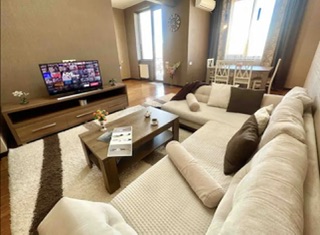
Living room. 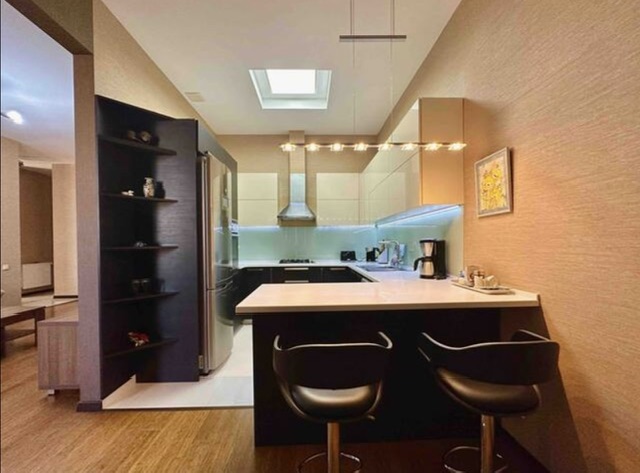
Kitchen. 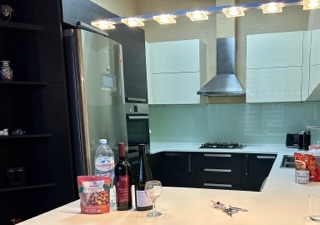
Kitchen, after I purchased a few essentials. : ) 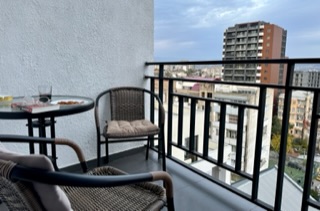
Balcony. From where I have been taking my evening view pictures. PS Money in Georgia is the lari. The exchange rate is good. 1 USD = 2.7 GEL. And everything is fairly inexpensive anyway.
PPS Taking is easy tomorrow and Saturday. On Sunday, Mike and I are going to the wine region for a couple of days. Sighnaghi, Kakheti. I’m really looking forward to this visit to their wine region.
PPPS I’m trying to ship Georgian wine back for my packing parties. Please come, it will be worth it!
-
Tea, history and wine,
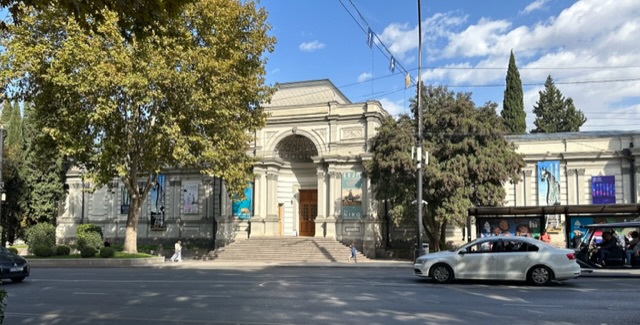
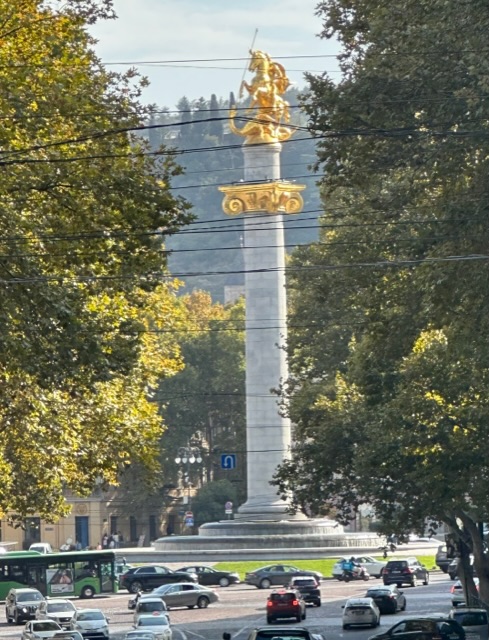
The freedom or liberty square is at the heart of Tbilisi, from here you can walk down to the old city, visit the Meidan Square, the sulfur baths, house of worships for the three main religions, or you can walk in the rich Shota Rustaveli Ave., to see the Galleria mall, opera house, old Parliament, museums and more. Also rich with cafes and restaurants. 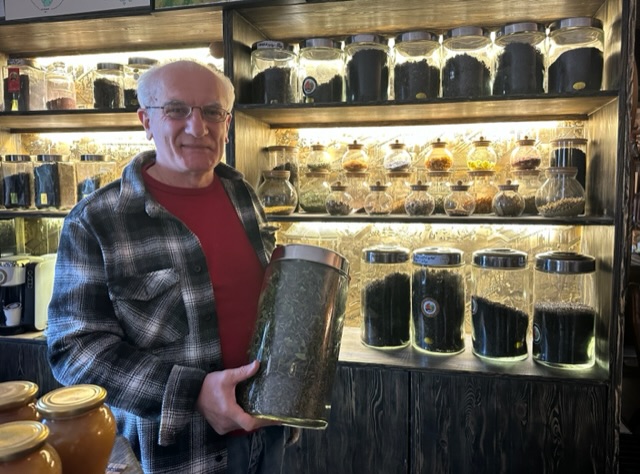
Tea House-Museum. I tried the Georgian white tea. I bought the black tea for Mike. 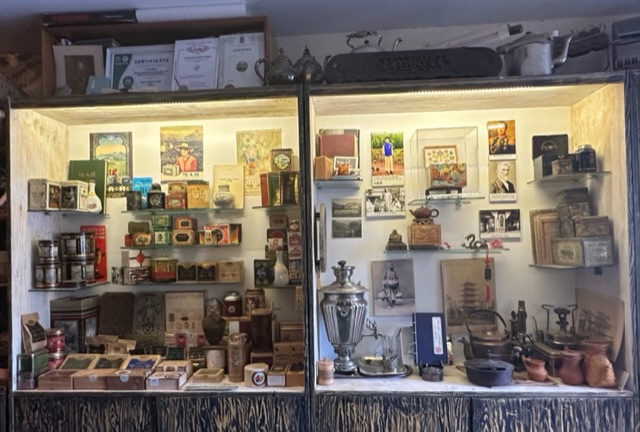
History of Georgian tea. 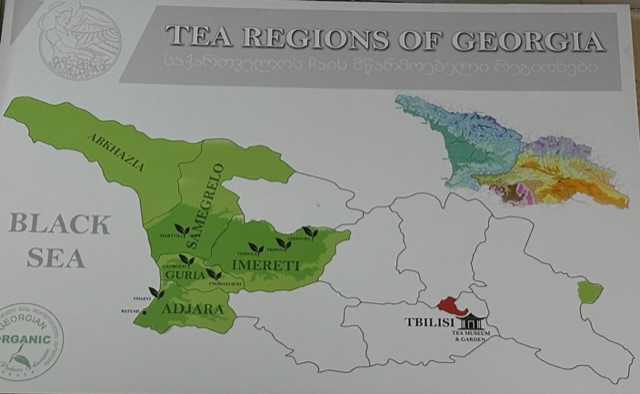
Georgian tea regains. 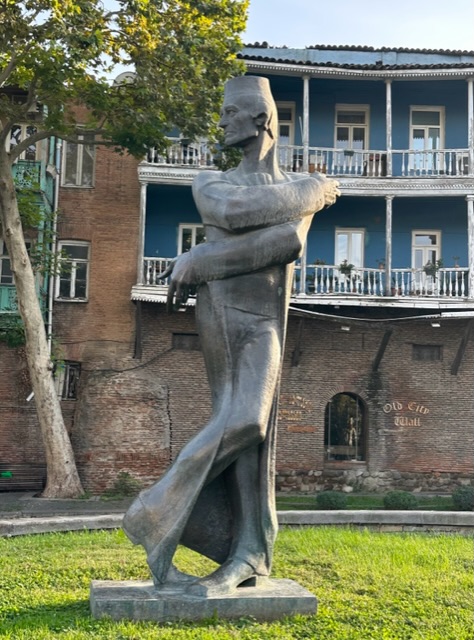
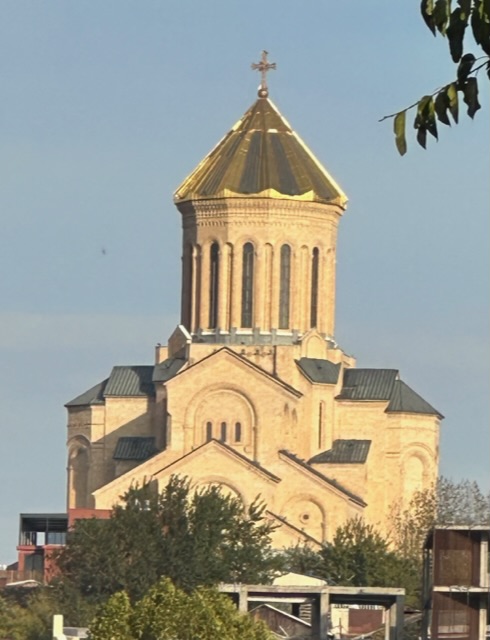
Holy Trinity Cathedral of Tbilisi. Sameba Tbilisi. Eastern Orthodox. 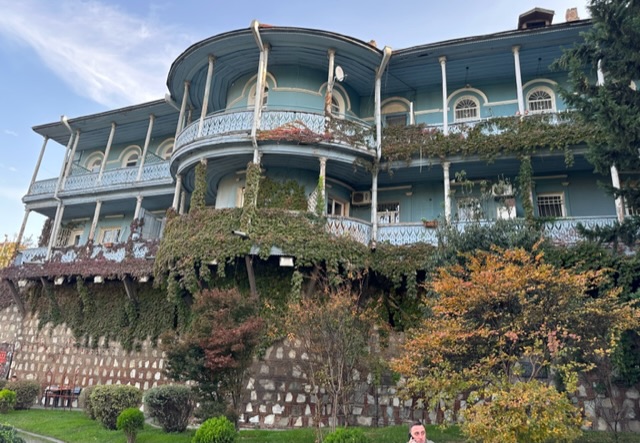
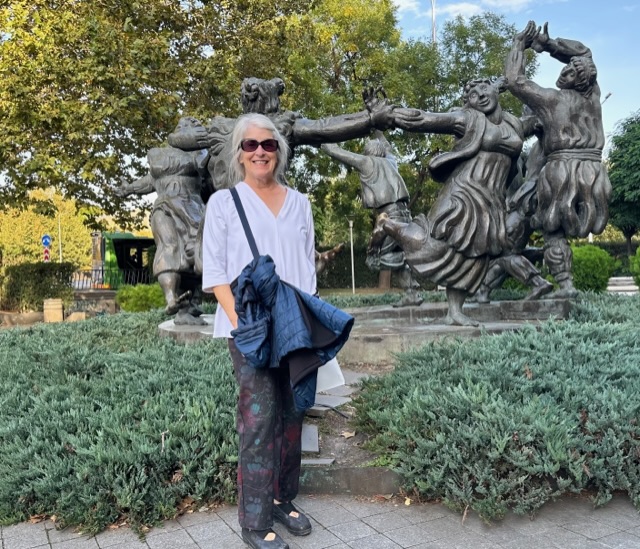
A lively circle of dancers in the Georgian capital commemorates an ancient rite of spring. 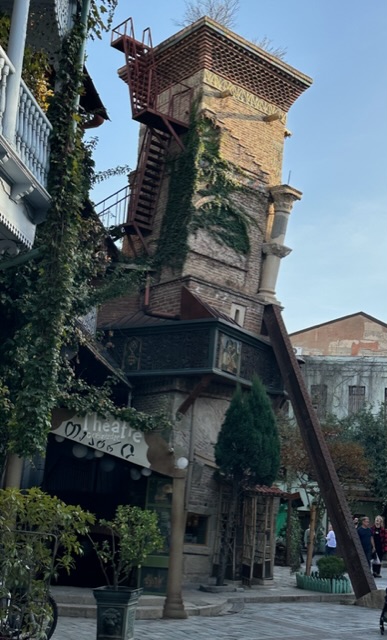
Redo Gabriadze Theatre. Presenting mature puppet performances full of depth and meaning. 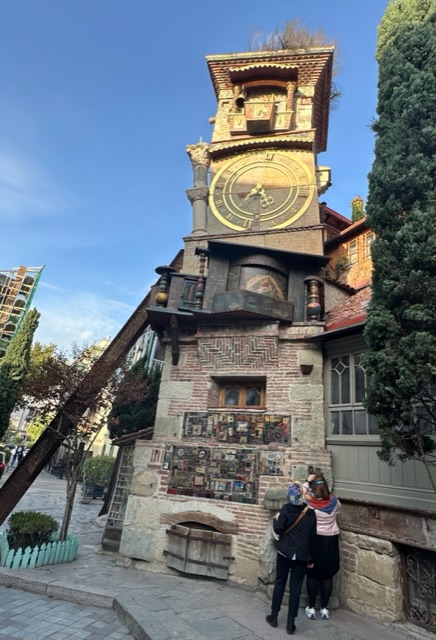
In 2010 Reno Gabriadze built a unique clock tower next to the marionette theatre in Tbilisi old town. 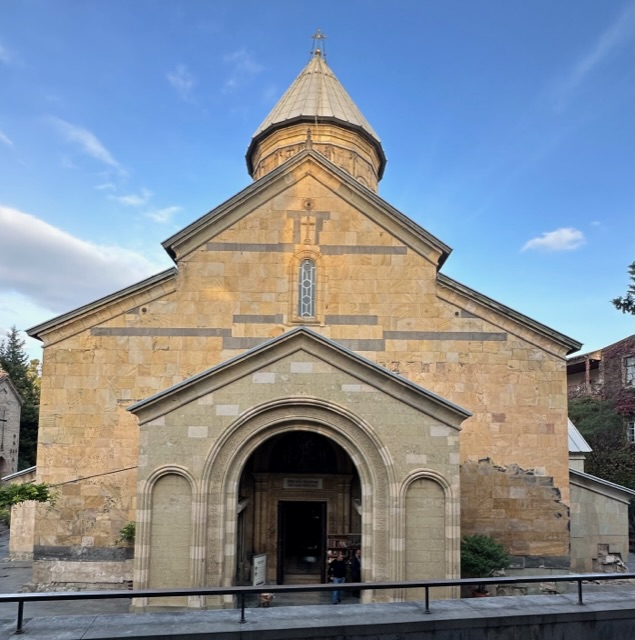
Anchiskhati Basilica of St. Mary. 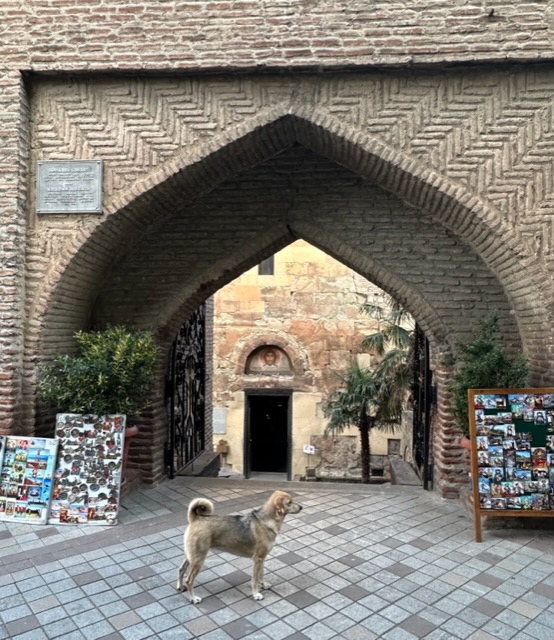
The oldest surviving church in Tbilisi. It belongs to the Georgian Orthodox Church. 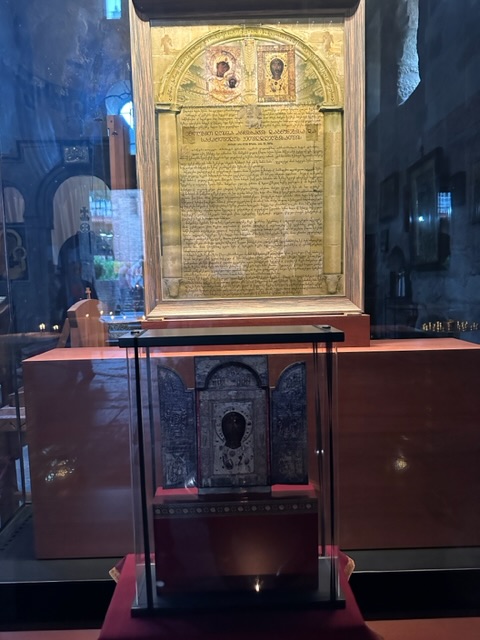
Inside. Very cool Russian icons. 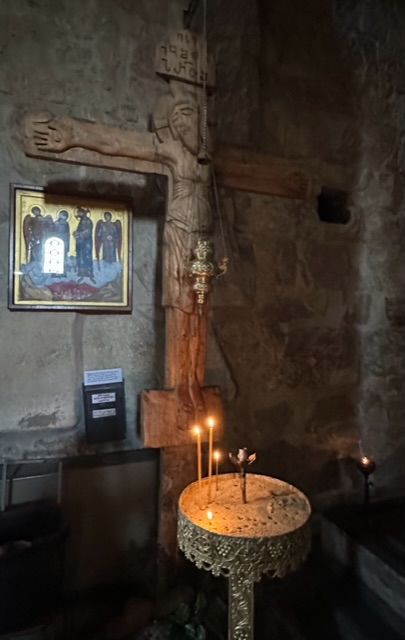
Candles for loved ones we have lost. 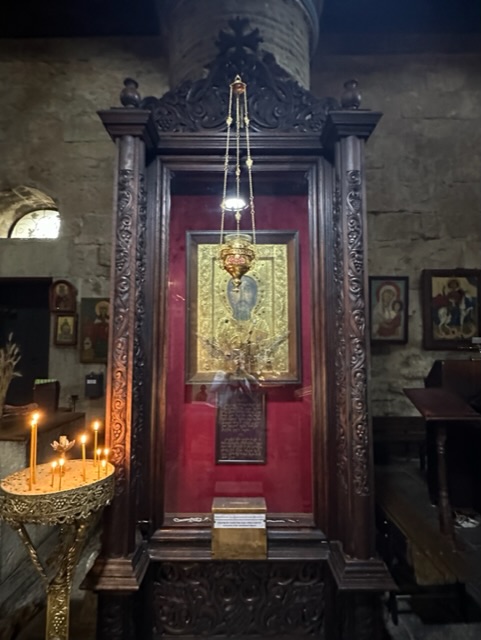
Candle for loved ones who are still living. 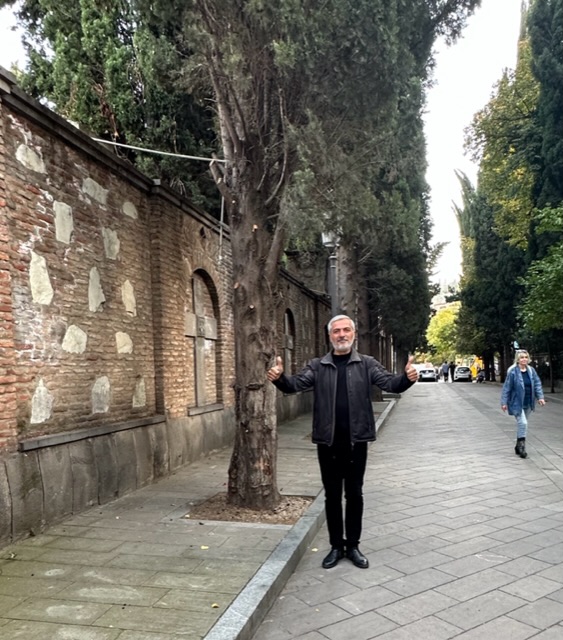
Mikhail, my guide. 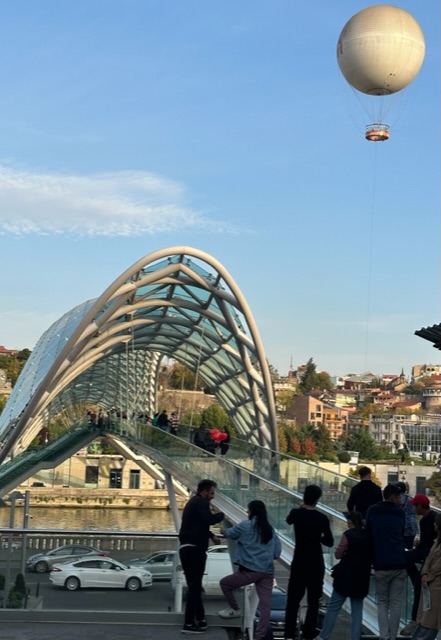
Bridge of Peach. A bow-shaped pedestrian bridge, a steel and glass construction illuminated over the Kura River. Linking Rike Park with Old town in central Tblisi. An important pedestrian crossing. 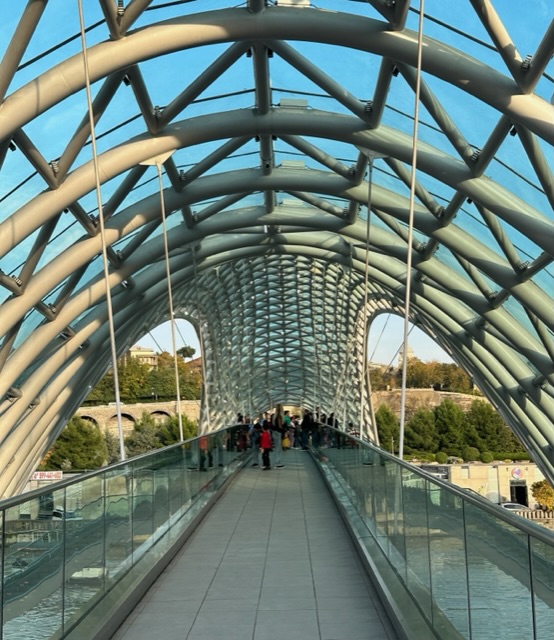
Opened in 2010. A significant tourist attraction. 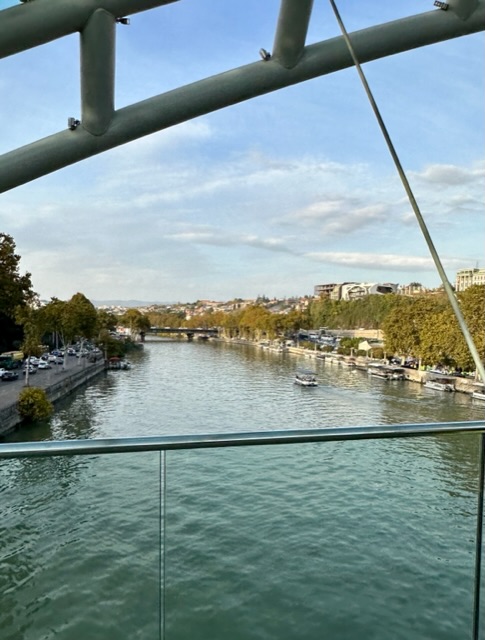
Kura river from the Bridge of Peace. 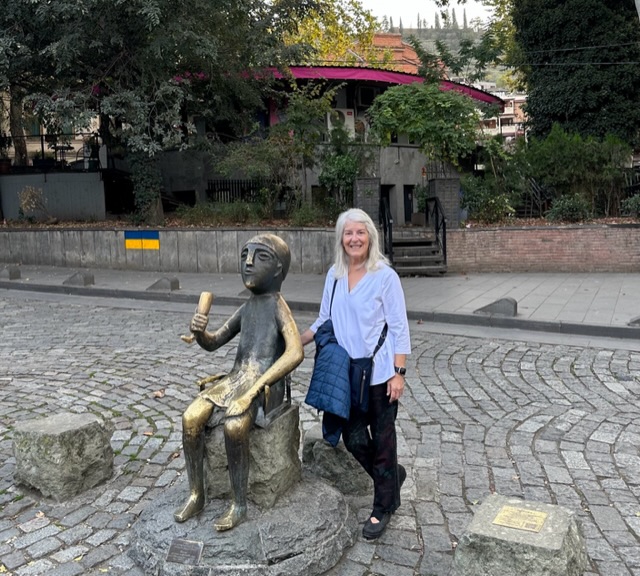
Tamara. The Toaster. A great representation of Georgian traditions. Being a toaster in Georgia means being a very respected and important person at the table who is in charge of toasts. 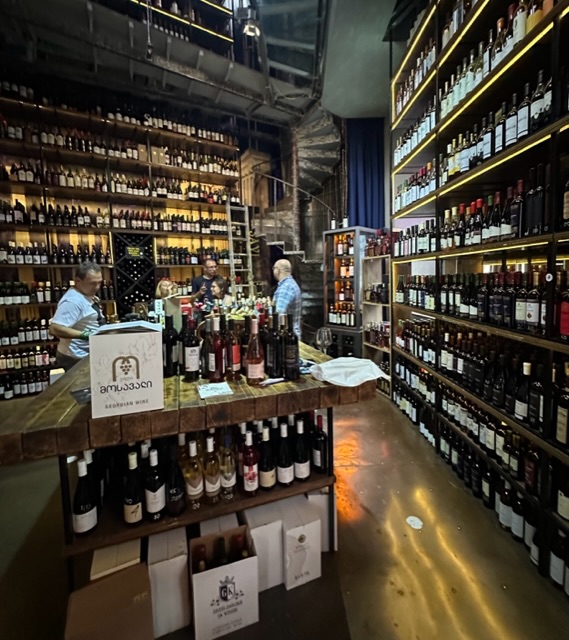
Great wine bar. Terrific tastings. All wines from Georgia. 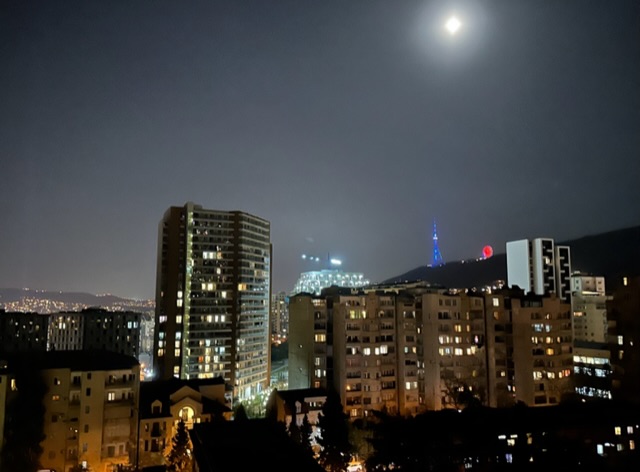
This evening’s view from my balcony. -
Khinkali and khachapuri cooking class and getting there,
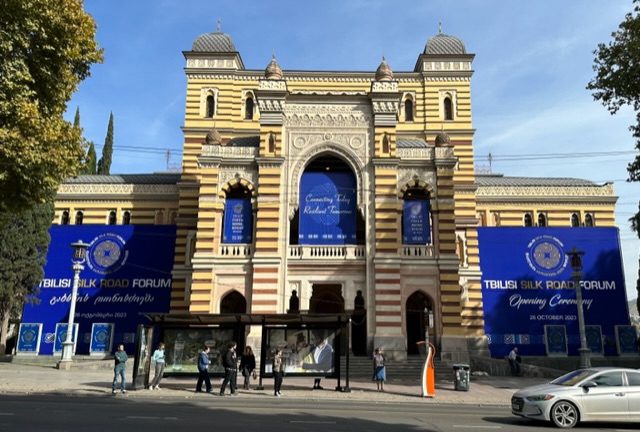
Tbilisi Opera and Ballet Theatre. 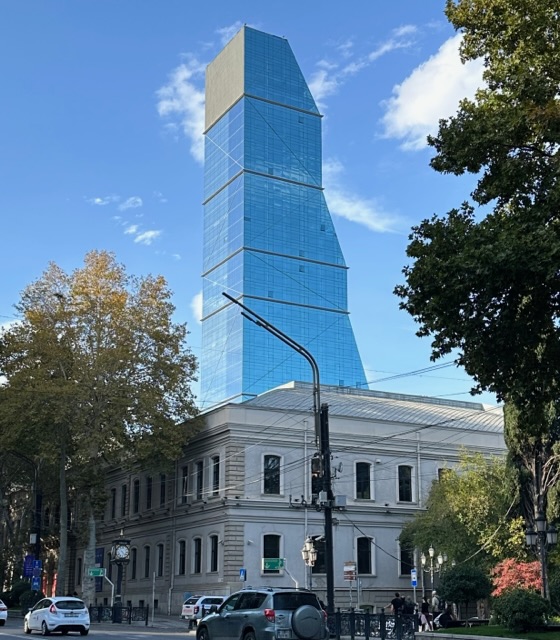
Another new building rising like a phoenix. 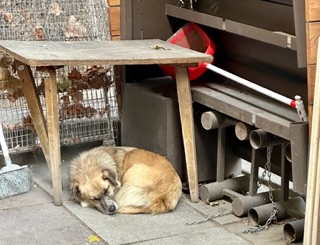
Some of the wild dogs. 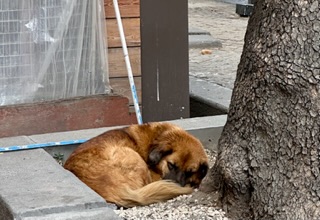
Resting by day. 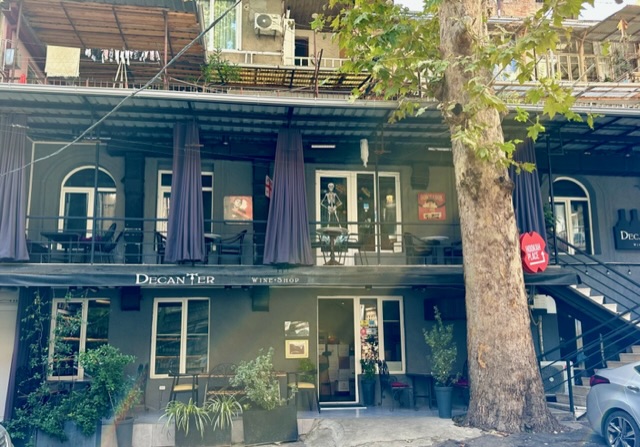
Just arrived at my cooking class. DecanTer – a really lovely Georgian wine bar too 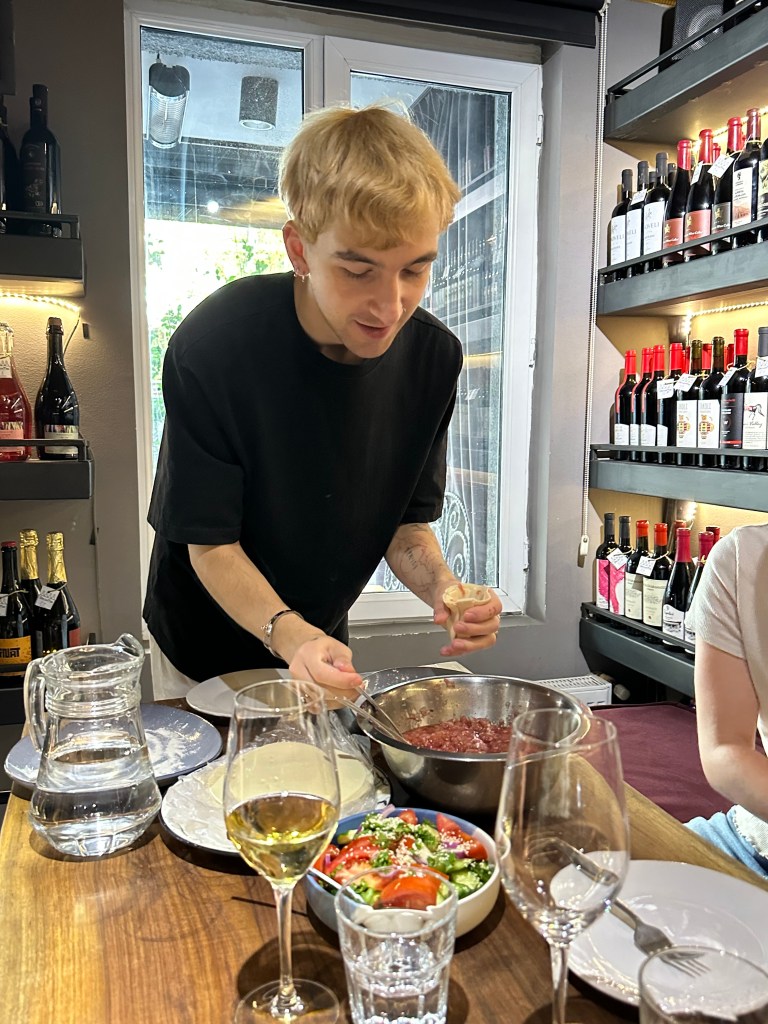
Our instructor. He was very patient with us. 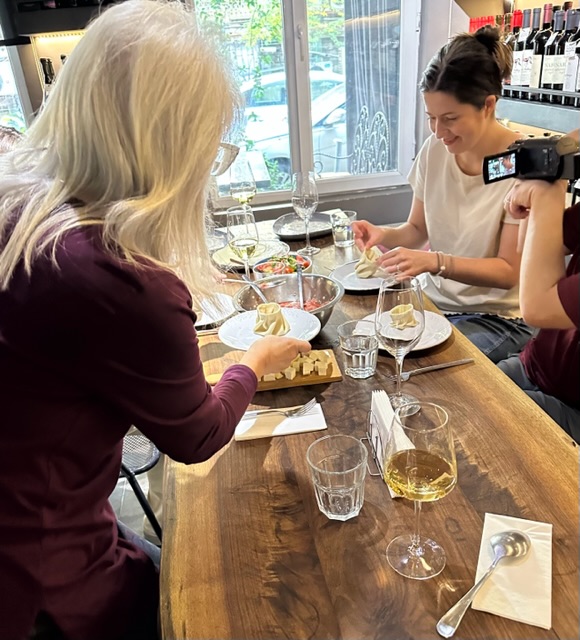
My best khinkali. 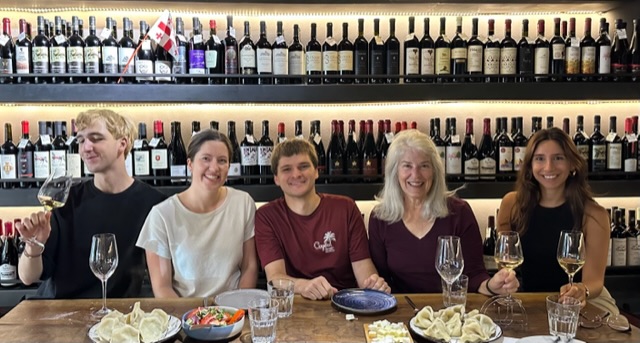
The class: L to R: instructor, young couple from upstate NY, me, journalist from Norway. 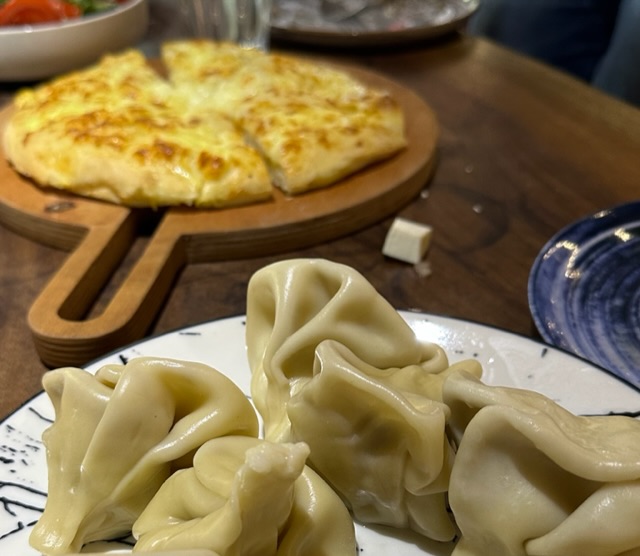
Khachapuri and khinkali. DELICIOUS! 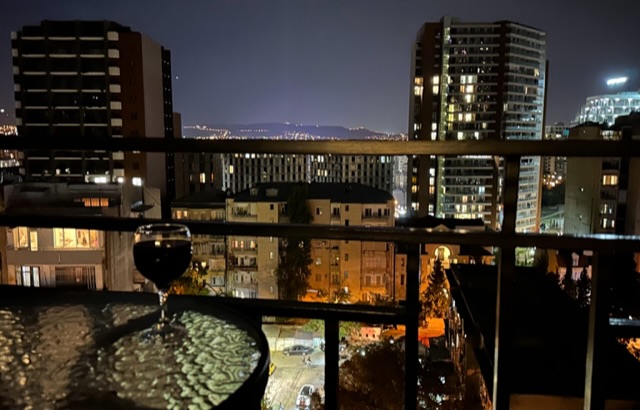
Enjoying a lovely Georgian wine as I end my day. From the apartment. 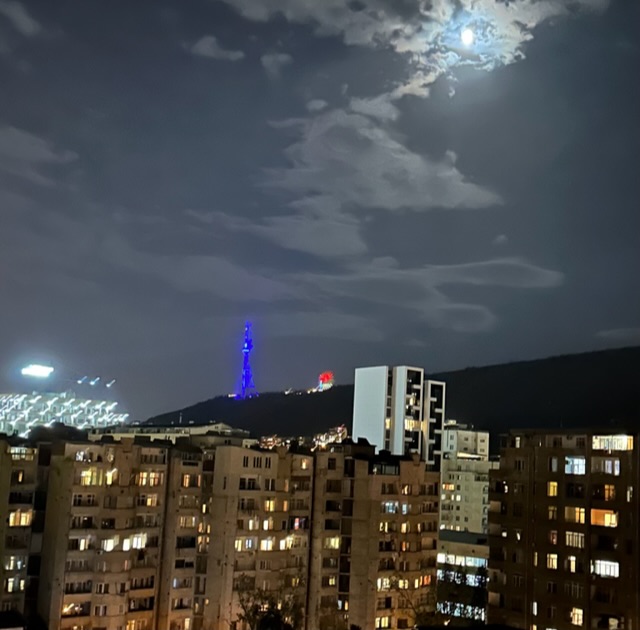
The view. Tomorrow, wine tour in Kakheti region.
Good luck to our Phillies!
-
Cultural differences is an understatement!
Touchdown in Tbilisi at 5AM this morning. I left the Paris apartment at 9AM yesterday. I had been traveling for almost 24 hours. I’m exhausted.
The cliché (it is said) is that Tbilisi represents the epitome of East meets West: a Silk Road crossroads where Arab, Ottoman, Mongol, and Russian imperial forces each left their own distinctive cultural mark. Upon retrieving my luggage and attempting to get a taxi to the Tbilisi apartment, I am overwhelmed—sensory overload. Strange smells, Russia meets Turkey; pandemonium. Taxi/Uber/Bolt drivers and people rushing about everywhere. The language difference. And remember, it is only 5:30AM. Taxi driver drives like crazy. Roads are already busy. As we approach the apartment building, wild(?) dogs seemingly everywhere. Untethered dogs—lots of them. Big wild dogs. I’m not kidding.
My apartment building is nice(ish) (the apartment really nice) but in close proximity to crumbling Soviet-era apartment buildings. Apartment blocks typical in Russia and Eastern Europe. A Khrushchyovka. Usually a 5 or 6 -storied concrete-paneled apartment building with notoriously small apartments, extensively constructed in the 1960s and 1970s to solve the housing problem. I’m in the section of the city called Vake. It is said to be nice.
Not at all genteel like in Paris or Paris’ melodic language. Kinda gritty.
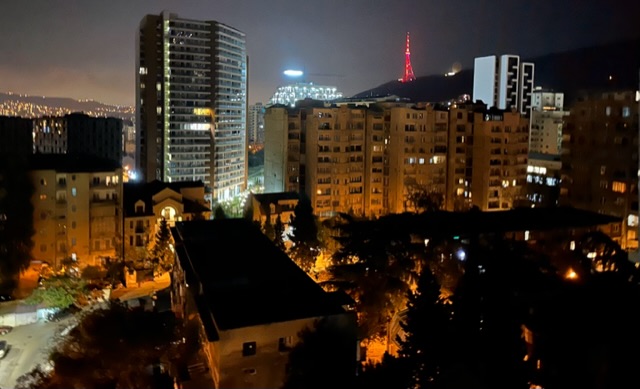
From my balcony at 6AM. 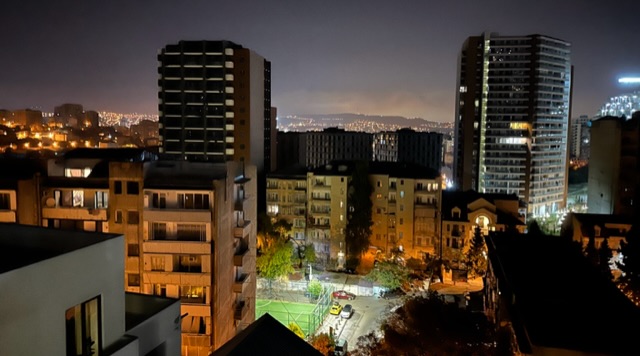
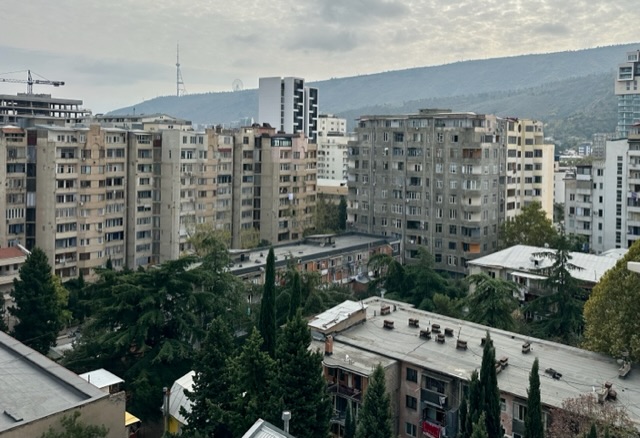
Same view at 12/noon. The picture doesn’t do the view justice. It is sunny and 68 degrees. 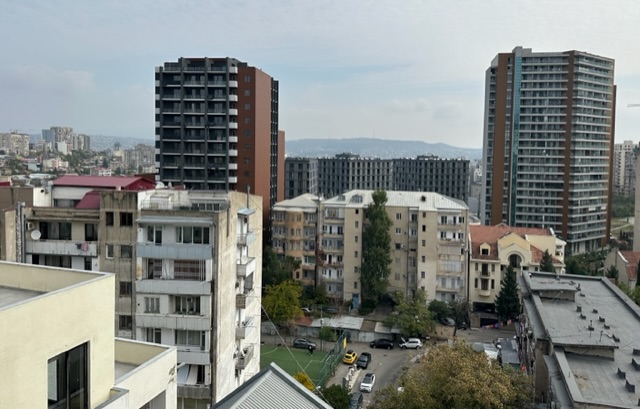
Mike stops over and we take a quick walk and have a late lunch. We are both tired from traveling. Mike is just back from NOLA, where he attended a wedding.
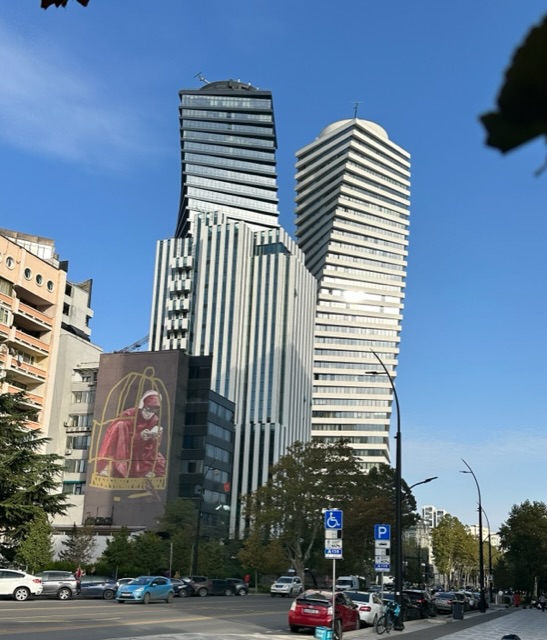
Some interesting shaped newer buildings. In stark contrast to the bland concrete ones. Candoo Restaurant. Nigvziani badrijani, eggplant rolls and the key ingredients are, eggplants, walnuts, garlic, spices and lemon. Yum.
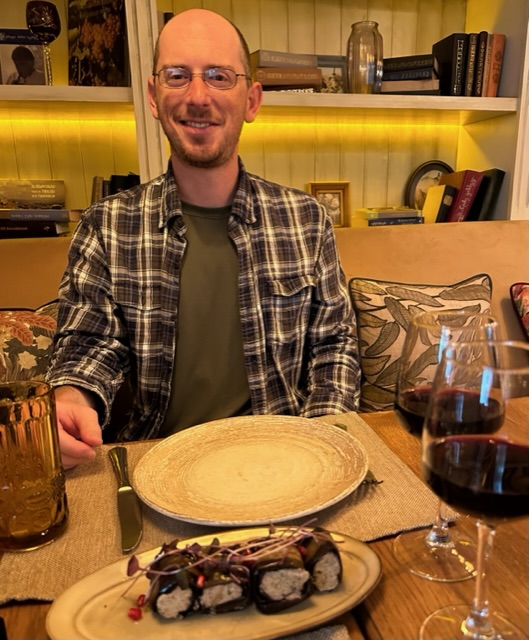
Mike says, “hi.” 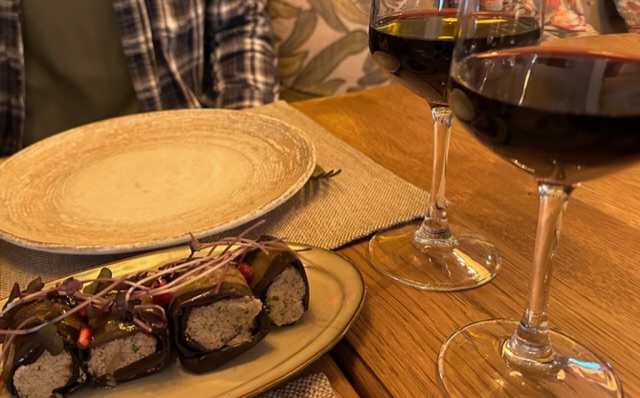
We also have Lobio (Georgian: ლობიო), it is a popular dish made with kidney beans and usually eaten with marinaded vegetables. Ours came with cabbage. Saperavi, Georgian red wine and the traditional khachapuri, this soft, cheese-filled bread with an egg in the middle is the national dish of Georgia. Everything was delicious! Sorry, we were so hungry that we ate before I remembered to take more pictures.
The wine-making process in Georgia involves pressing the grapes and then pouring the juice, grape skins, stalks and pips into the qvevri, which is sealed and buried in the ground so that the wine can ferment for five to six months before being drunk. Most farmers and city dwellers use this method of making wine. A qvevri (also called a churi in western Georgia) is a large, egg-shaped clay vessel with narrow bottom and a wide mouth at the top.
Well, that is about all I have for today. Cooking class tomorrow.
-
Tbilisi
Are we there yet? I left Paris this morning, am writing during my six hour layover in Munich. This airport is nice though; remind me to fly through Munch whenever I can. I’m wired up and enjoying a very quiet, at least for now, lounge. And hands down, Lufthansa lounges have it all over AA lounges!
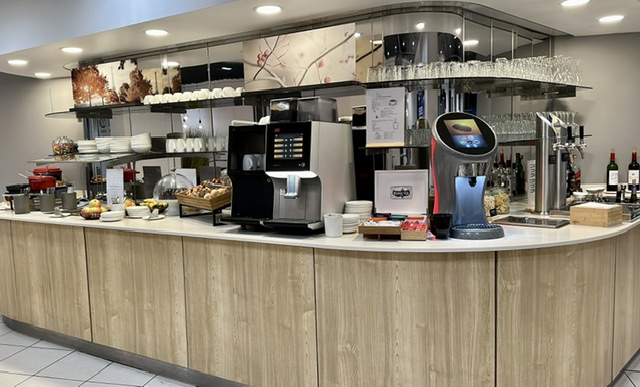
Lufthansa lounge. PS French cultural differences that I noticed or spoke to some about,
- The French seem to live a more leisurely lifestyle than Americans.
- Spend more time with family and friends.
- Eat better food.
- The French speak the language of Molière.
- In Paris, they eat out/in restaurants a lot! and the doggie-bag is timidly practiced.
- French fashion is much more stylish. Always a scarf.
- University in France is practically free.
- The French don’t tip many workers who would be tipped at home.
- The preferred alcoholic beverage is wine.
- The one negative is that they seem to smoke a lot. And a lot smoke.
I can’t even begin to imagine the cultural differences in Tbilisi! Stay tuned.
PPS I don’t think London and Paris are as environmentally friendly as the Eastern European and Irish cites I visited last fall and this past spring.
PPPS Lastly for today, I forgot to list all of my time differences. I’m always wondering what time it is at home. 😜 And on November 5th (I think), we fall back one hour at home—I’m not sure what any of these cities do.
- London was a five hours difference
- Paris: six hours
- Tbilisi: eight
- Istanbul: seven
- Bruges: six
- Edinburg: five hours a head
-
Last Paris walk about. Packing. Leaving tomorrow. Traveling most of Sunday and Monday, Tblisi isn’t easy to get to. ; )
You are in luck. Packing up. Leaving Paris early Sunday and don’t get in until Monday midday. You get a couple of days off. : )
On my walk to Montmarte. I’m trying not to bore you with all of the exquisite bakery windows and neighborhood bookstores/libraries. One after the other! It is very hard for me not to take some photos.
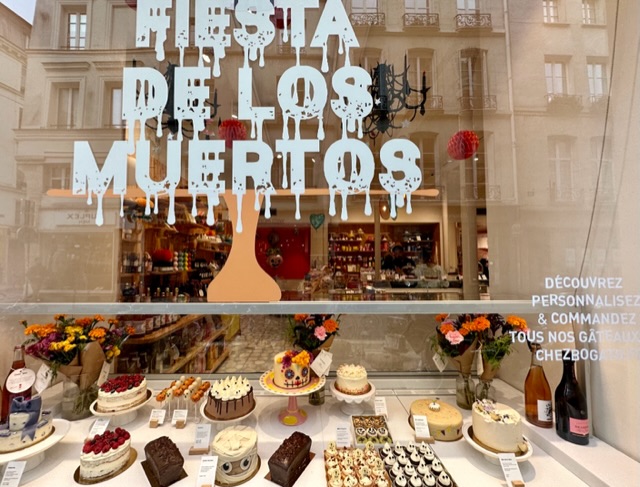
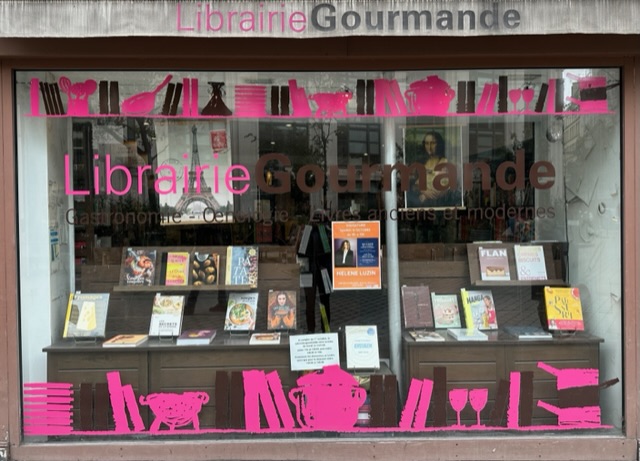
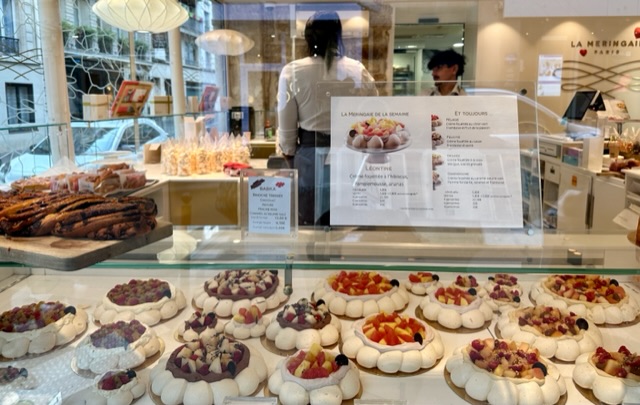
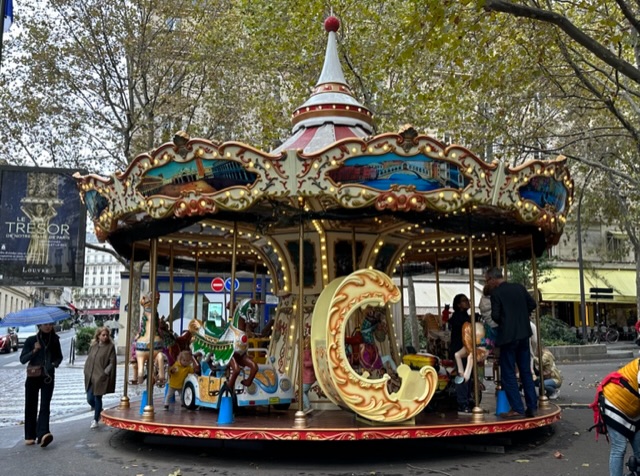
Carrousel – on my way to Montmartre. 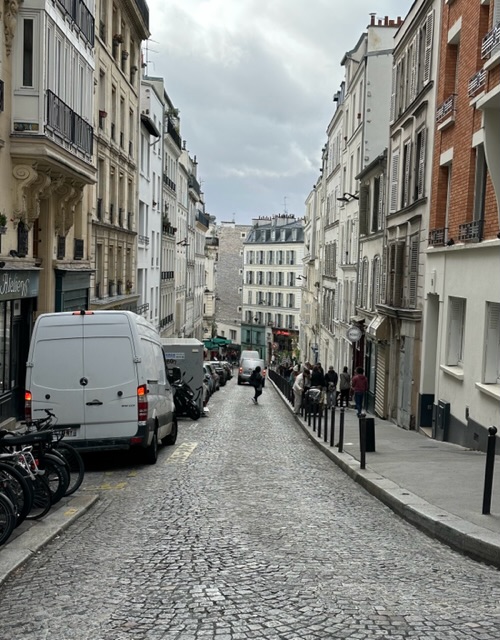
Climbing. Montmartre is a large hill in Paris’ 18th arrondissement. 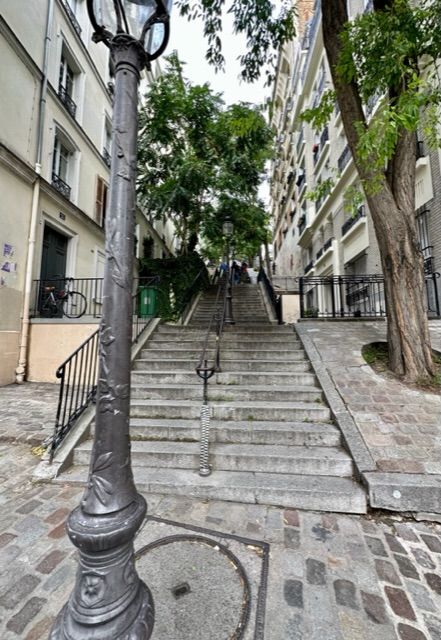
Steps. 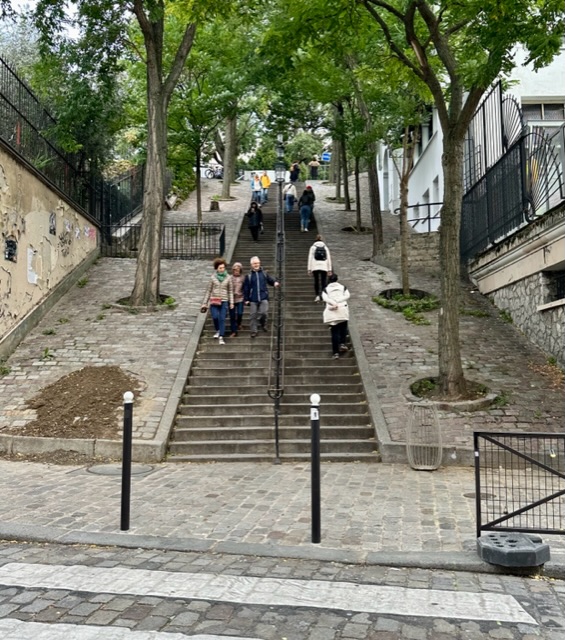
More steps. 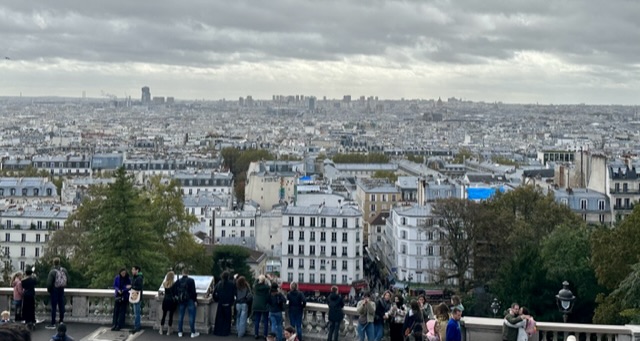
I made it! 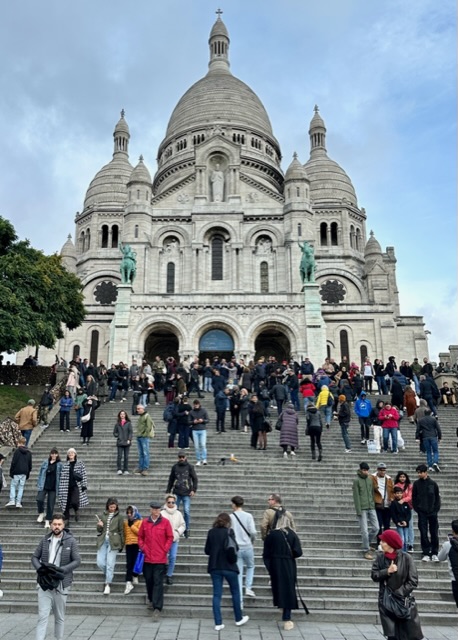
Sacre-Coeur. Like Tour Eiffel, it never disappoints! 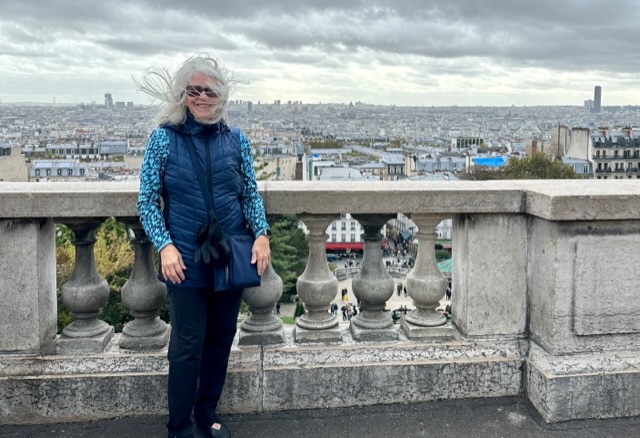
Paris from the hill. It is very windy today. 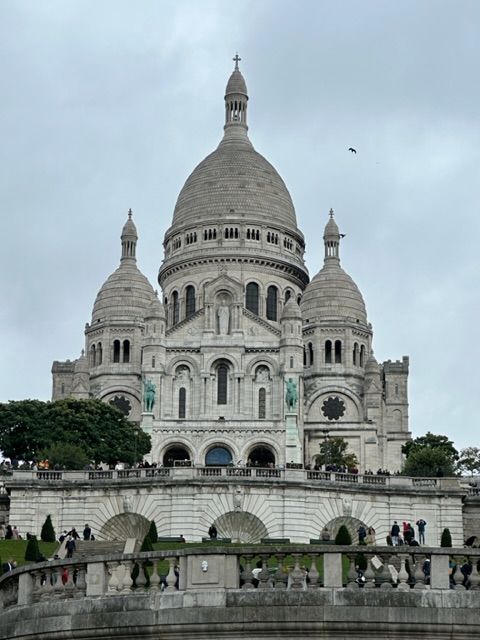
On my way back down. On my walk from Montmartre. Destination, Galeries Lafayette and Arc de Triomphe. Ok, in case anyone is paying attention, I told you a few days ago that the Arc de Triomphe was under construction. Well, it dawned on me after my post—the Arc de Triomphe is not at/near the Louvre/Tuileries (which is where I was for those pictures). 🤦♀️ The Arc de Triomphe du Carrousel (and the carrousel) is under construction. The Arc de Triomphe du Carrousel is/was originally intended as a monumental entrance to the Tuileries palace.
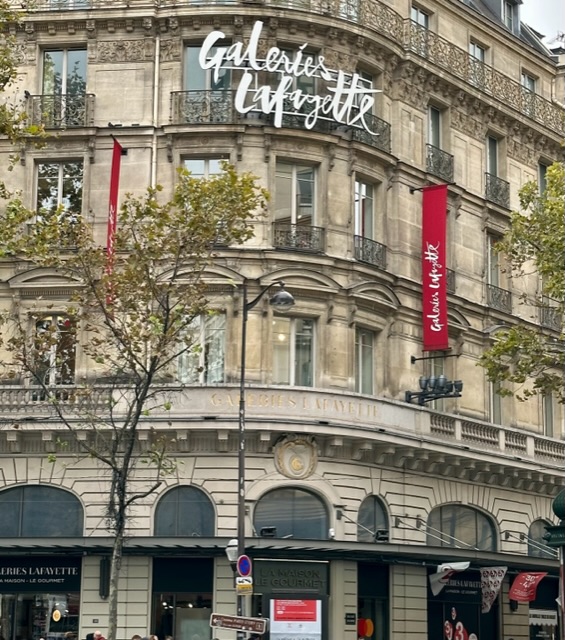
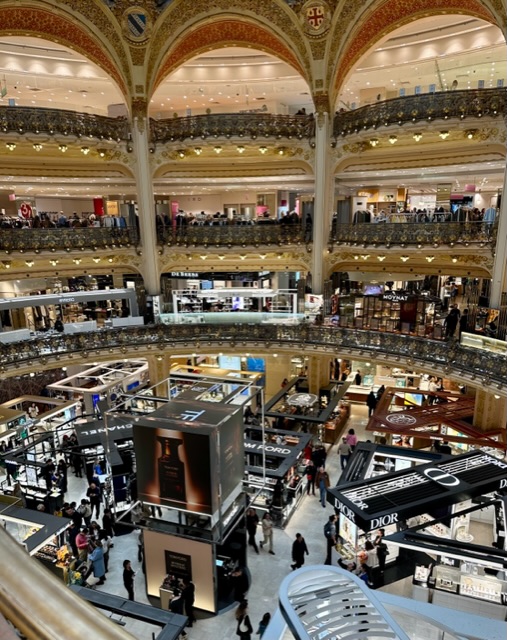
Stunning. Floors of splendid shopping. I went in, just for the fun of it. The Arc de Triomphe is not under construction. Photo here for everyone’s viewing pleasure; although today wasn’t a sunny day. Photo taken from the Avenue des Champs-Elysees.
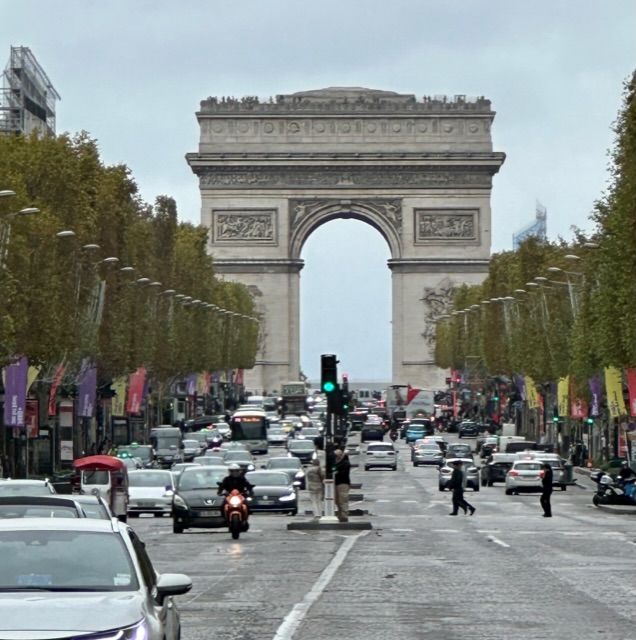
Arc de Triomphe. Great day. Great ending to my time in Paris. Entirely on foot. I think I walked through seven arrondissements—4, 3, 10, 18, 9, 8 and 1, respectively. All on the right bank—Rive Droite today. And I did get caught in a huge downpour on my way back to the apartment. At least I was on my way back to the apartment!
Next stop Tbilisi. Can’t wait to see Mike! Miss everyone.
-
The Fondation Louis Vuitton
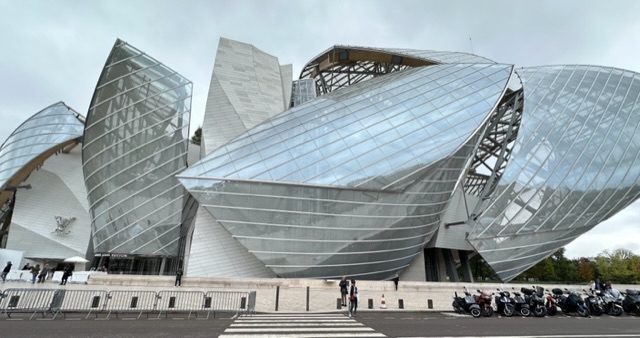
Frank Gehry’s building, which reveals forms never previously imagined (at the time), is the reflection of the unique, creative and innovative project that is the Fondation Louis Vuitton 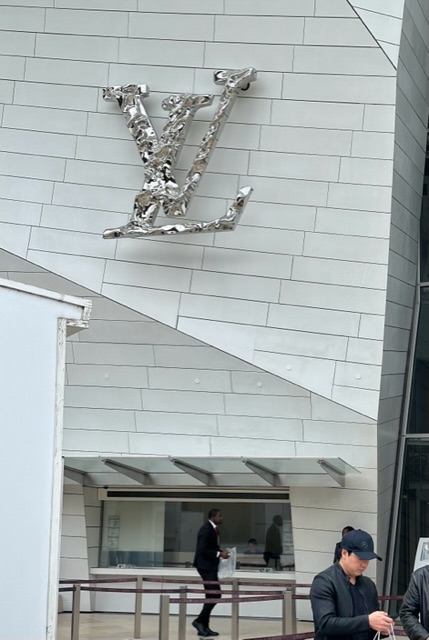
The Fondation Louis Vuitton presents the first retrospective in France dedicated to Mark Rothko (1903-1970) since the exhibition held at the Musée d’Art moderne de la Ville de Paris in 1999. I’m a huge fan.
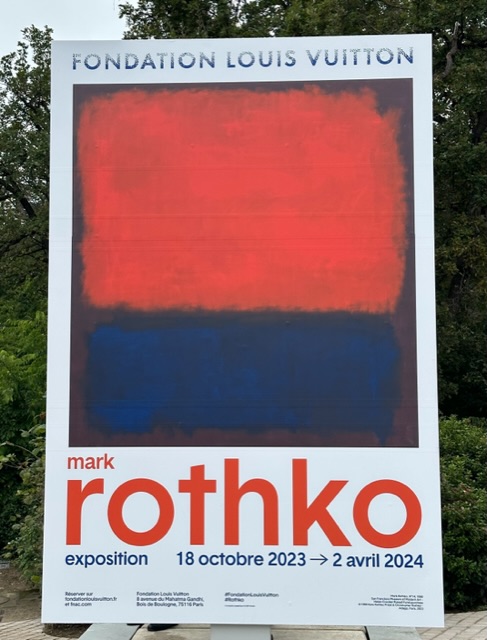
The early years. Urban scenes, subways and portraits.
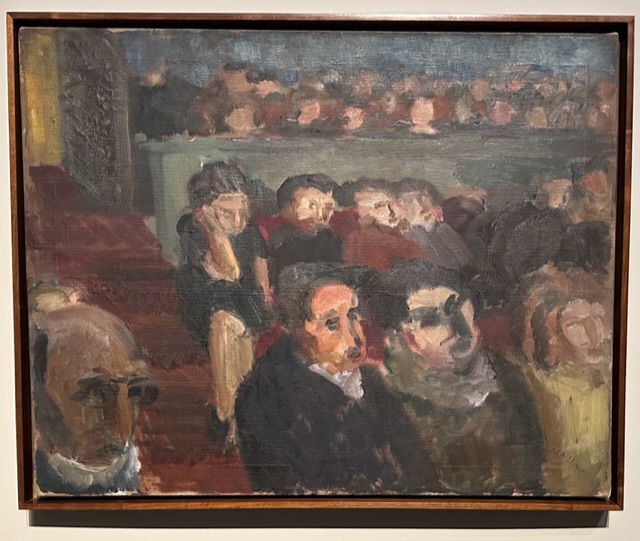
Movie Palace, 1934 – 1935 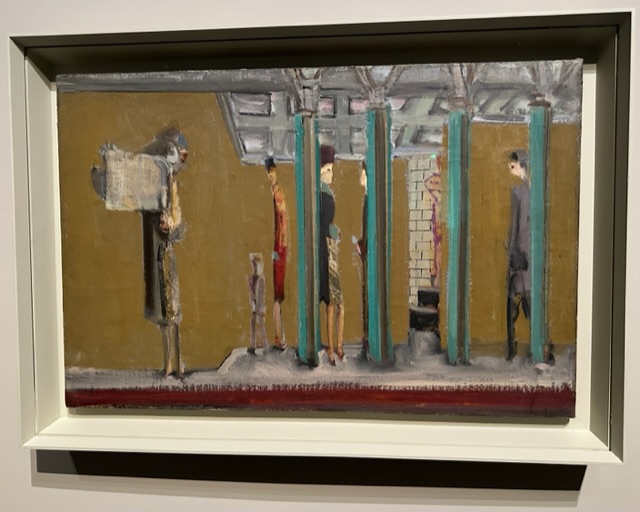
Untitled (Subway), 1937 Multiforms and early classic paintings.
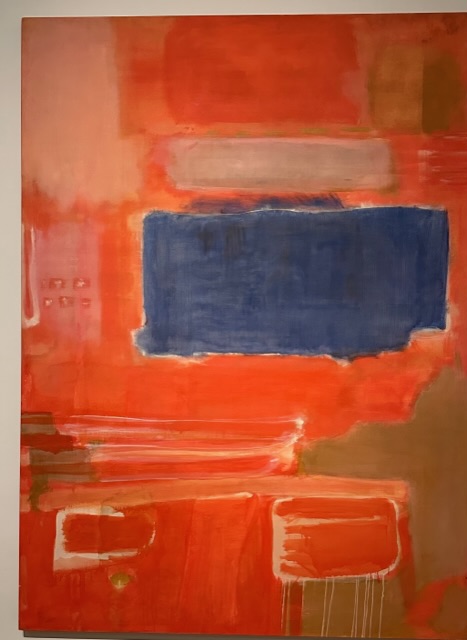
Untitled (Multiform), 1948 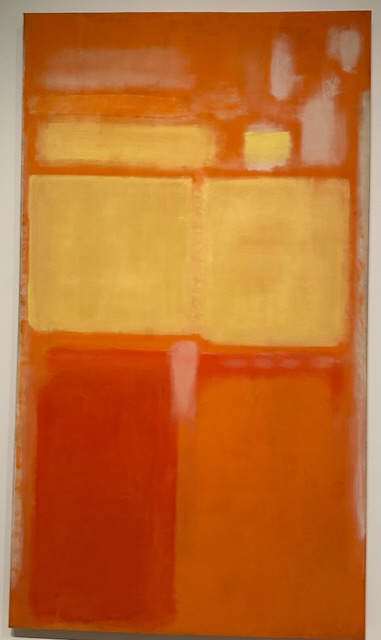
The 1950s and the Seagram murals.
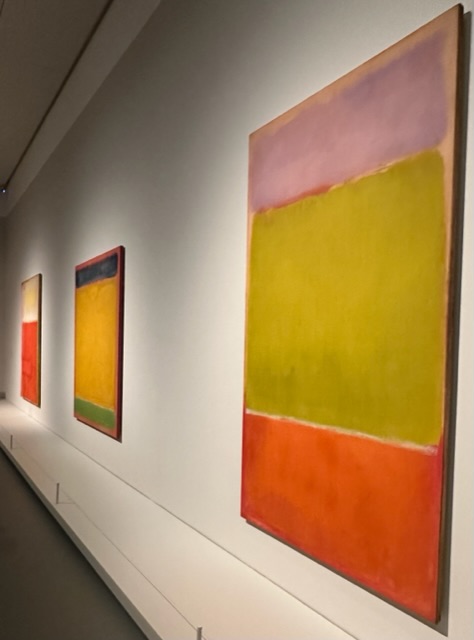
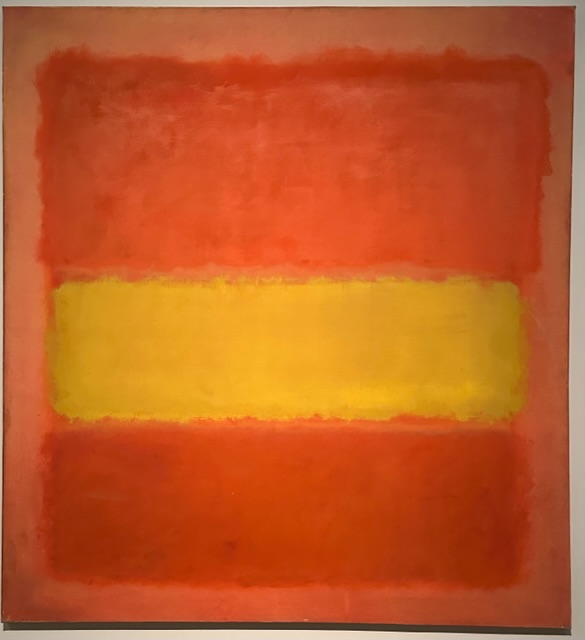
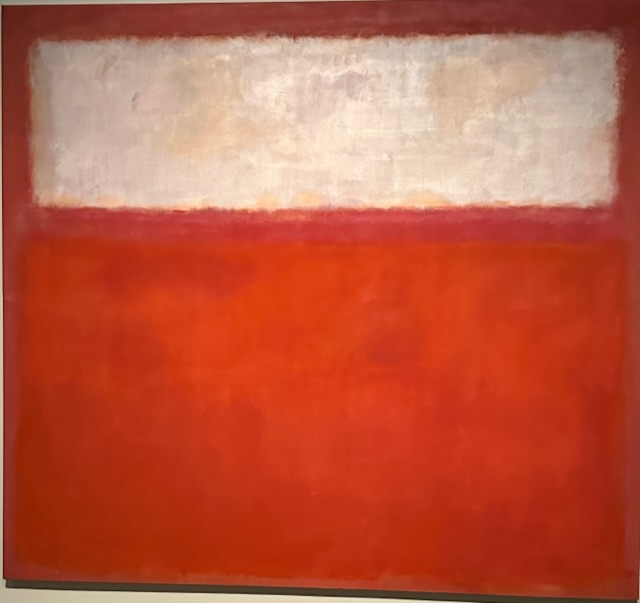
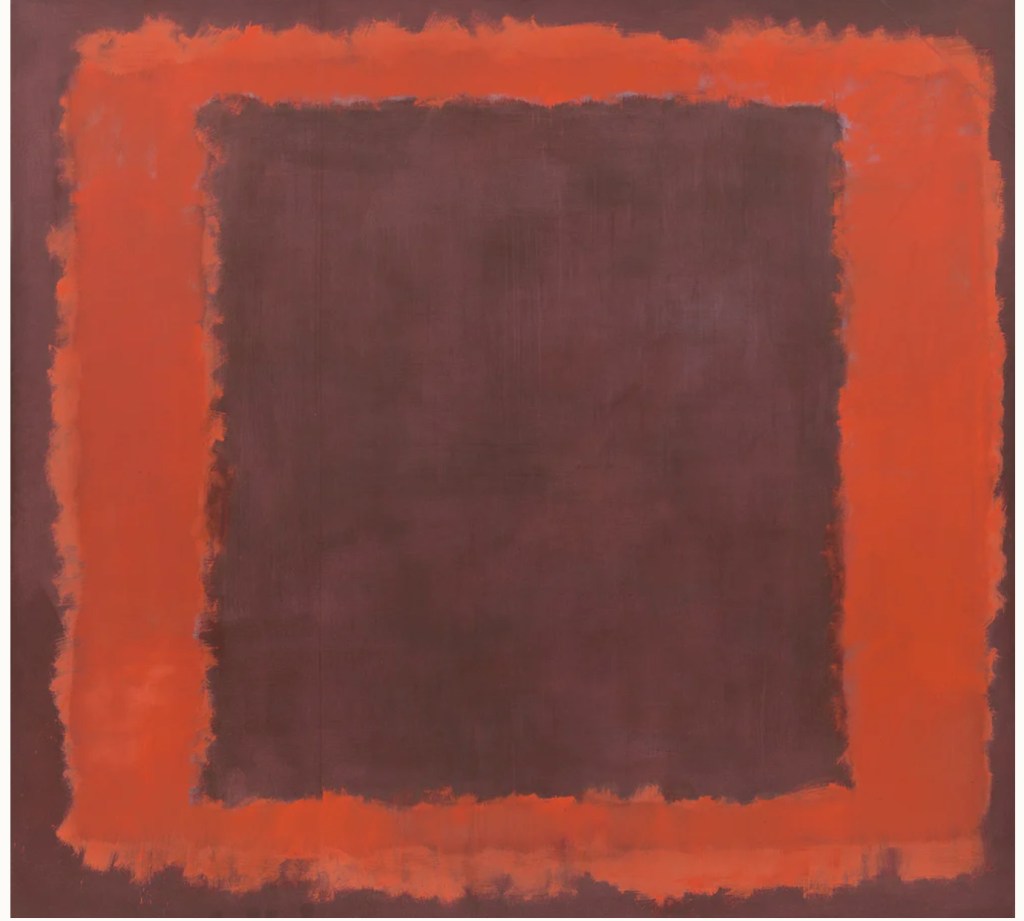
One of the Seagram Murals. 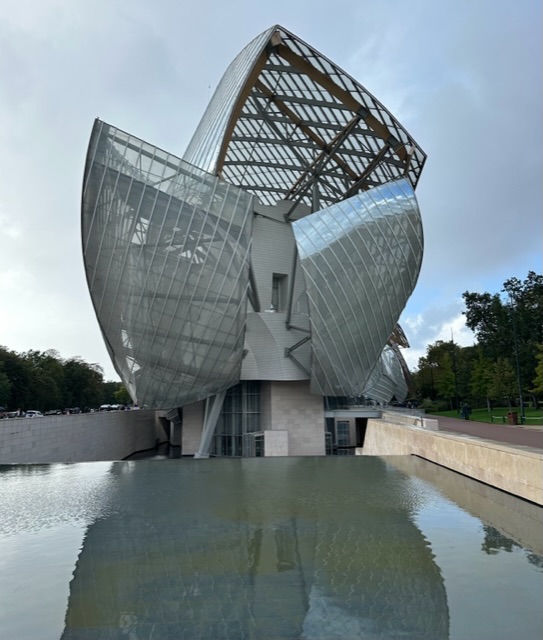
Enjoyed! Back to Le Marais. Travel today by Uber, foot and metro. -
My walk this morning and the Musée d’Orsay this afternoon.
This morning. Bookstores and my second bridal photo shoot,
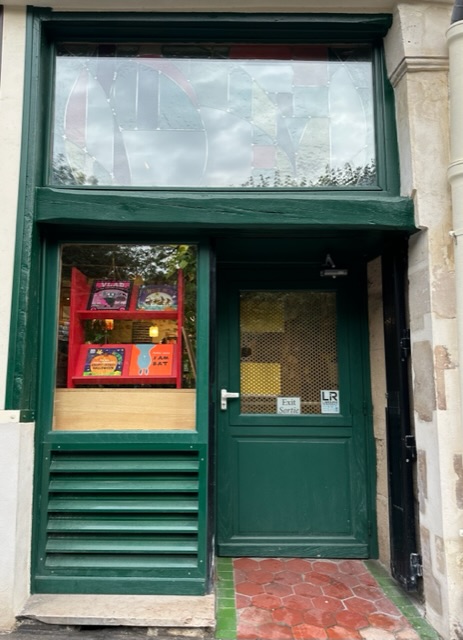
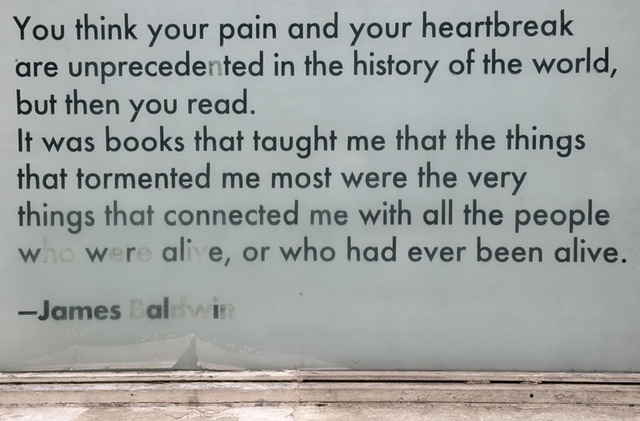
Sign in the window next to the bookshop above. 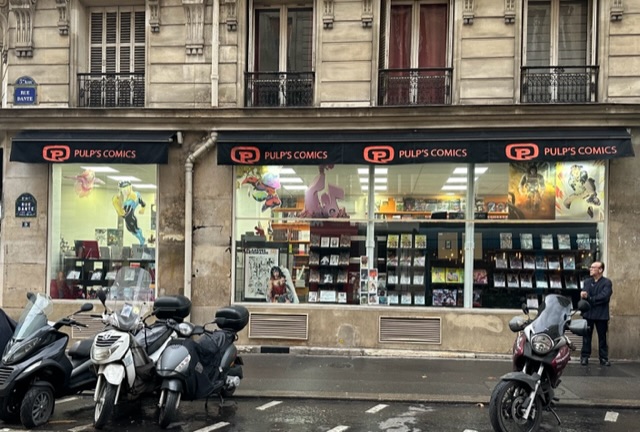
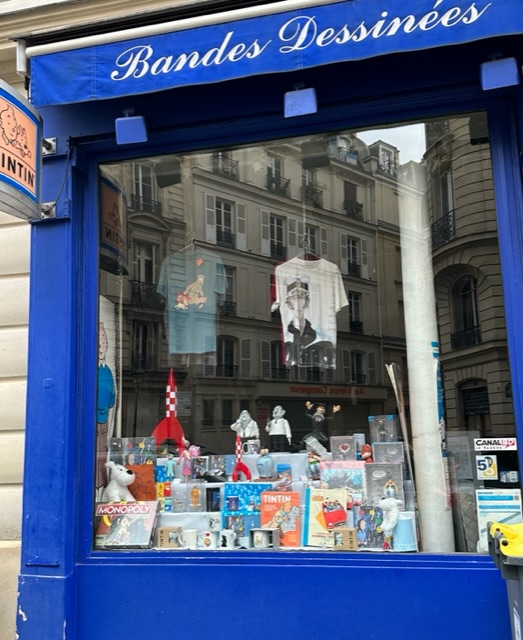
We used to read Tintin to Mike when he was young. 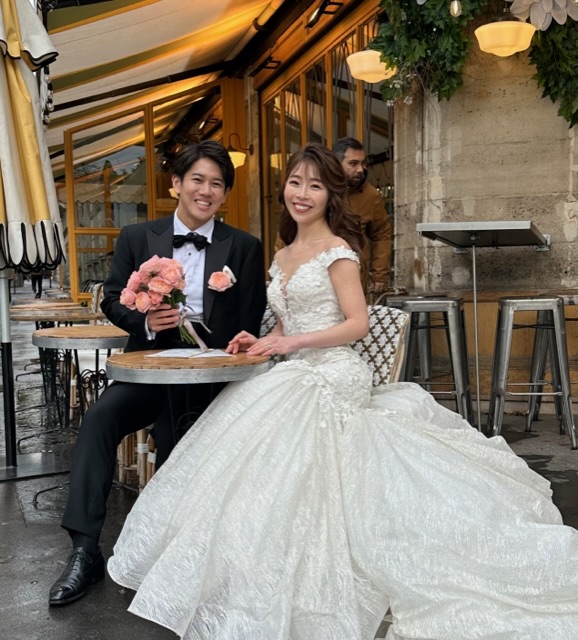
Another beautiful bride and groom.
Paris weddings seem popular, Alex and Luke? A second ceremony?Musée d’Orsay
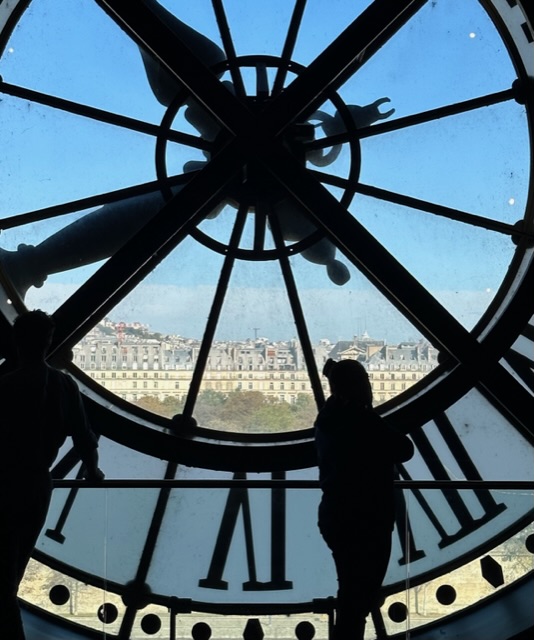
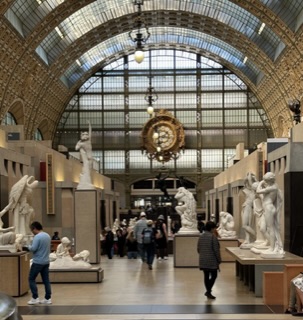
The Musée d’Orsay is a museum in Paris, France, on the Left Bank of the Seine. It is housed in the former Gare d’Orsay, a Beaux-Arts railway station built between 1898 and 1900. The museum holds mainly French art dating from 1848 to 1914, including paintings, sculptures, furniture, and photography
The Orsay has a beautiful collection of French Impressionist art, along with being a gorgeous building in and of itself. You can see the entire collection within a few hours—more if you spend lots of time in each gallery. Degas, Monet, Caillebot, Gauguin, Van Gogh and his Starry Night to name a few.
Art in Paris seems chronological—going from the Louvre to Orsay to Pompidou. Formerly a royal palace, the Louvre embraces eight centuries of French history. Intended as a universal museum since its creation in 1793, its collections – among the finest in the world – span several thousands of years and a territory that extends from America to the confines of Asia. The Louvre is a universal museum with eight curatorial departments: Egyptian Antiquities; Near Eastern Antiquities; Greek, Etruscan, and Roman Antiquities; Paintings; Sculptures; Decorative Arts; Prints and Drawings; and Islamic Art (we didn’t go in ). As an “Impressionist paradise”, the Orsay boasts a splendid collection of Impressionists and Post-Impressionists, the origin of early modern art (1848-1914). A benchmark for each of the great artistic movements of the 20th and 21st centuries, the Centre Pompidou collection starts around 1905. The cubist movement, initiated in 1907 by Braque and Pablo Picasso, is also represented here with major works by the painters Juan Gris and Ferdinand Léger and sculptors Henri Laurens and Jacques Lipchitz.
Today the Orsay.
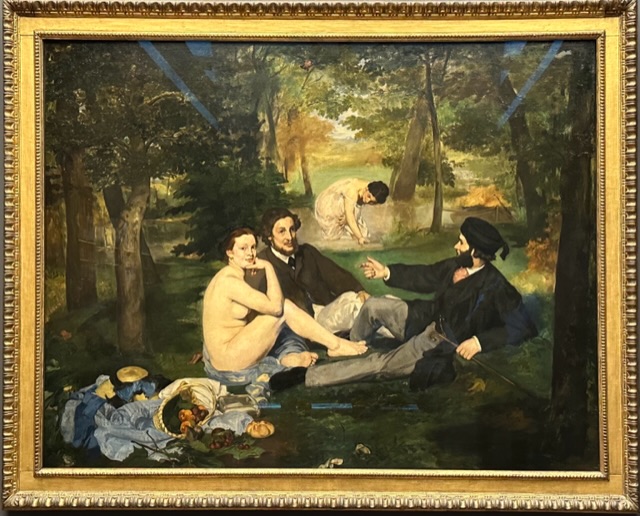
Laughter. Scandal. Edouard Manet didn’t intend to ignite both when he entered this painting to the 1863 official Paris Salon. It was rejected by the stuffy committee members but Manet went on to exhibit it at the famous Salon des Refusés — an alternative art show initiated by Napoleon III. 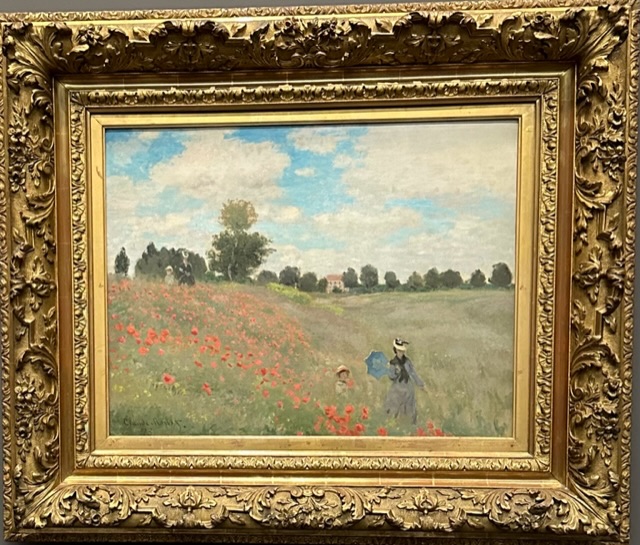
When Monet returned from England in 1871, he settled just outside of Paris in Argenteuil. These were good years for him; he was financially supported by his art dealer, Paul Durand-Ruel, and there were plenty of beautiful places to paint nearby with bright landscapes, allowing him to explore his love of en plein air painting 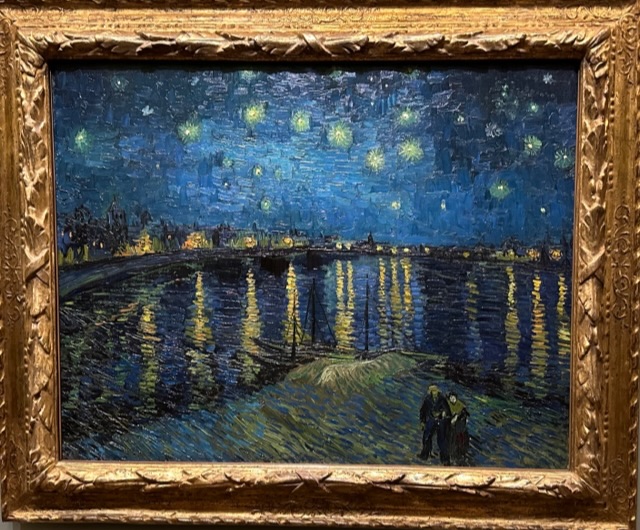
Van Gogh’s Starry Night Over the Rhone is a perfect example of what makes him so popular.. Van Gogh in Auvers-sur-Oise. The Final Months
We were lucky enough to see. Opening at the Musée d’Orsay on October 3, this exhibition is the first to be devoted to the works produced by Vincent Van Gogh (1853-1890) during the last two months of his life, in Auvers-sur-Oise near Paris. The exhibition is the result of years of research on this crucial phase in the artist’s life, and will finally enable us to appreciate its true importance.
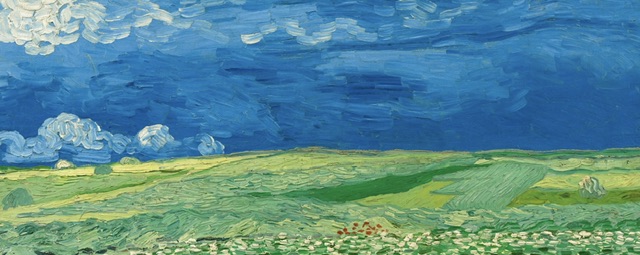
Champ de blé sous un ciel orageux, Auvers-sur-Oise, juillet 1890 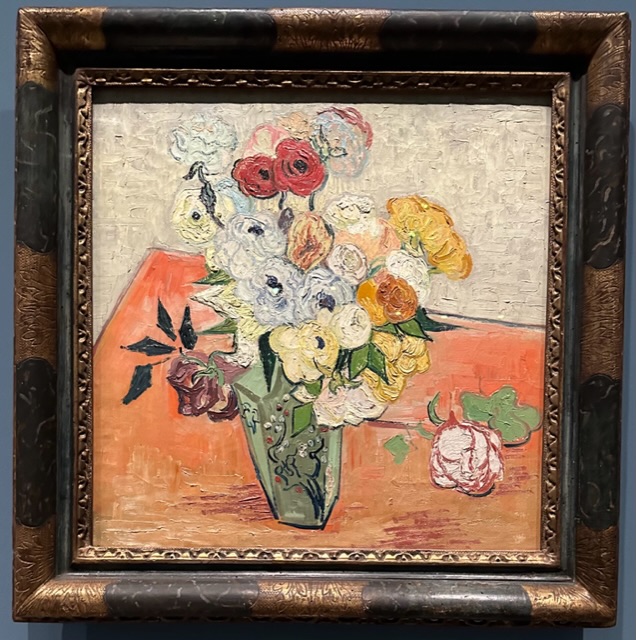
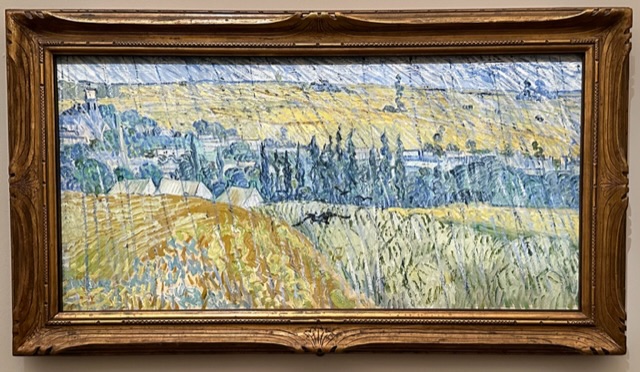
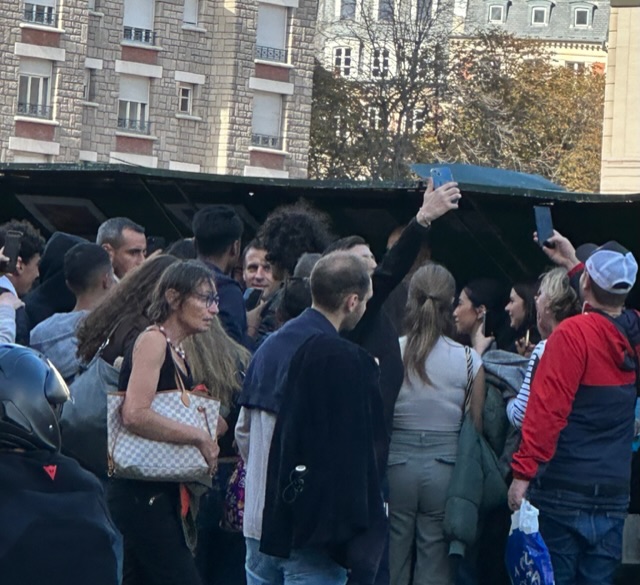
So, we go from almost being arrested in the metro, to evacuation from Versailles to presidential status.
President Macron stopped right in front of us on the way back to the apartment from Orsay. Can you believe it?
-
Subscribe
Subscribed
Already have a WordPress.com account? Log in now.
 Dream to Travel from NCM