
Off to Telavi Bazaar then back to Tbilisi.
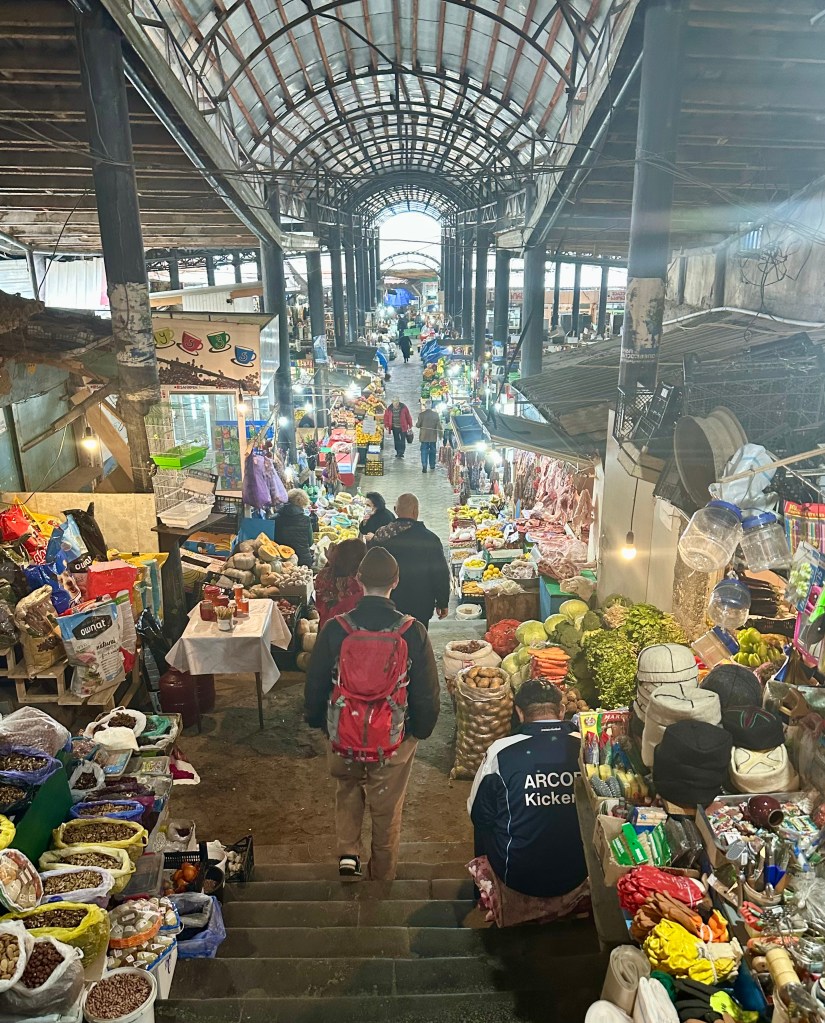
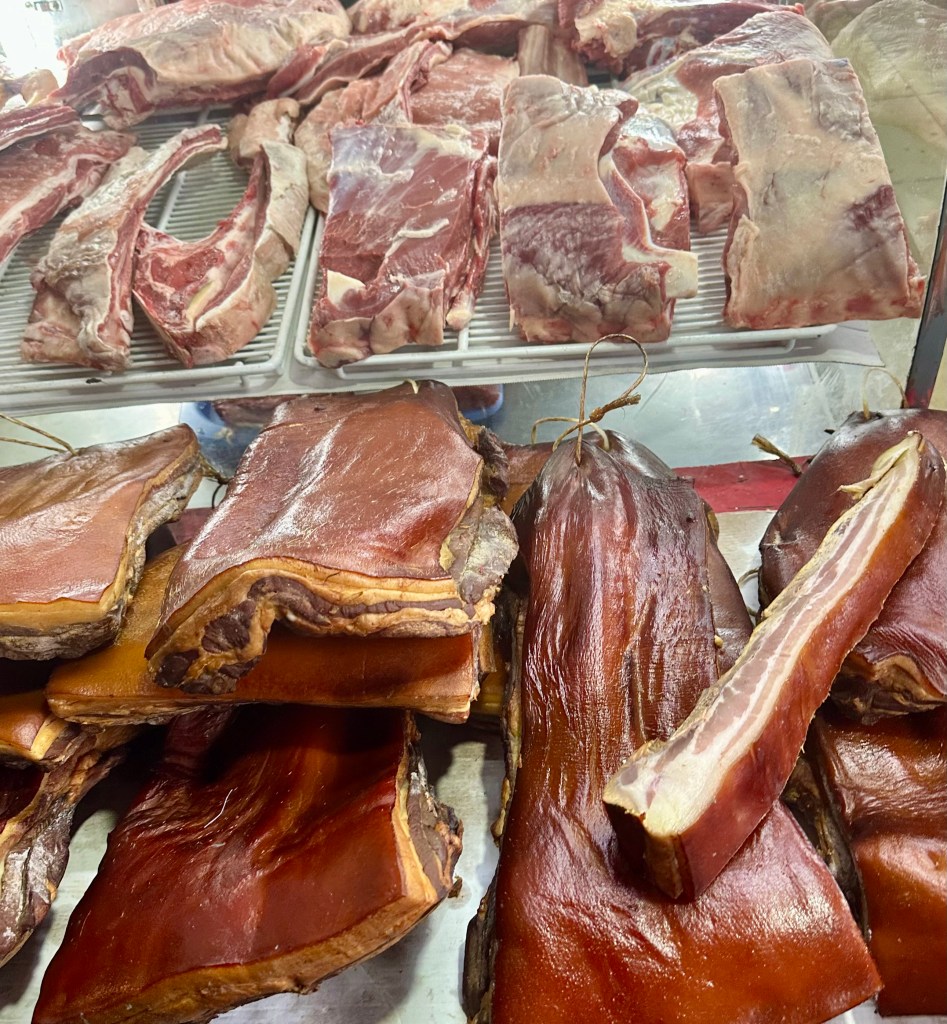
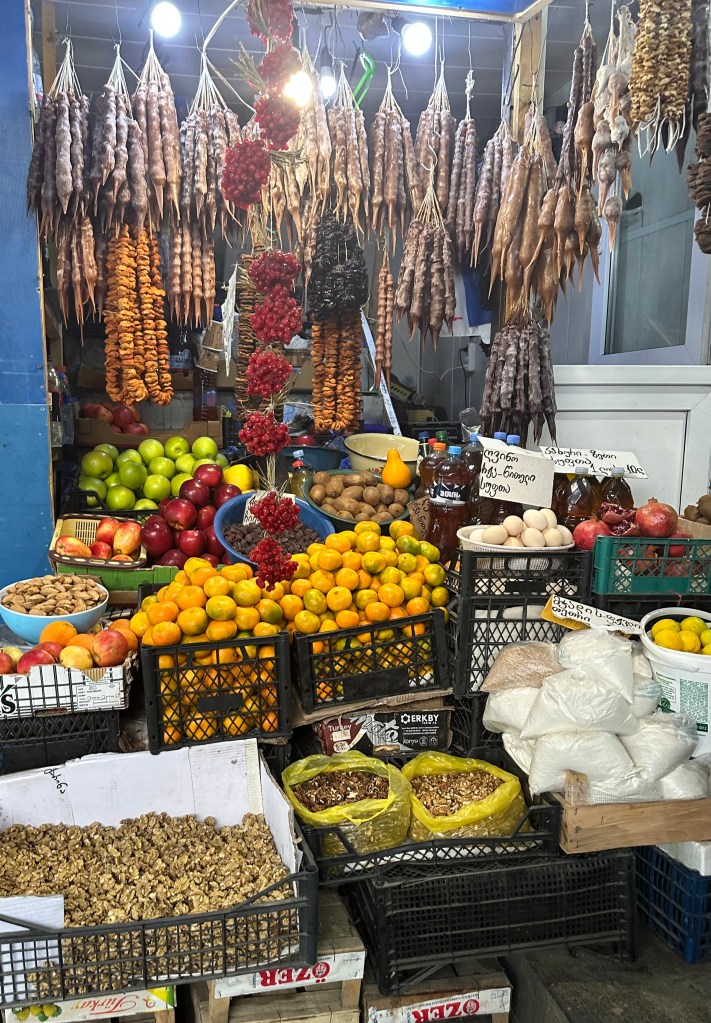
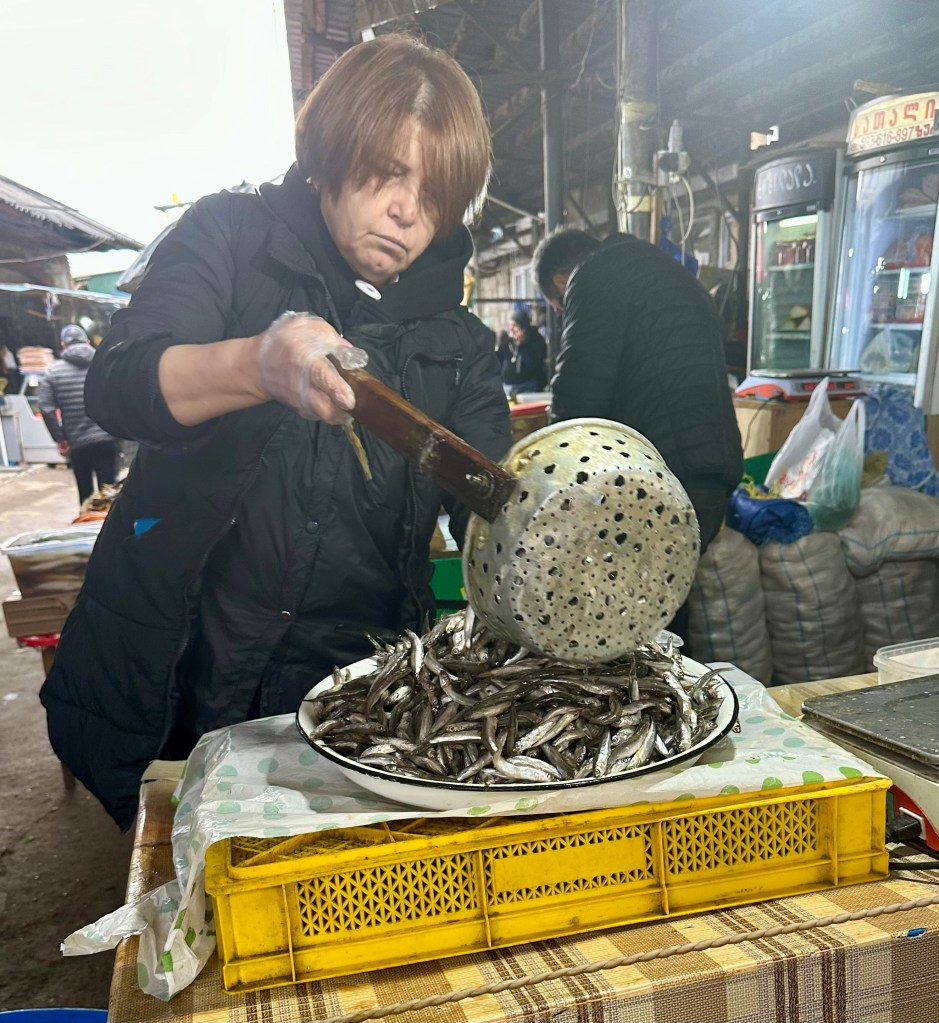
Off to Telavi Bazaar then back to Tbilisi.
Ok, before the folk dancing.
Folk dancing.
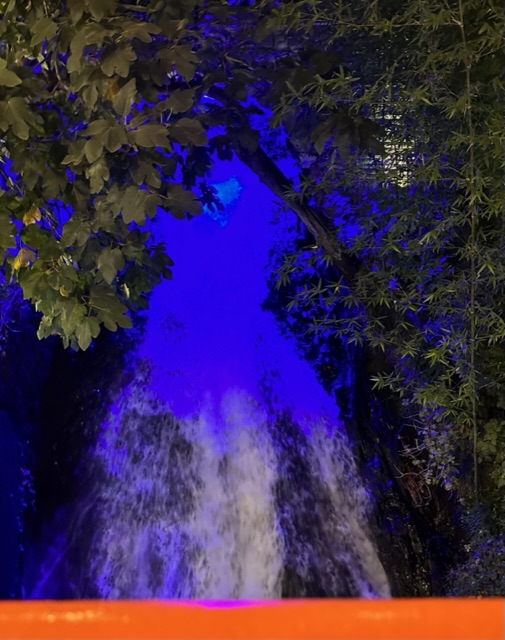
Ethno Tsiskvili is on Beliashvili Street. An impressive exterior is created by the natural waterfall and an old water mill, pure Georgian bricks and preserved rock in the interior shape leaves an unforgettable impression.
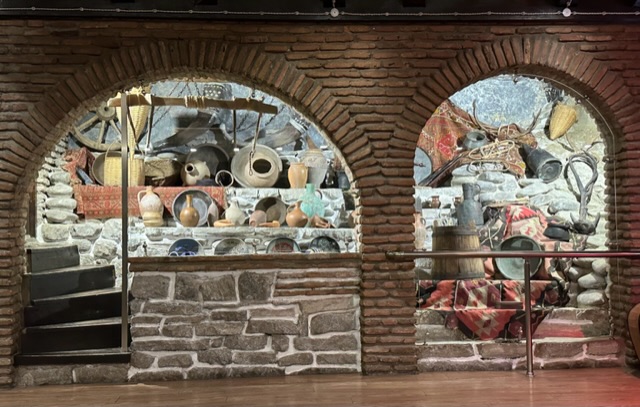
Ethno Tsiskvili’s distinguishing features is its various concept halls, where ancient museum exhibits are displayed and give it a unique restaurant/museum importance. Its main mission is to spread centuries old Georgian history and hospitality, revive ancient traditional cuisine and share Georgian culture by promoting national folk music and dances every evening. Vintage Georgian balconies, traditional pottery and various medieval items allow guests from around the world imagine ancient Georgia. A little bit Atlantic City or Las Vegas. But tasteful.
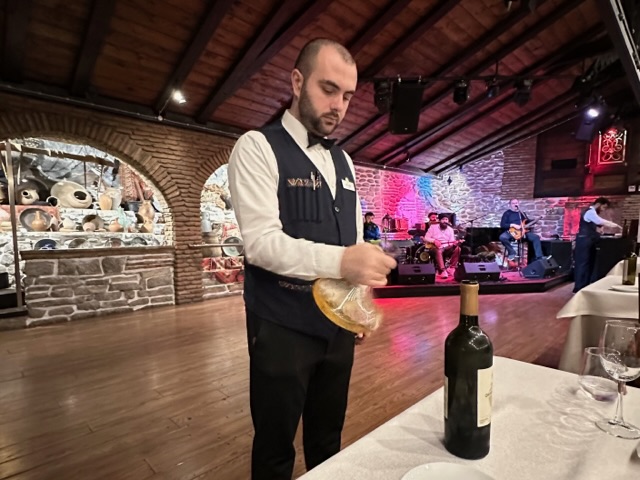
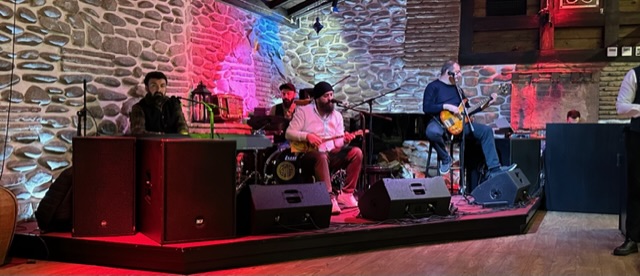
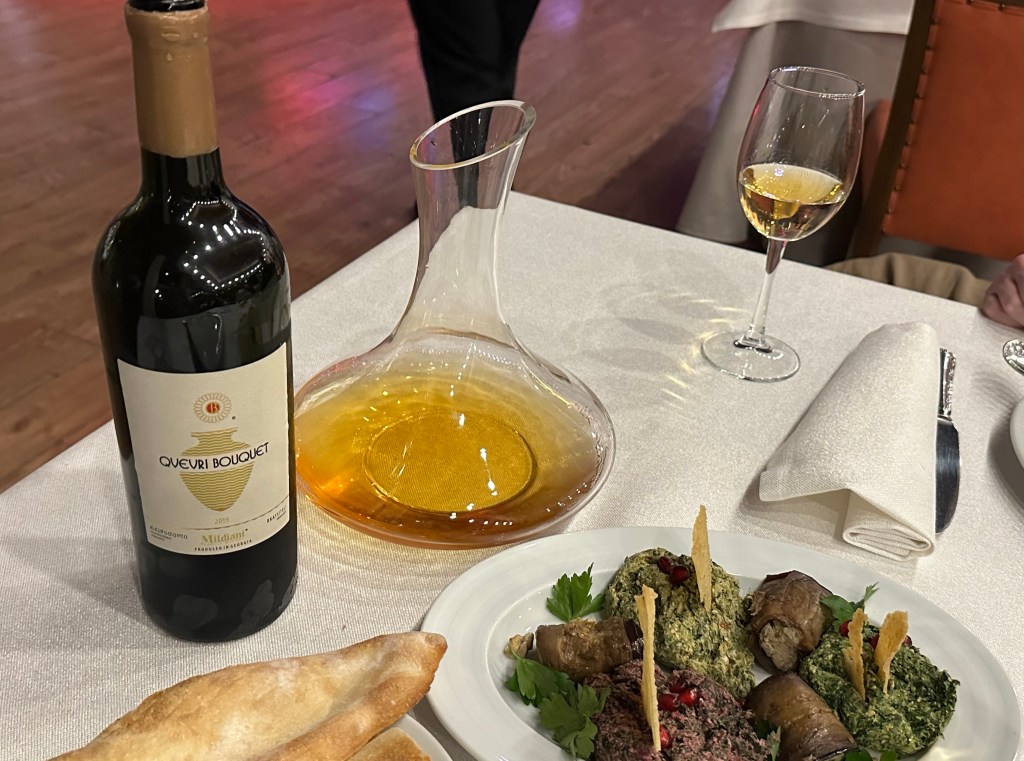
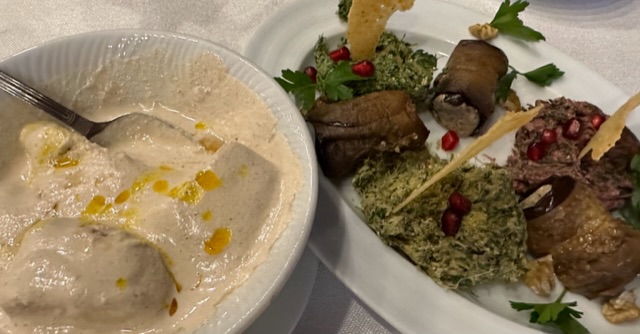
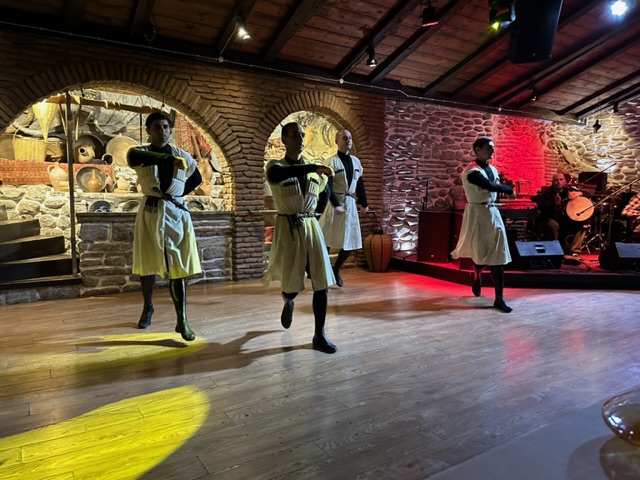
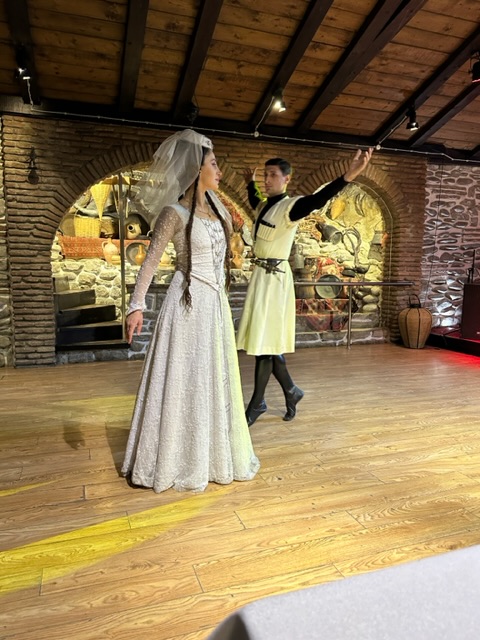
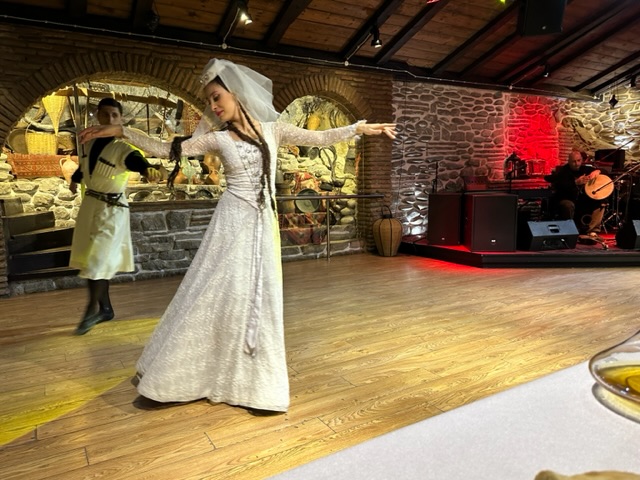
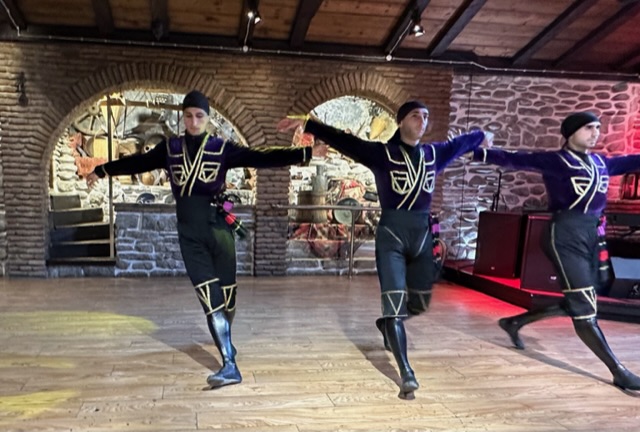
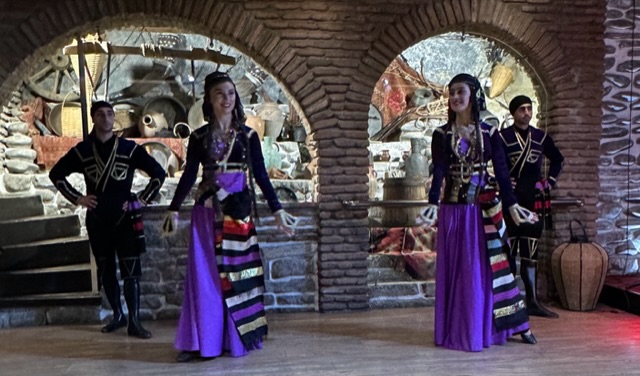
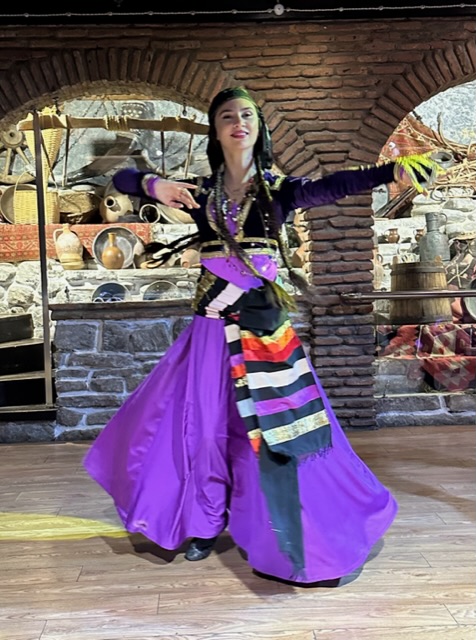
We had fun. I am so glad we went. Tonight is when I was kinda sorry I didn’t pay for the version that allows me to post videos.
A couple of wineries for Mike and me today.
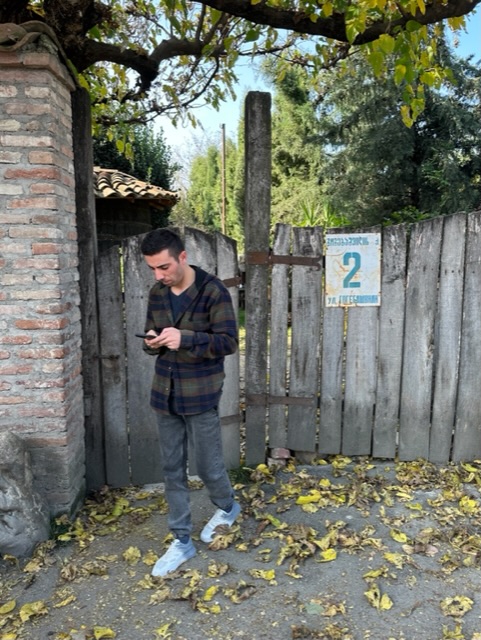
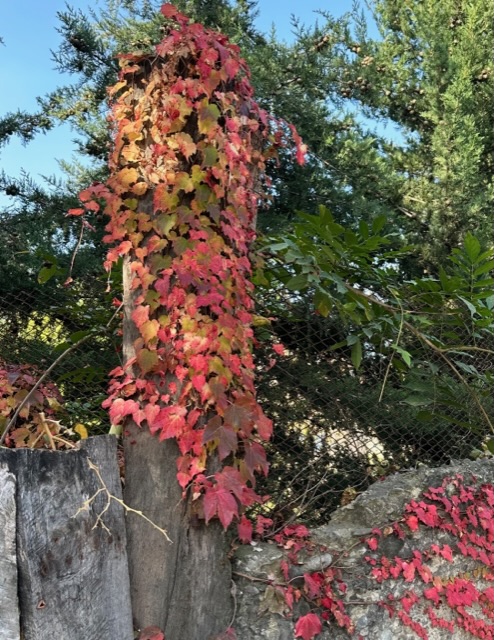
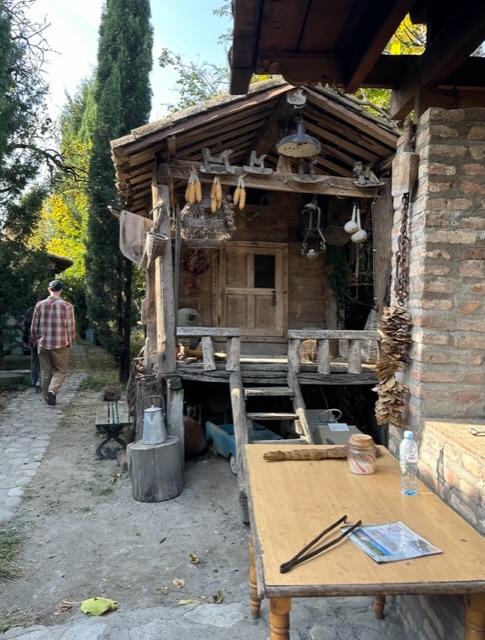
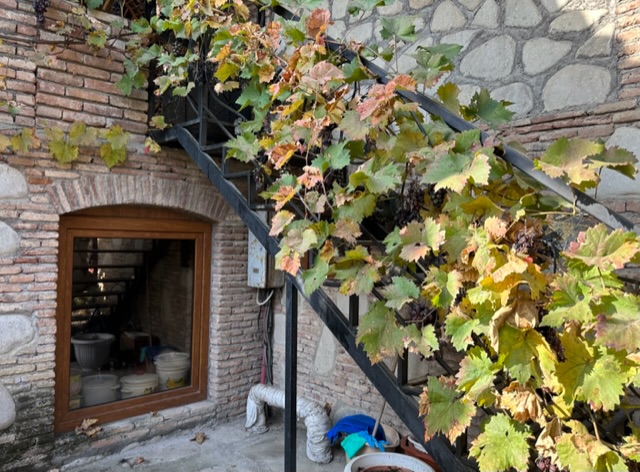
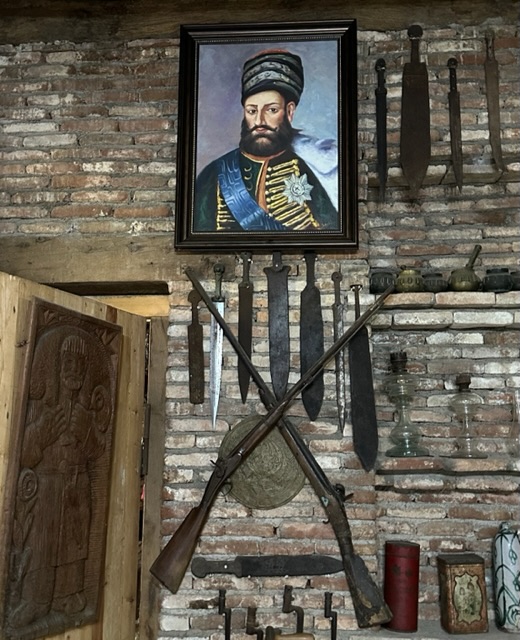
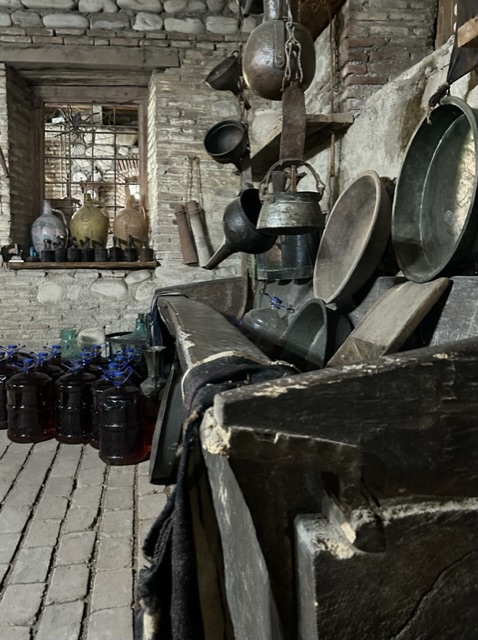
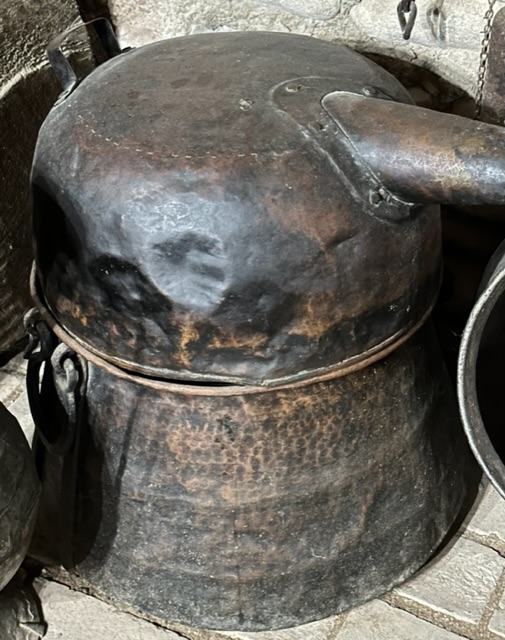
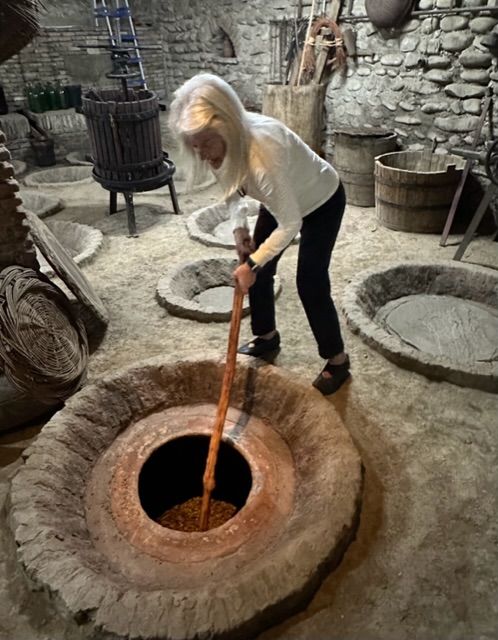
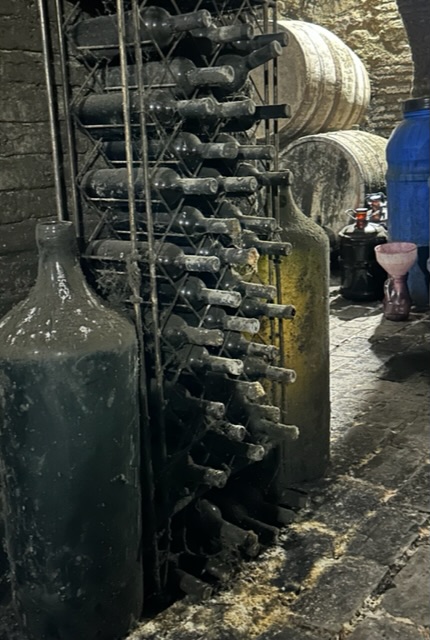
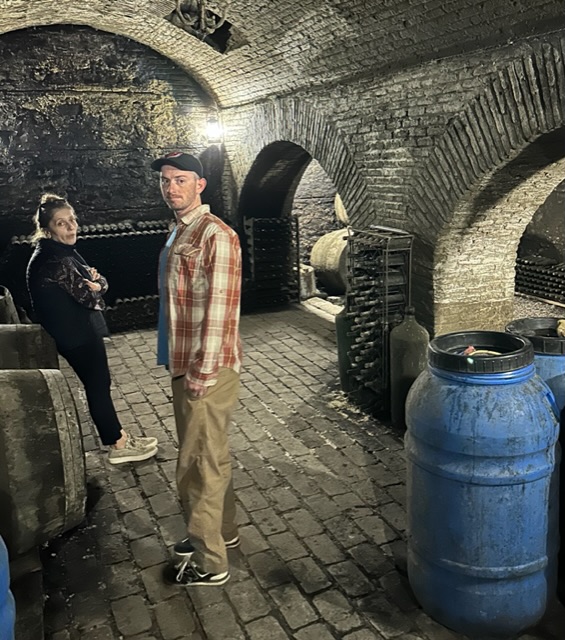
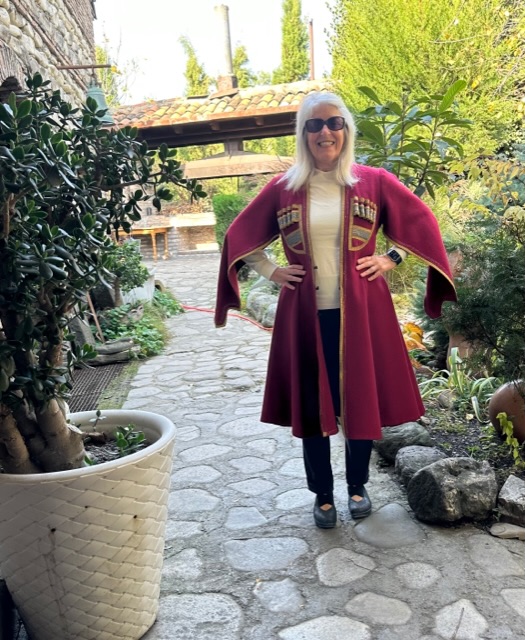
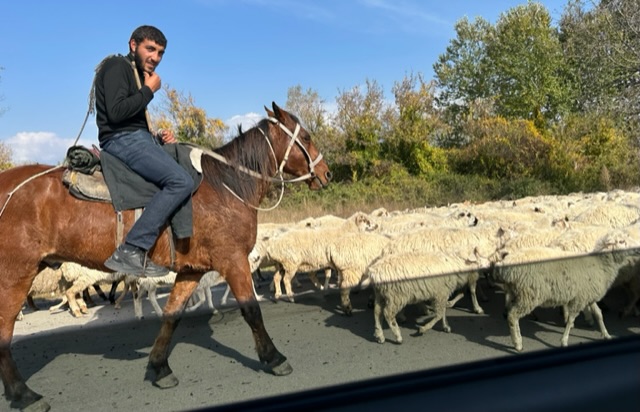
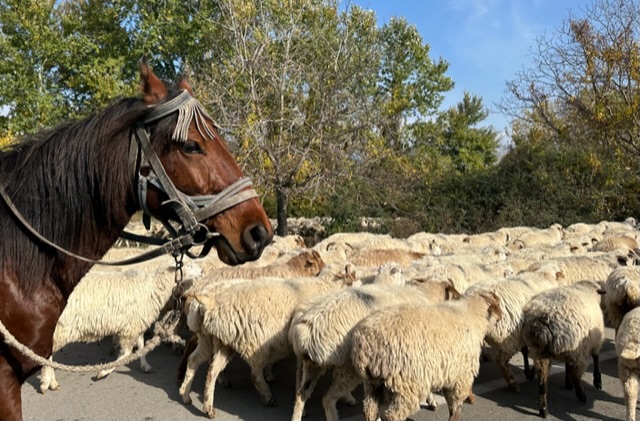
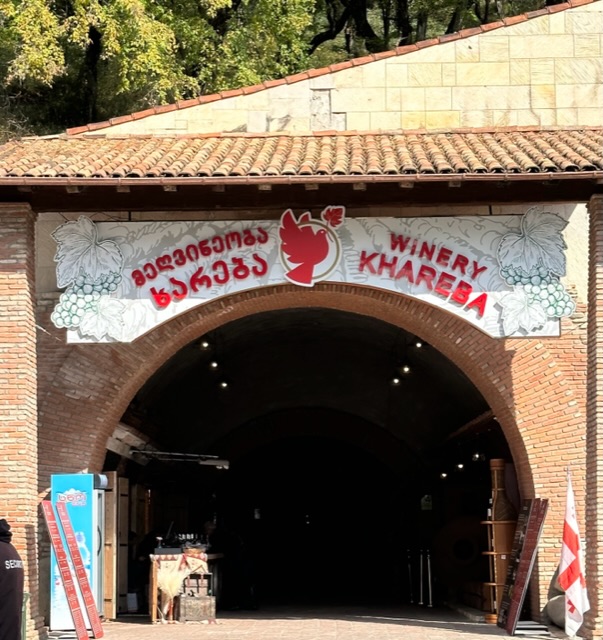
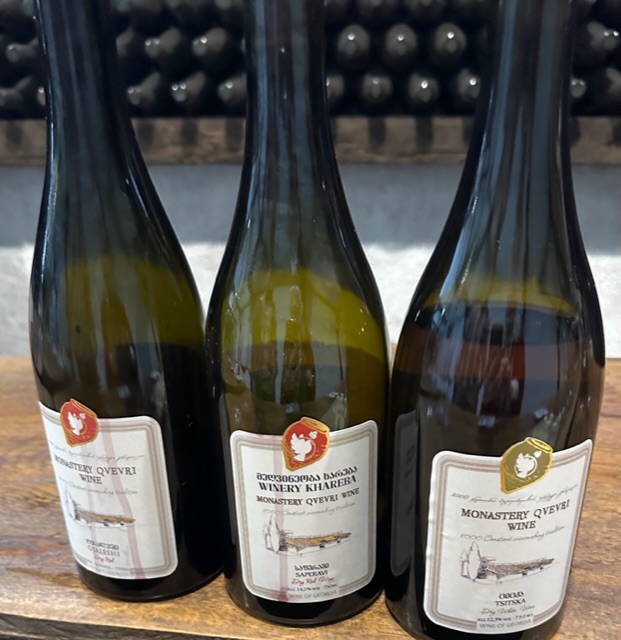
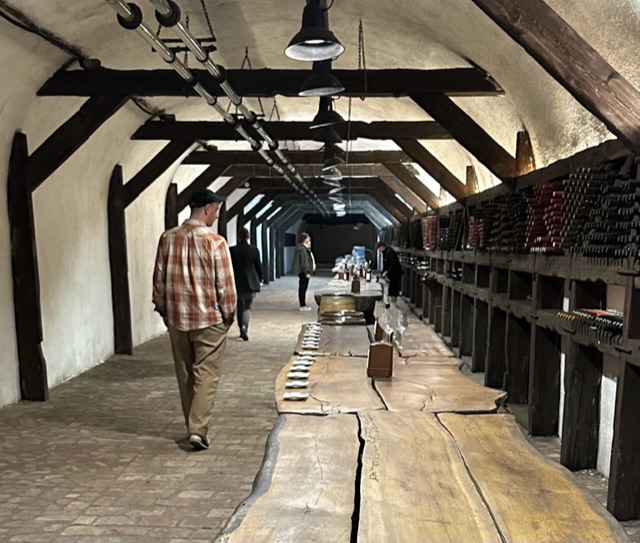
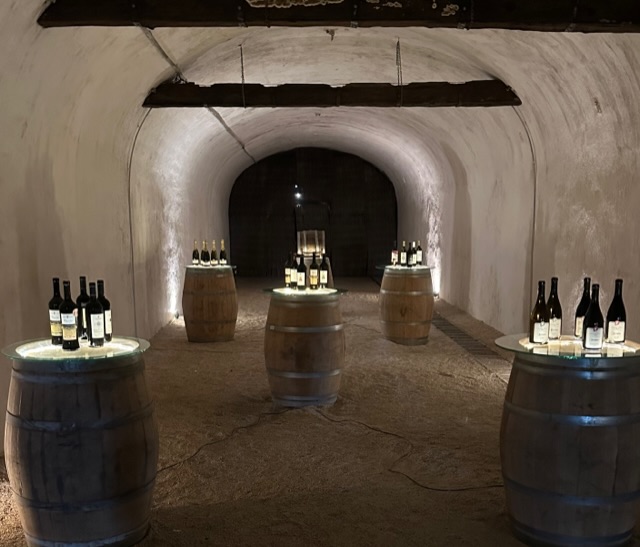
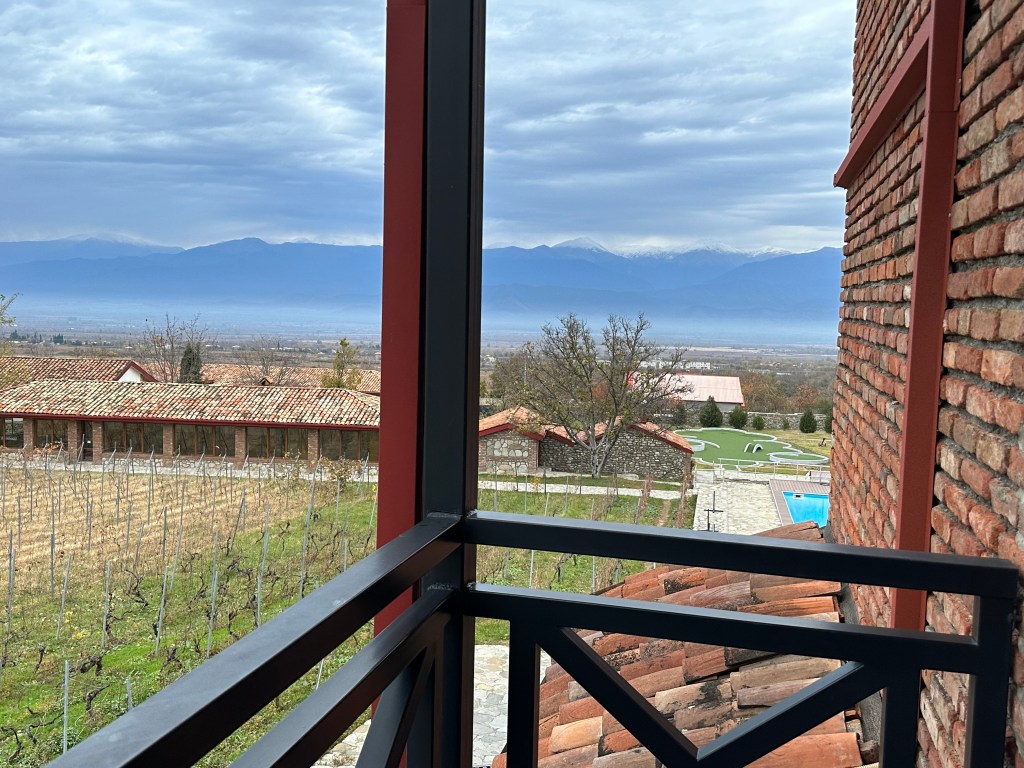
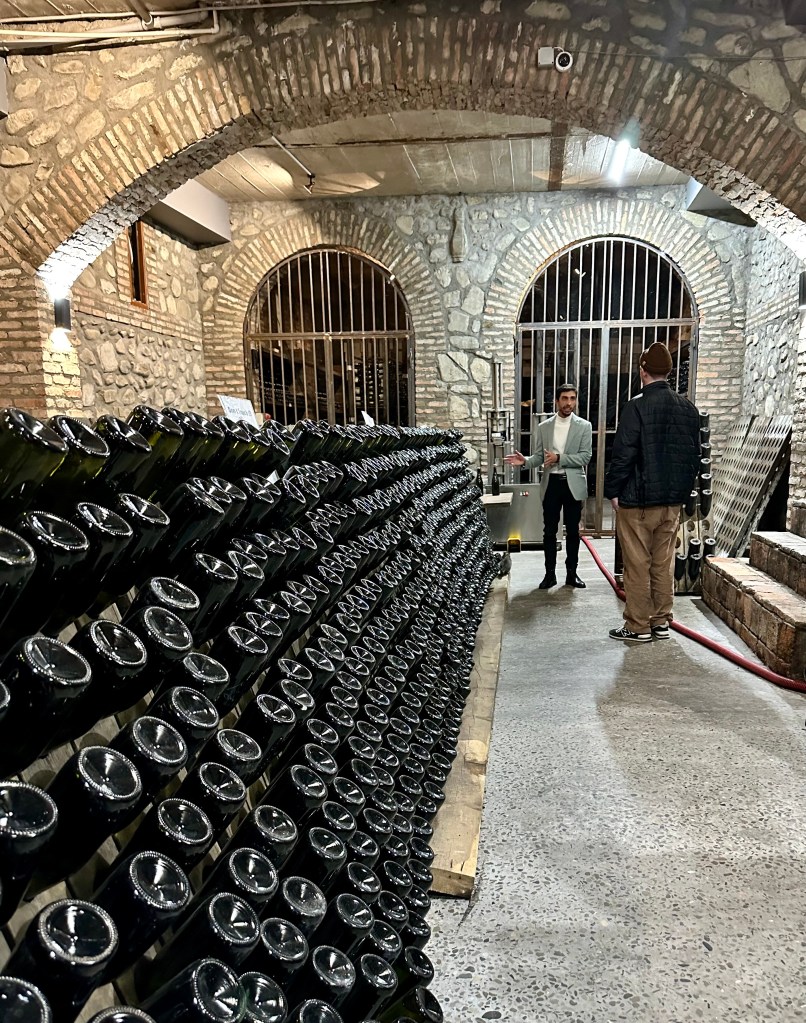
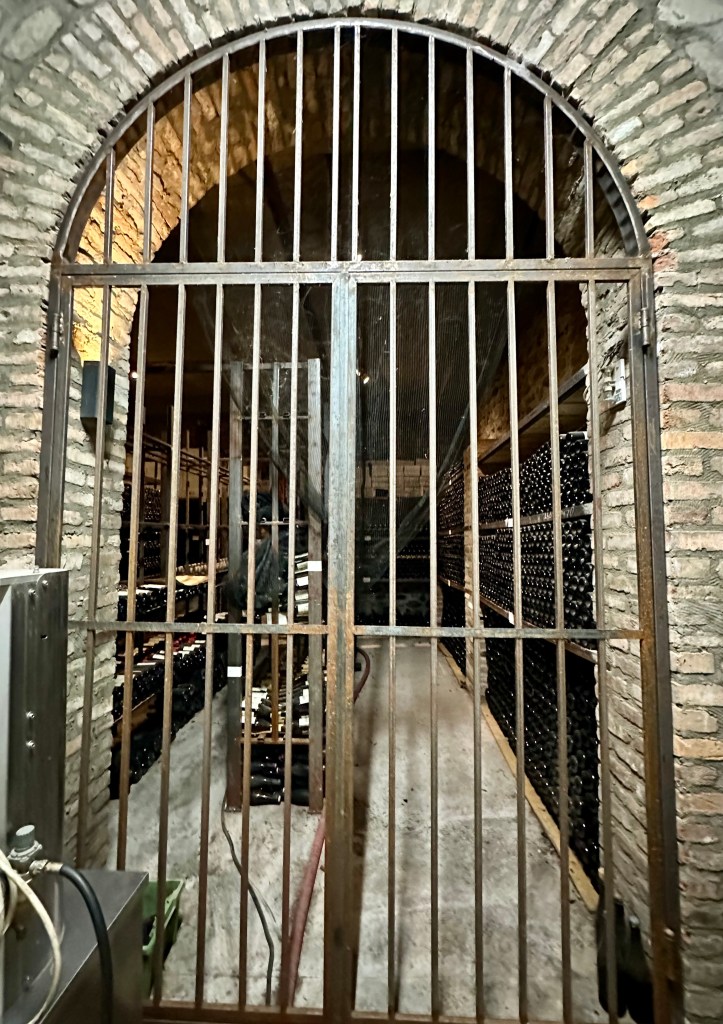
Kvareli Wine Cave is built on the edge of Alazani Valley. The cave, carved into the Caucasus rock massif, was opened in 1962 specifically for the World Congress of Vine and Wine. Stunning.
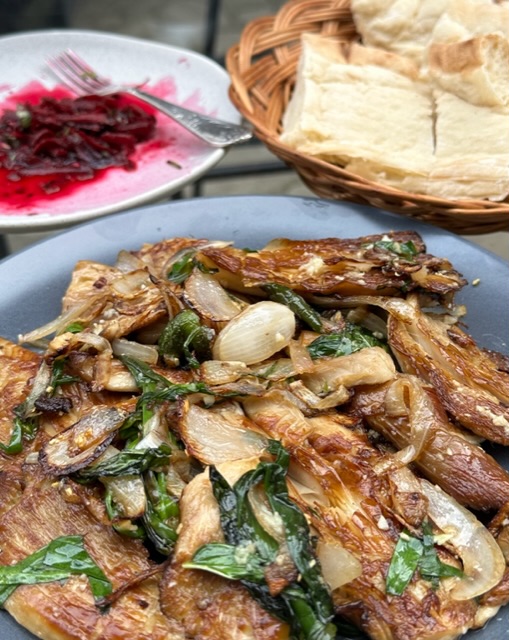
Back to Tbilisi late. Mike has to work tomorrow—somebody’s gotta work. 😉
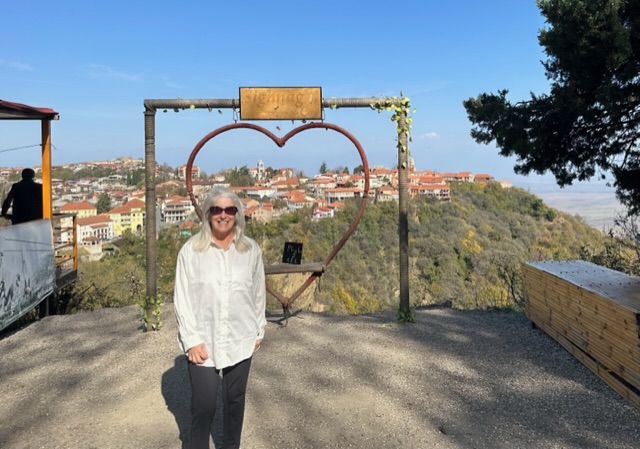
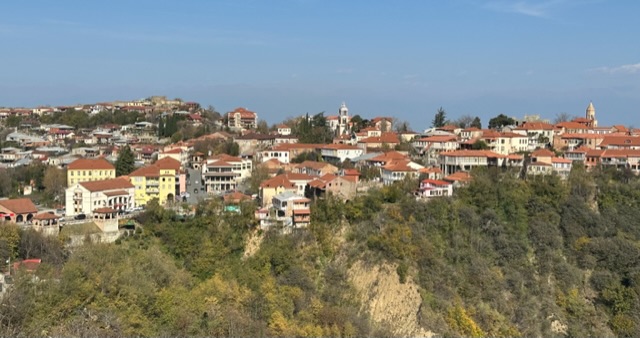
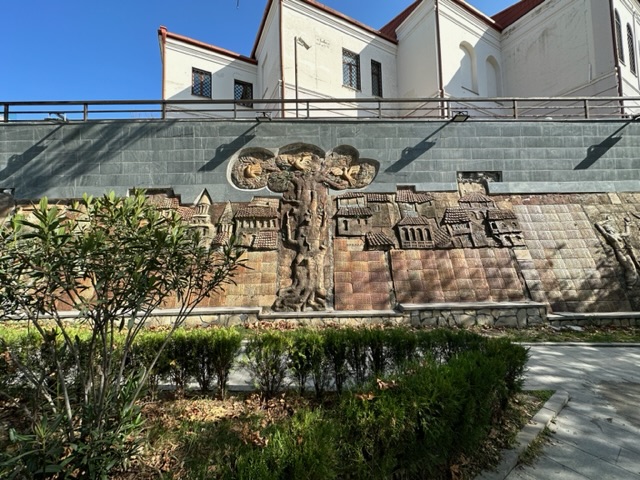
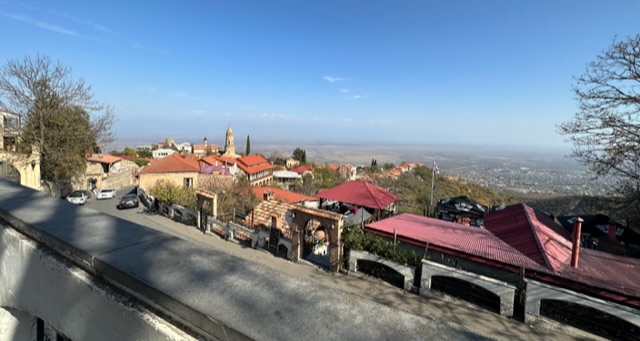
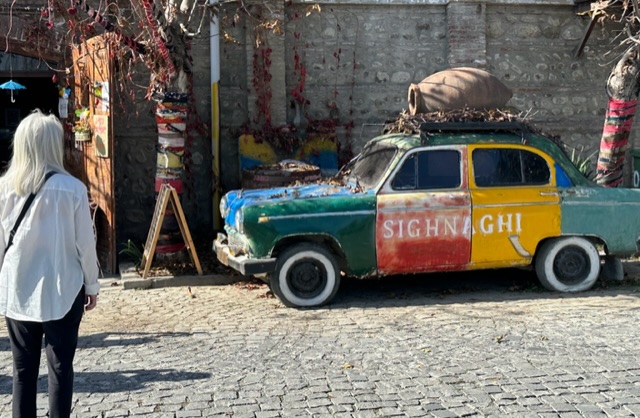
Nearly three-quarters of Georgia’s wine grapes are grown in the Kakheti region, including Sighnaghi, Telavi, and Tsinandali. Though there are many types of wine to try throughout the region, Rkatsiteli, a white grape, is the most celebrated — known for its granny smith apple taste and subtle spice. The main city of Kakheti is Telavi, facing the mighty Tsiv-Gombori Range, and the city itself boasts a history that features some of the region’s most important sites. First settled in the Paleolithic era, Sighnaghi holds the distinction of being one of Georgia’s smallest and most picturesque towns, complete with cobblestone streets and an outlook over the Alazani Valley.
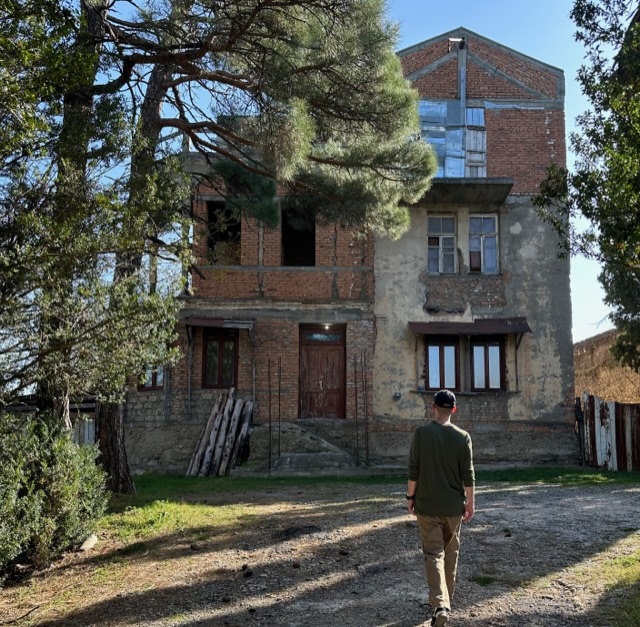
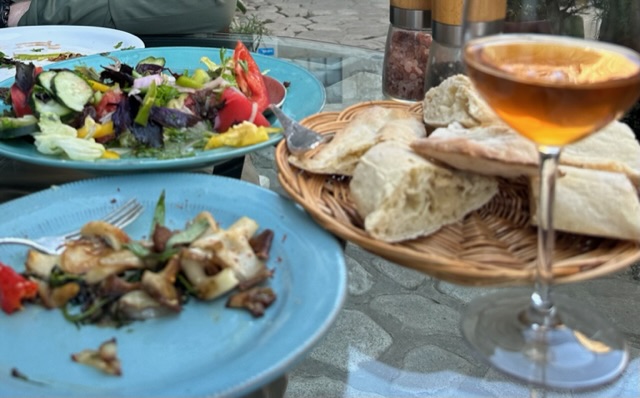
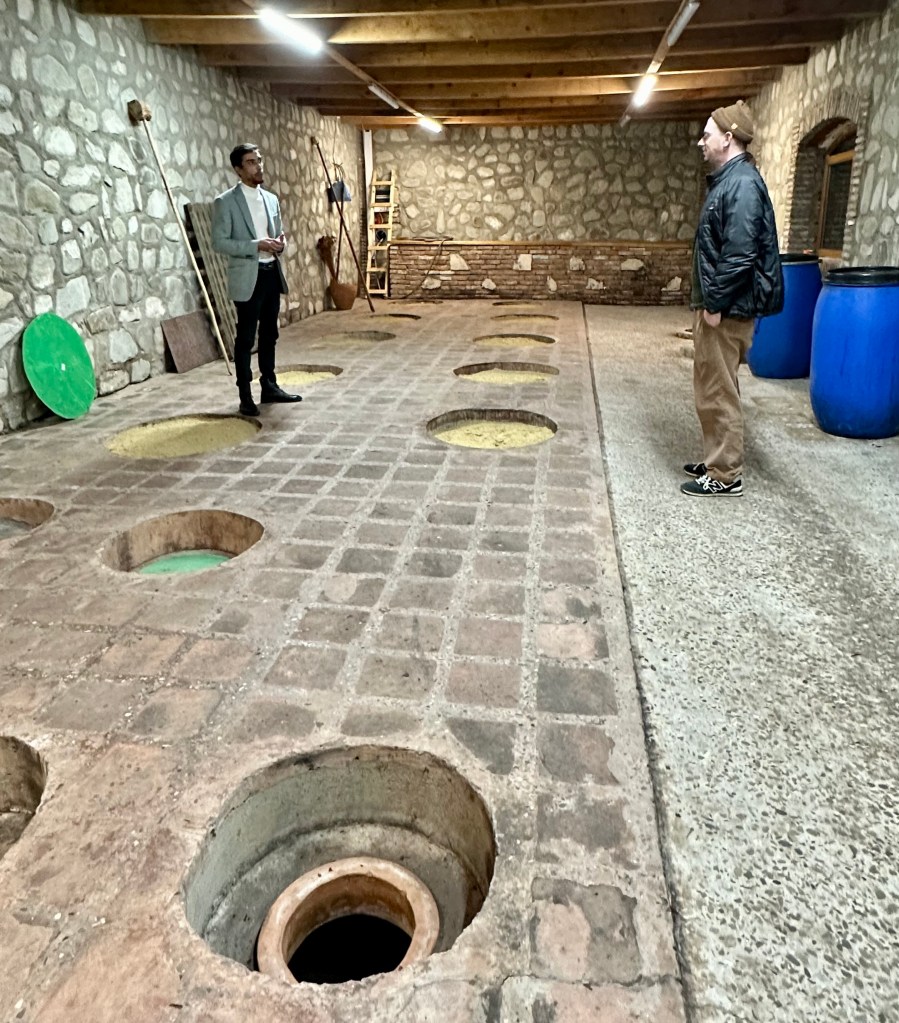
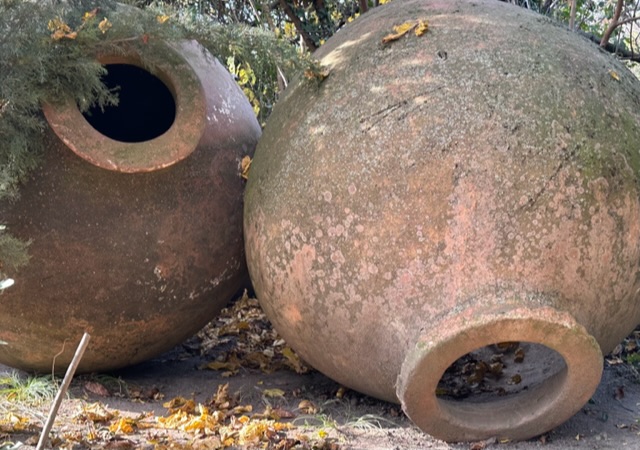
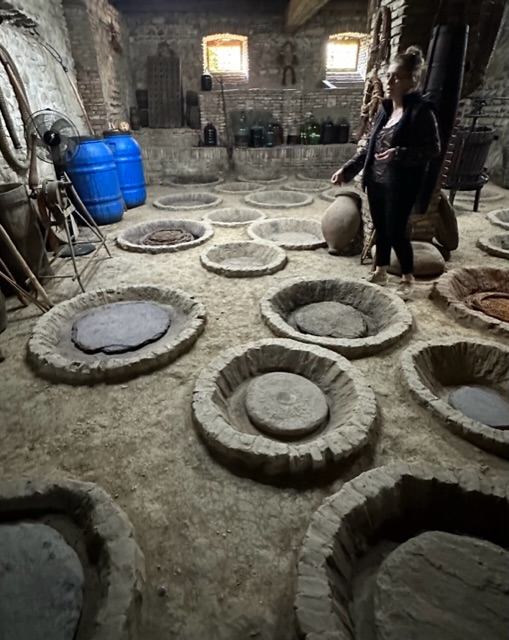
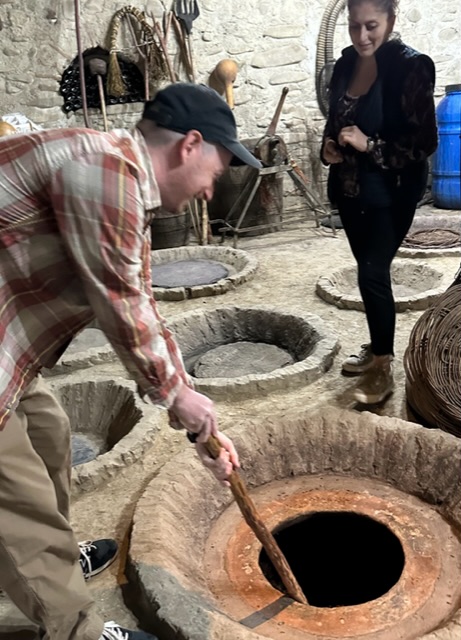
All of the wines at Pheasant’s Tears are fermented and aged in qvevri, a unique Georgian vessel used to ferment and store wine. This method of fermenting wine dates back to 6000 BC. Qvevriare clay vessels lined with beeswax are completely buried under the ground where the temperature stays even throughout the year, allowing the wines to ferment in the natural coolness of the earth.
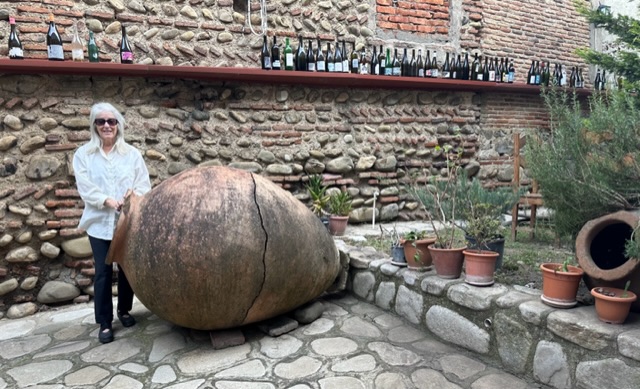
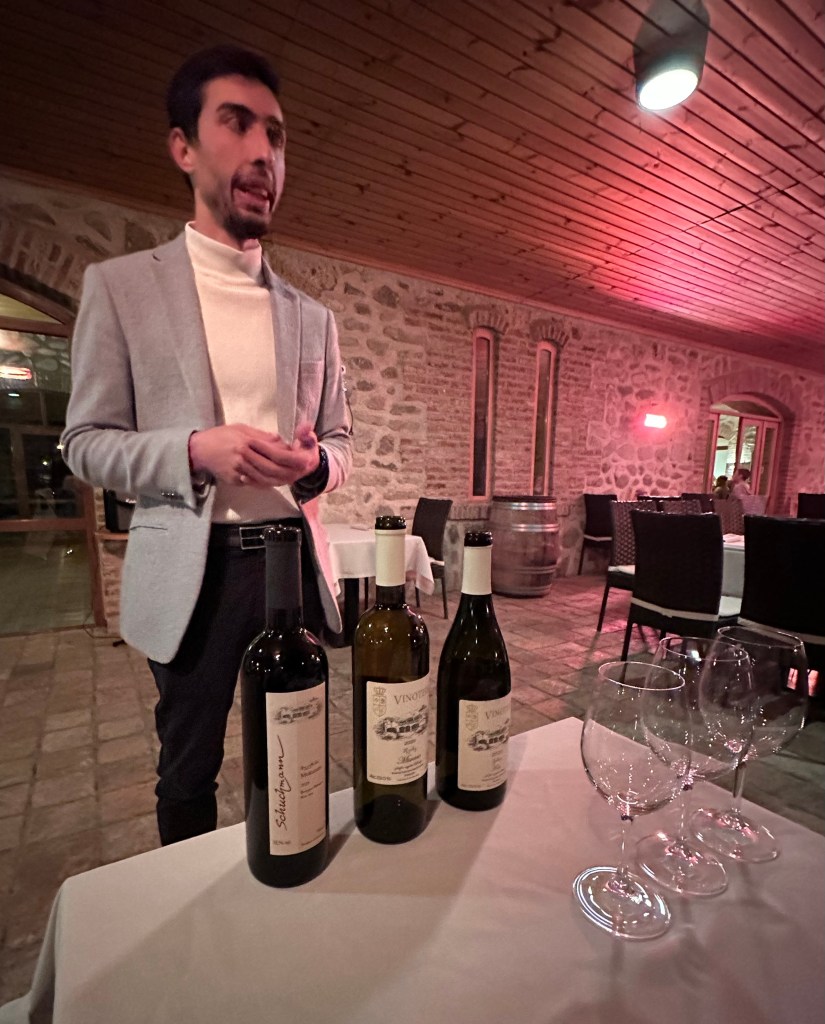
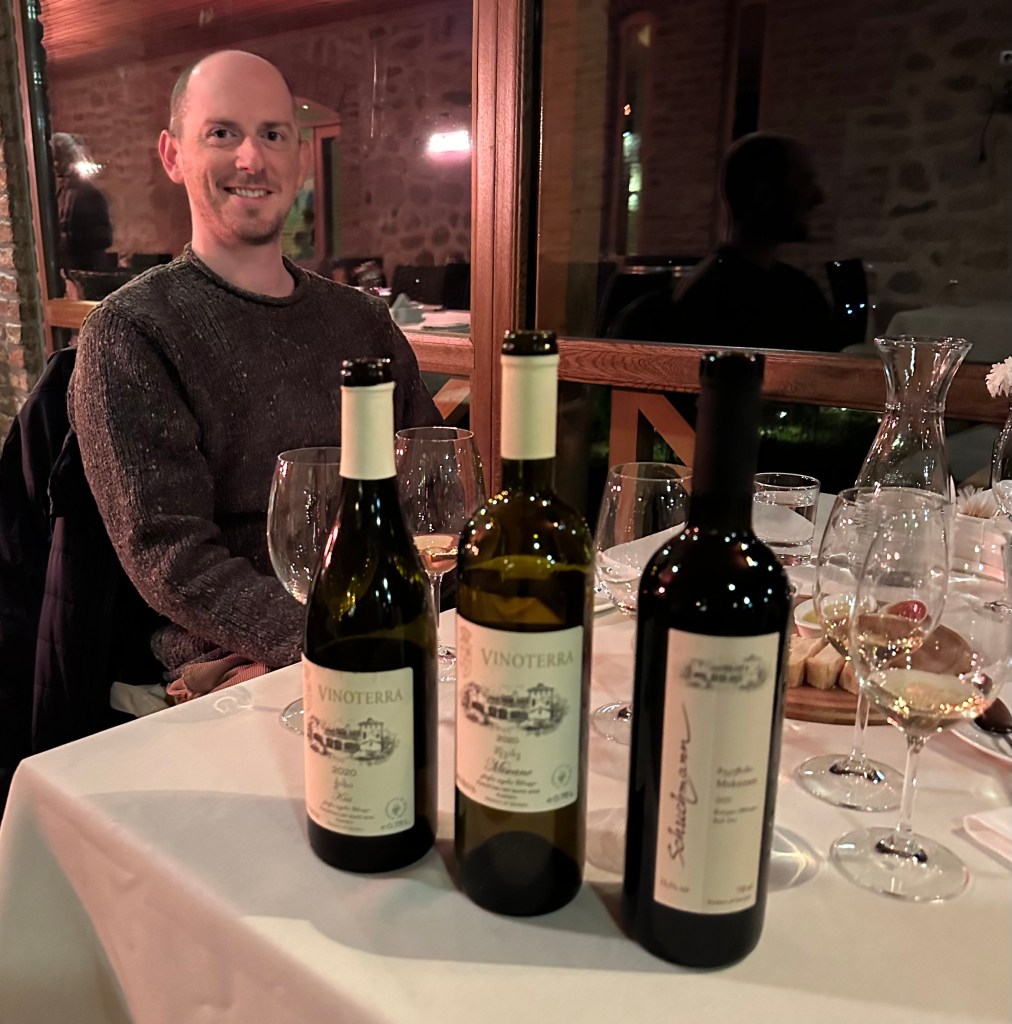
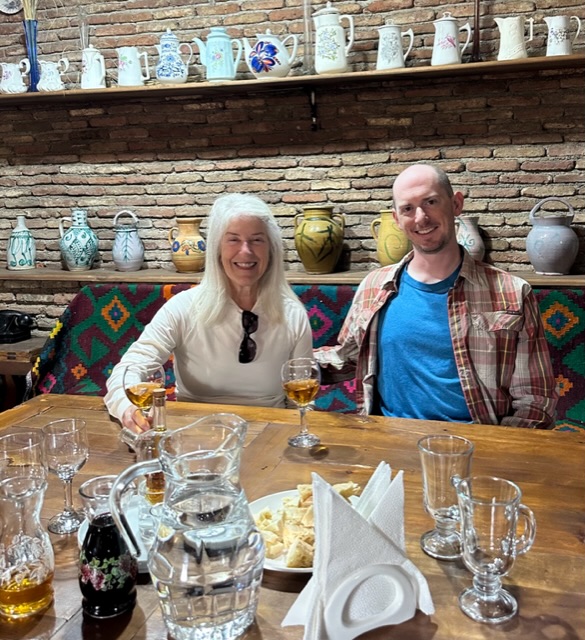
Wine tasting this evening.
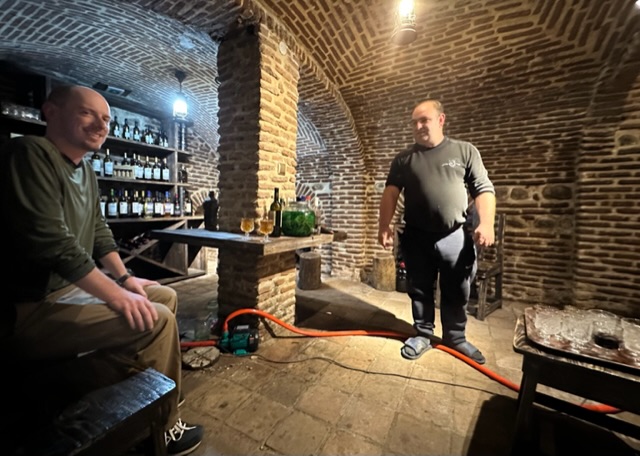
Here is what I learned. The most well known white wine grape in Georgia is rkatsiteli, which produces a crisp, amber wine. The most famous red wine grape is Saperavi, a dark-skinned grape and one of the world’s few with a red interior. In Georgia, at least in Sighnaghi, wine is white or black. Even the amber rkatsiteli is called a white wine. Red wines are black.
In Georgia, wine is both an economic asset and source of identity and national pride. You find it everywhere: in designer glassware or homespun pitchers at formal affairs, in plastic water bottles! and always at casual gatherings. You even find it being sold by street vendors. I can vouch for this.
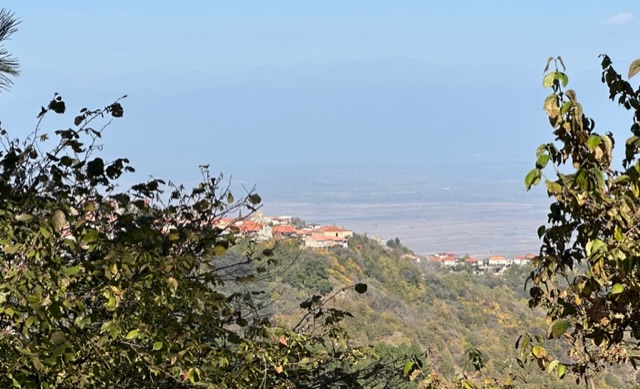
Sighnaghi overlooks Alazani Valley and faces the Caucasus mountains. It is these mountains (I think I got this correct) that help to create a tropical(ish) climate in the eastern part of the country, Kakheti, where most commercial wine production takes place. The extent of my Georgian wine knowledge. All of the wine—at least that we had, is very good.
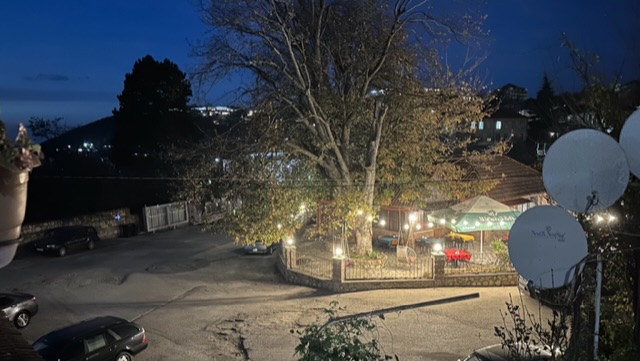
PS wild dogs everywhere. And up all night!
Tomorrow, a couple of wineries.
 Dream to Travel from NCM