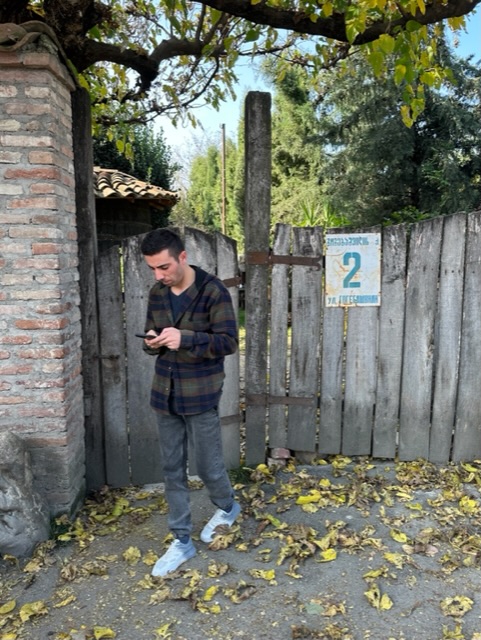
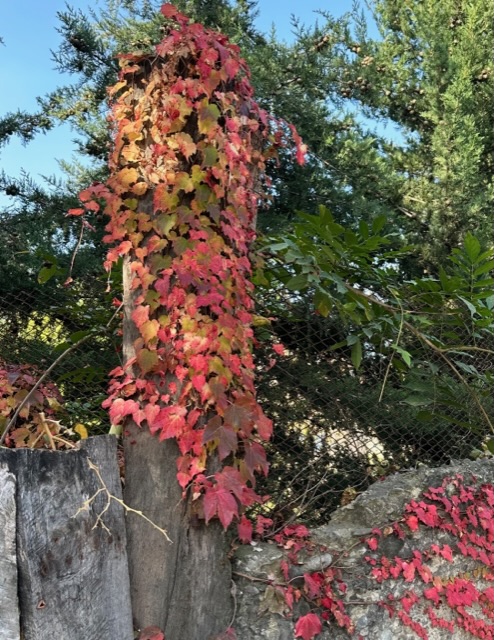
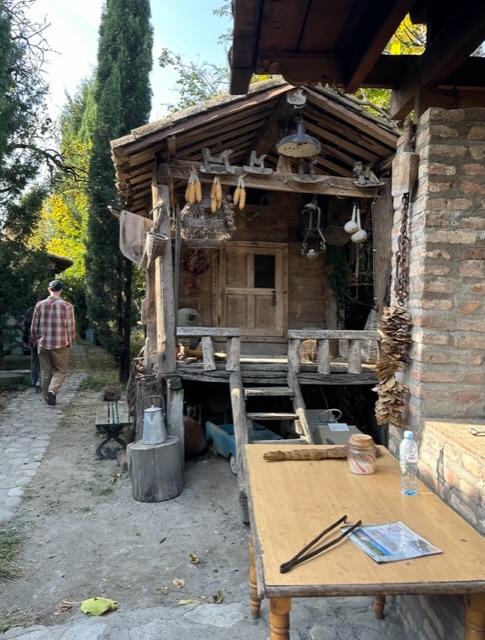
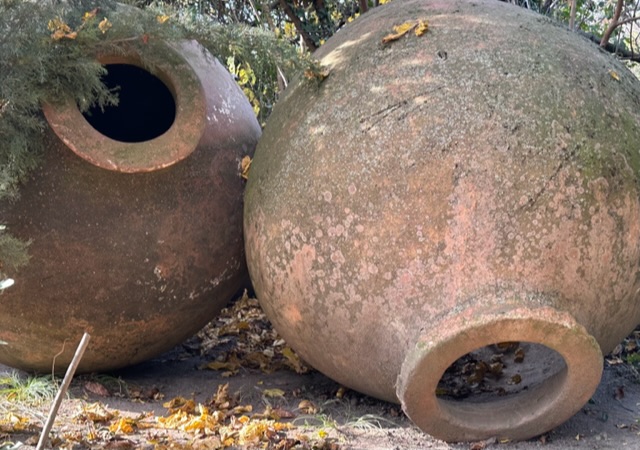
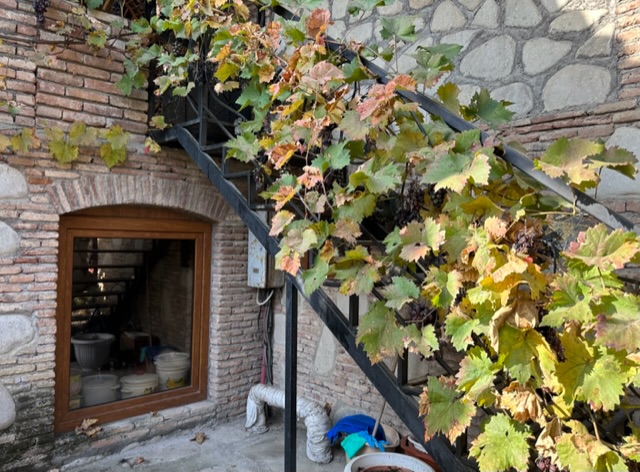
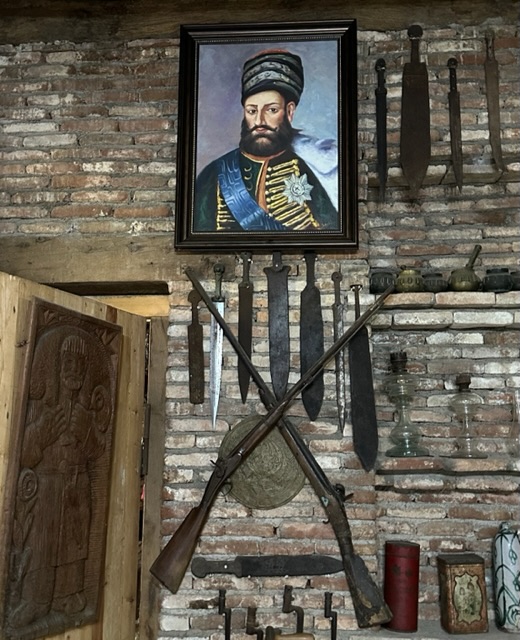
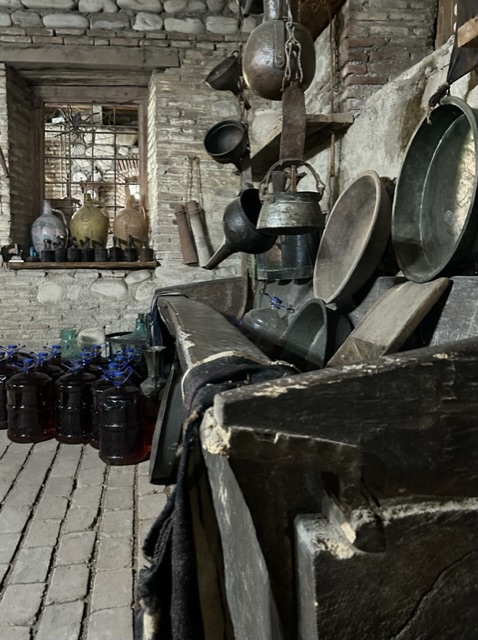
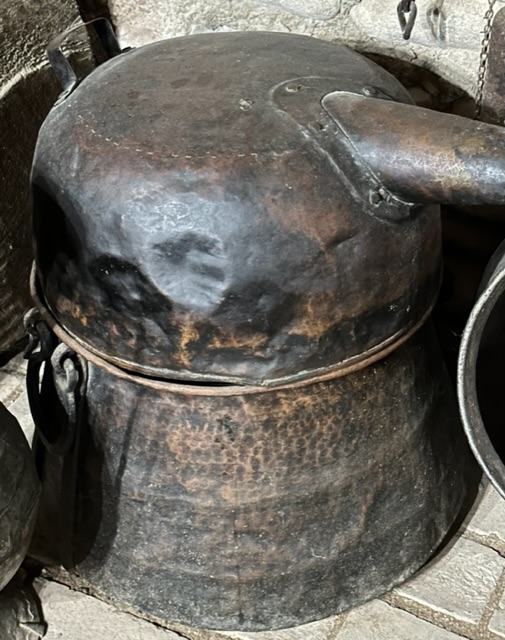
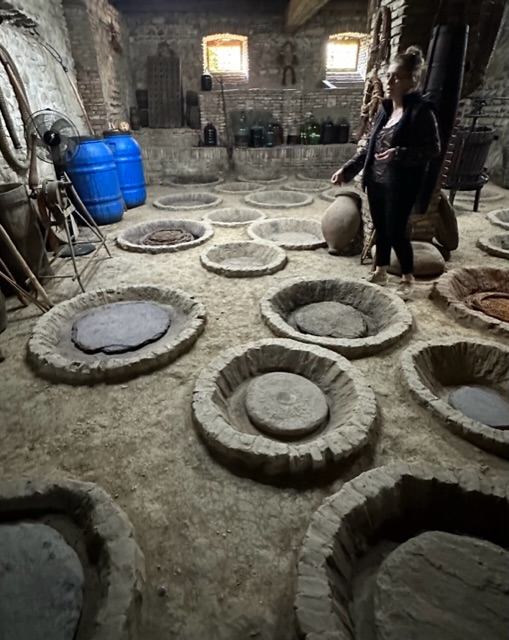
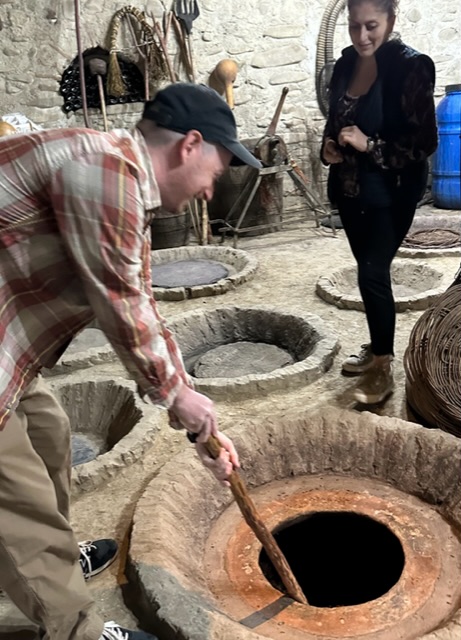
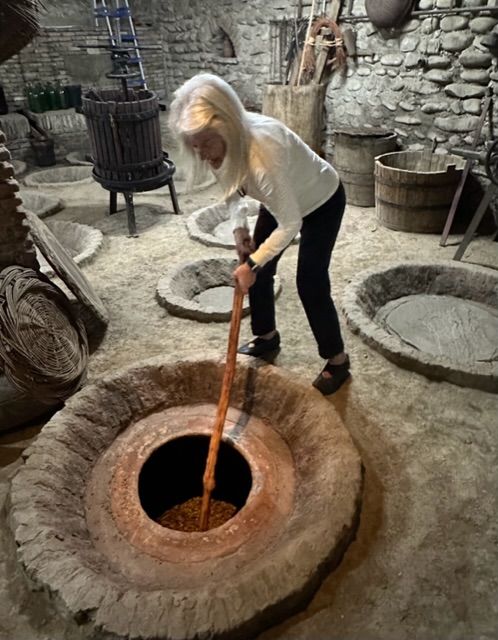
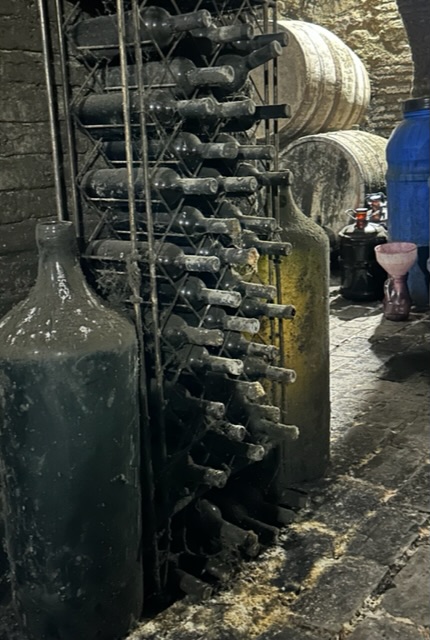
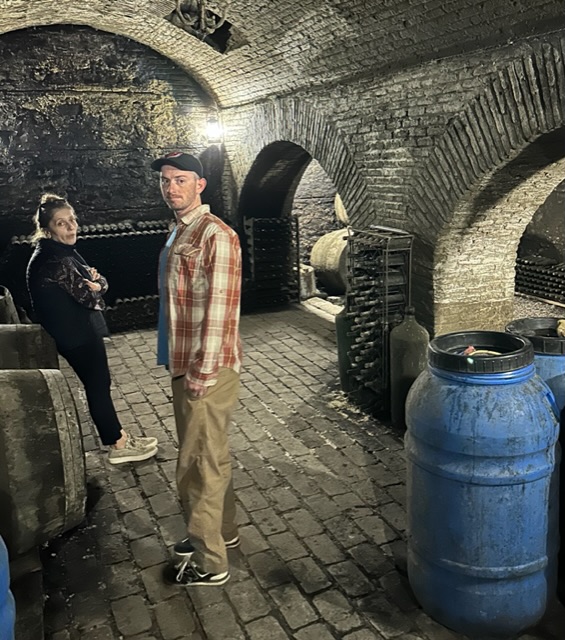
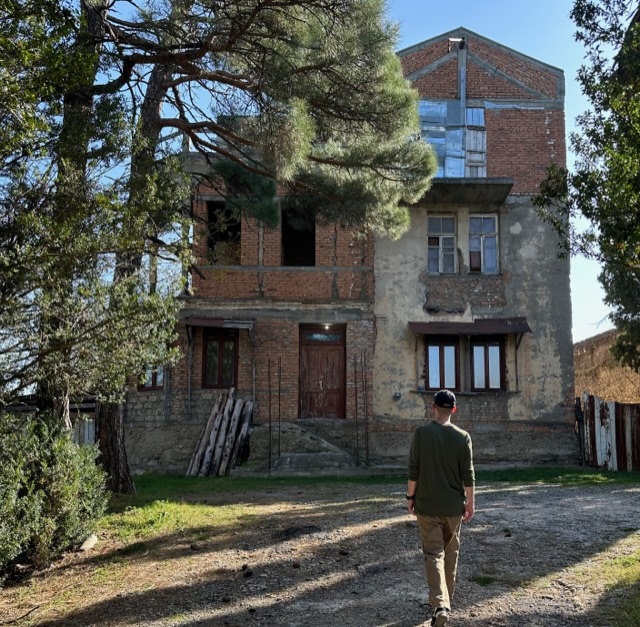
Our first winery. A small, family run winery. Nikolai, affectionately called Coco, was our driver and de facto guide for the day.The landscape is beautiful this time of year. It is autumn in the Kakheti region too.Mike strolling around the property.Qvevri.The harvest is complete. These grapes are for the birds. Here we were introduced to the ancient Georgian wine making process.The people of Kakheti love Erekle II. Heraclius (Erekle) II, King of Kartli and Kakheti, was born in 1720, in Telavi. During his reign he achieved many victories and became a legend. He first participated in a battle at the age of 15, and appeared to be a great warrior despite of being not tall or too athletic, which is why the people lovingly referred to him as “The Little Kakhetian”. In Georgia, thrown into chaos by conquest, there had not been a Christian king on the throne of Kartli since 1632, about a century before, when, on the first day of October in 1745, Erekle’s father, Teimuraz II, was crowned King of Kartli in Svetitskhoveli. Erekle II was proclaimed King of Kakheti. And the love affair began.Many traditional winemaking tools are still in use today here in Georgia. Wooden pitchforks, gourds, slabs of cherry bark and other tools are still in use when it comes to winemaking using qvevris. Check out this antique grape press.Chacha pot.Qvevri room. The ones with wicker tops are in the fermentation process and need to be stirred every few days.
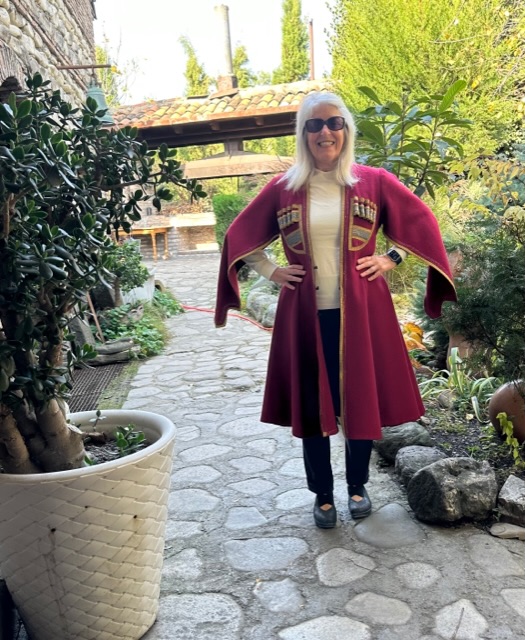
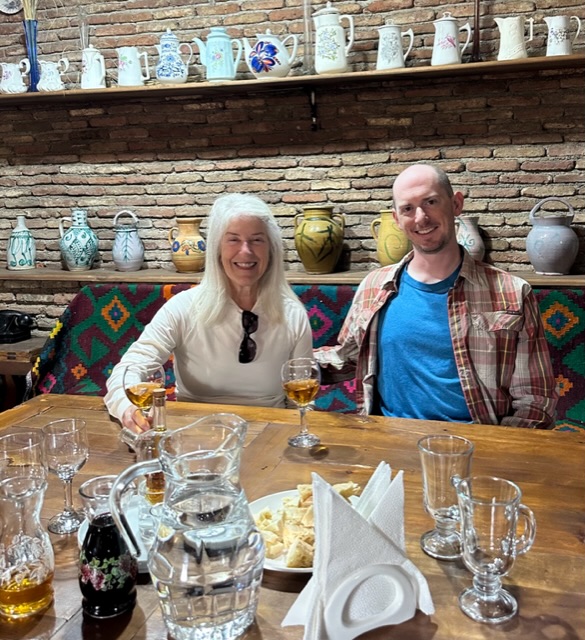
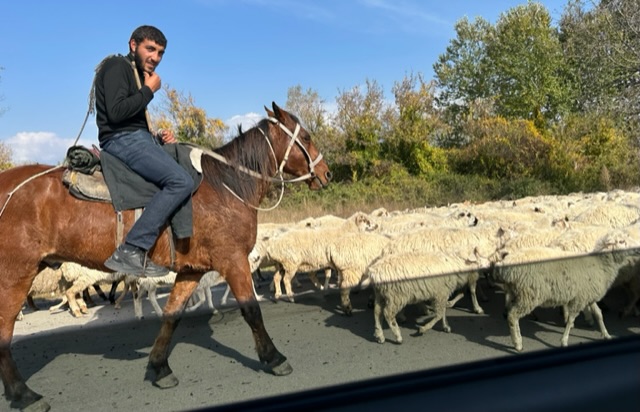
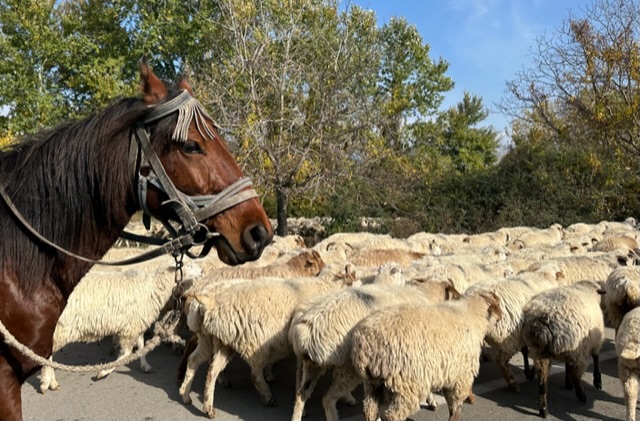
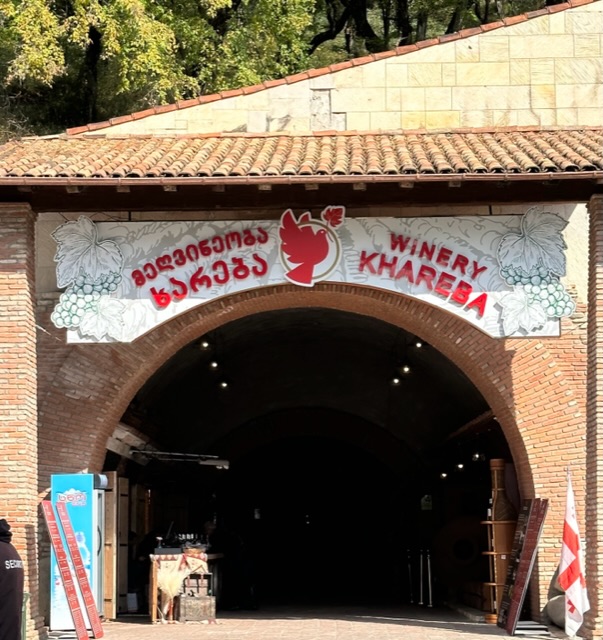
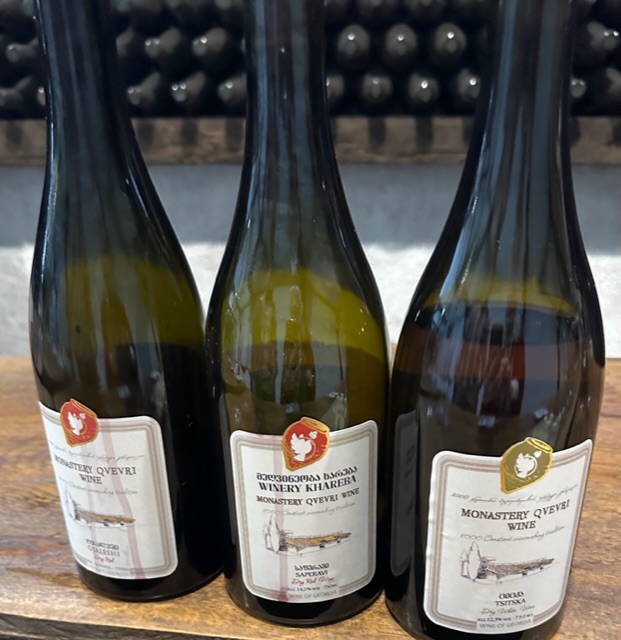
I’m a honorary Georgian.Mike and I enjoying our first tasting. Rkatsiteli white; saperavi, red/black with cheese and bread. In the lovely decanter was their homemade brandy (amber color) and chacha (clear).On our way to the second winery. Sheep herding. It’s a real thing in Georgia.Khareba Winery. An award winning winery about 40 minutes from Sighnaghi. Three of their award winning wines. Two were blends. Monastery qvevri wine. All delicious!
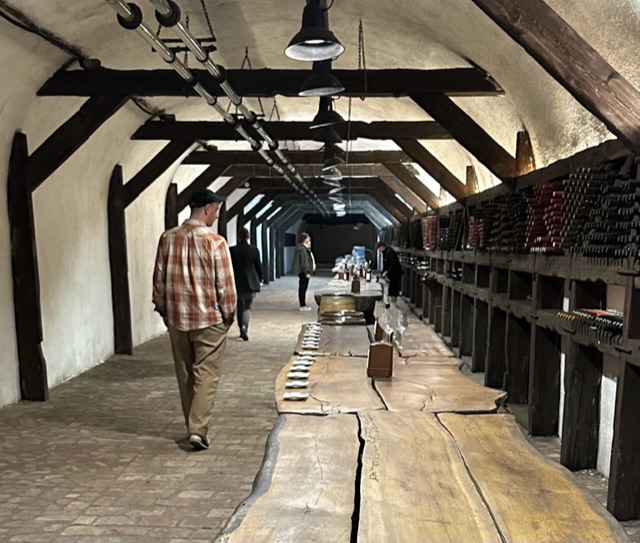
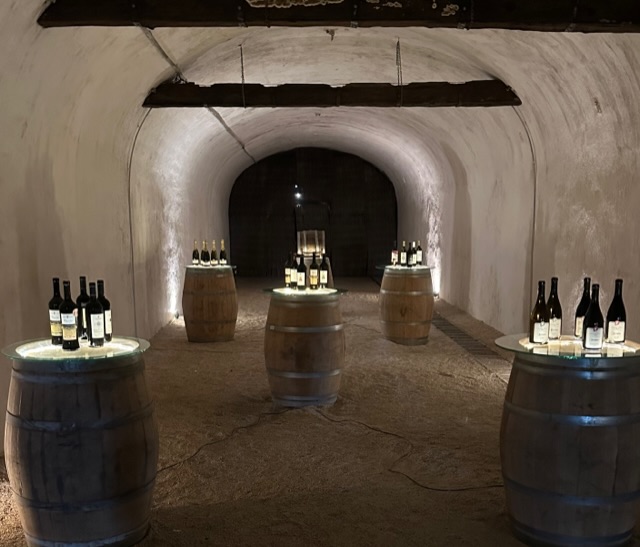
Kvareli Wine Cave is built on the edge of Alazani Valley. The cave, carved into the Caucasus rock massif, was opened in 1962 specifically for the World Congress of Vine and Wine. Stunning.
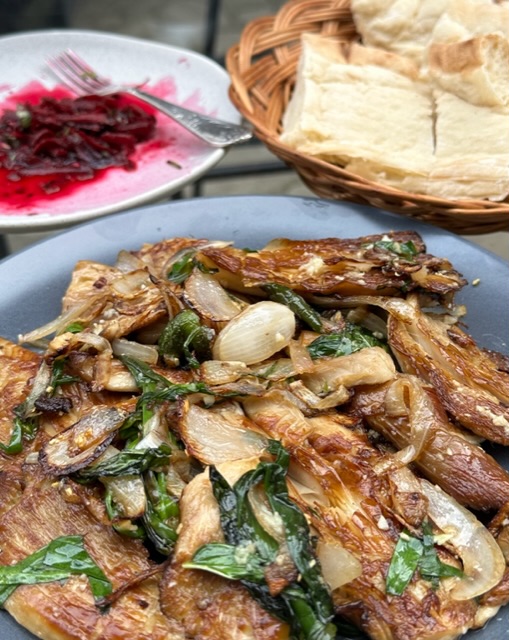
We loved the mushrooms so much, we decided to end our day back at Pheasant’s Tears for more and this time accompanied them with a beet salad.
Back to Tbilisi late. Mike has to work tomorrow—somebody’s gotta work. 😉
Nearly three-quarters of Georgia’s wine grapes are grown in the Kakheti region, including Sighnaghi, Telavi, and Tsinandali. Though there are many types of wine to try throughout the region, Rkatsiteli, a white grape, is the most celebrated — known for its granny smith apple taste and subtle spice. The main city of Kakheti is Telavi, facing the mighty Tsiv-Gombori Range, and the city itself boasts a history that features some of the region’s most important sites. First settled in the Paleolithic era, Sighnaghi holds the distinction of being one of Georgia’s smallest and most picturesque towns, complete with cobblestone streets and an outlook over the Alazani Valley.
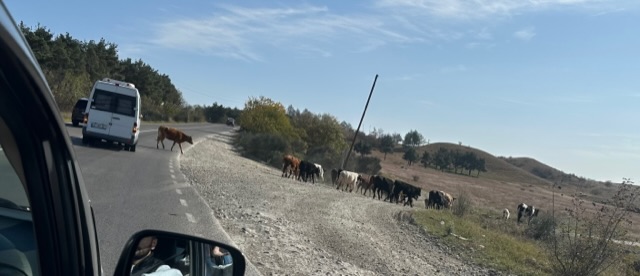
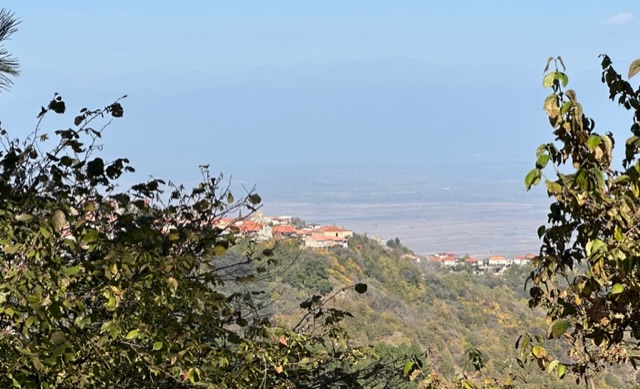
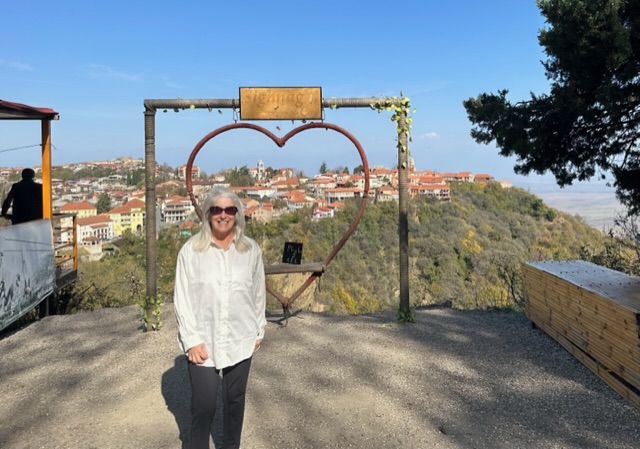
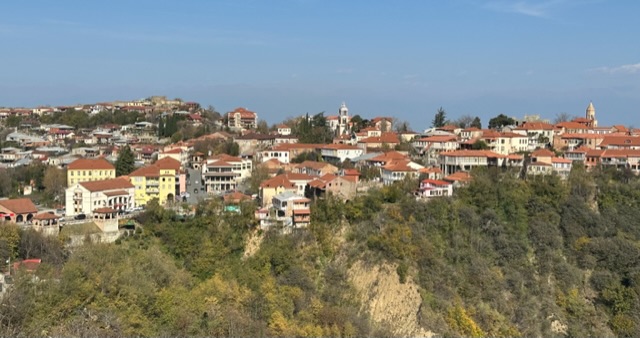
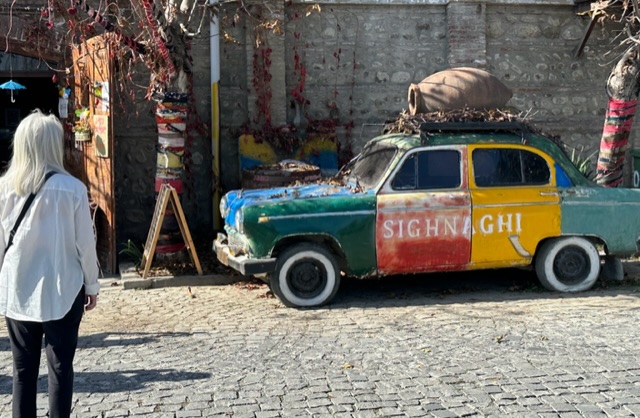
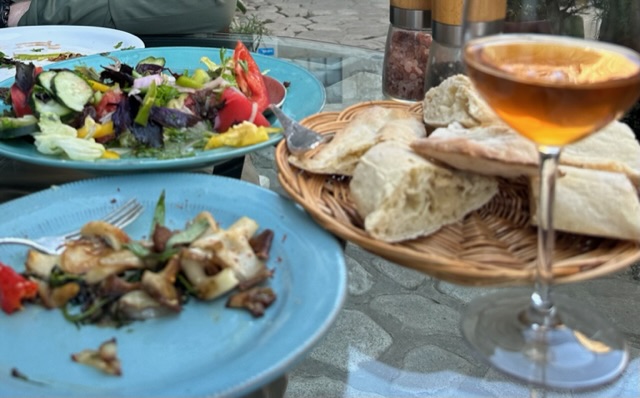
Cow crossing. And the sign warned us. : )First glimpse of Sighnaghi. It is only about 90 minutes from Tbilisi.Sighnaghi is the city of love. The heart proves it. And there is a wedding house where you can get married any day of the week, anytime of the day.Almost there.We made it. Just about the first thing we saw, this WWII memorial. Approximately 300,000 Georgians lost their lives in WWII.Stretching our legs. Lots of hills!We’re still walking . . .Lunch, we ate at Pheasant’s Tears. Georgian salad, wild mushroom dish, bread and amber, Rkatsiteli wine. The wild mushroom dish was delicious! I’ll be raving about the mushrooms for years. (For those who know and appreciate my love for mushrooms, think the Four Seasons and Suraya.) At Pheasant’s Tears they adapt the menu to what the forests, rivers and meadows are currently offering. Mike and I watched an Anthony Bourdain segment from this restaurant when we found out Georgia was his next assignment. Who knew at the time that we would be able to eat here too. Anthony gave it a thumbs up and it didn’t disappoint.
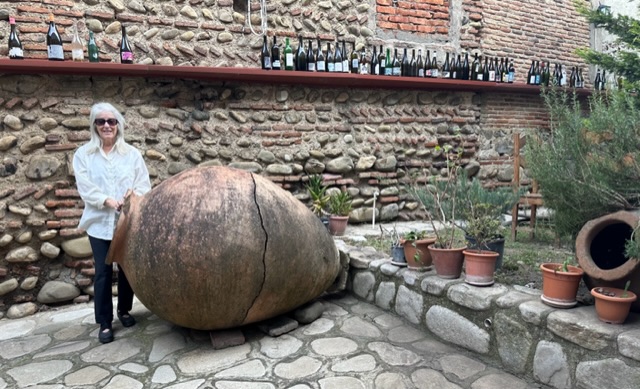
All of the wines at Pheasant’s Tears are fermented and aged in qvevri, a unique Georgian vessel used to ferment and store wine. This method of fermenting wine dates back to 6000 BC. Qvevriare clay vessels lined with beeswax are completely buried under the ground where the temperature stays even throughout the year, allowing the wines to ferment in the natural coolness of the earth.
Qvevri.
Wine tasting this evening.
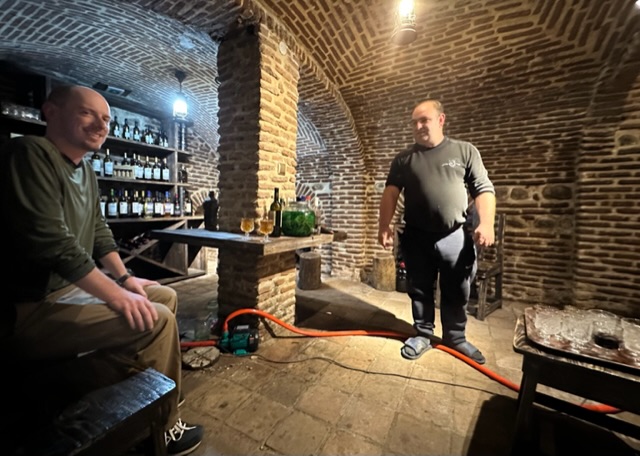
Wine tasting with Giorgi. Home made wine and chacha. The pours were very generous.
Here is what I learned. The most well known white wine grape in Georgia is rkatsiteli, which produces a crisp, amber wine. The most famous red wine grape is Saperavi, a dark-skinned grape and one of the world’s few with a red interior. In Georgia, at least in Sighnaghi, wine is white or black. Even the amber rkatsiteli is called a white wine. Red wines are black.
In Georgia, wine is both an economic asset and source of identity and national pride. You find it everywhere: in designer glassware or homespun pitchers at formal affairs, in plastic water bottles! and always at casual gatherings. You even find it being sold by street vendors. I can vouch for this.
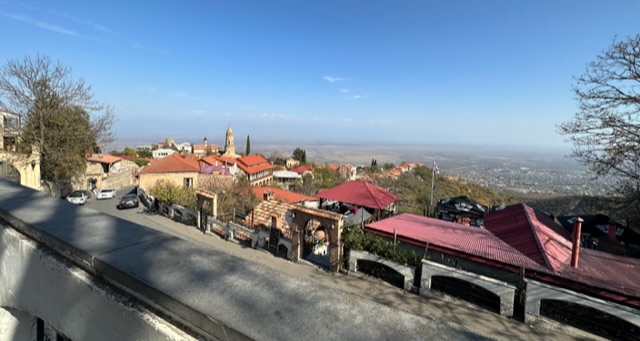
Sighnaghi overlooks Alazani Valley and faces the Caucasus mountains. It is these mountains (I think I got this correct) that help to create a tropical(ish) climate in the eastern part of the country, Kakheti, where most commercial wine production takes place. The extent of my Georgian wine knowledge. All of the wine—at least that we had, is very good.
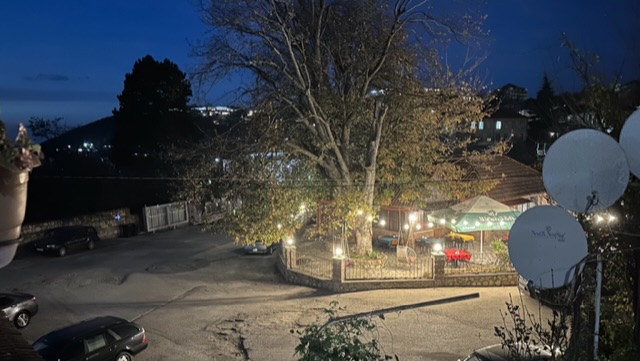
Evening view from our little balcony. I was finishing my wine from the generous wine tasting pours.
 Dream to Travel from NCM