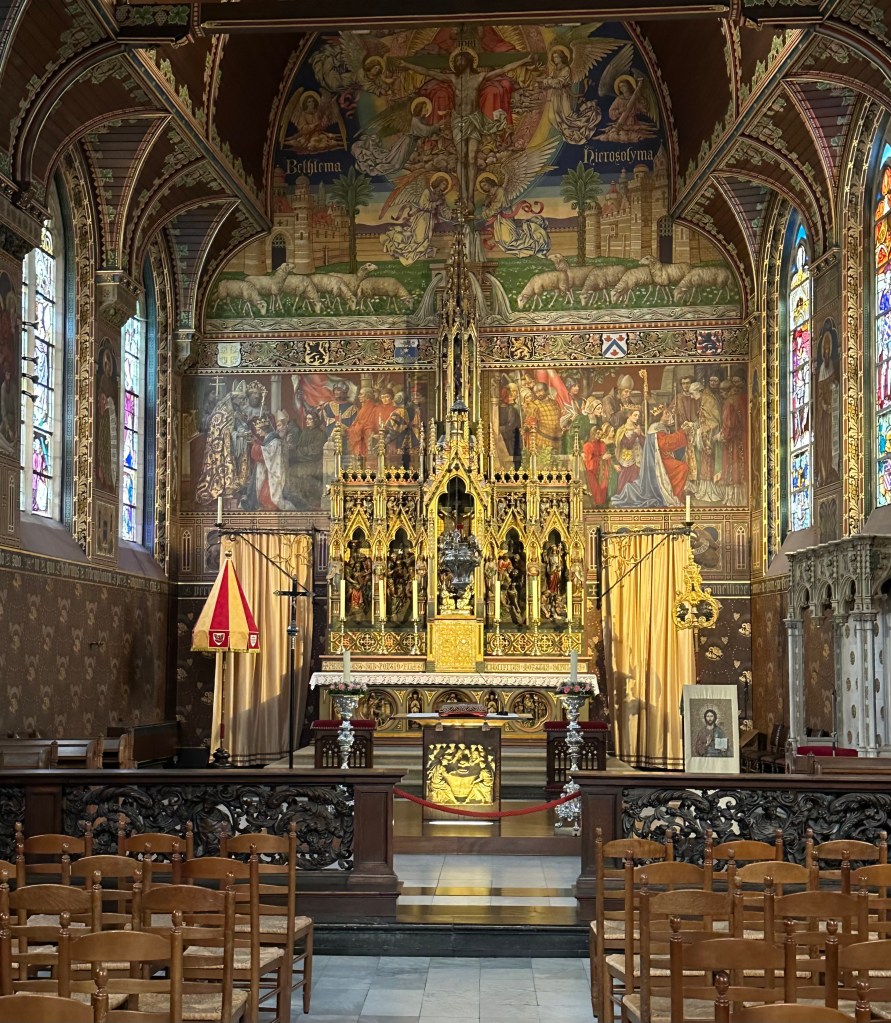
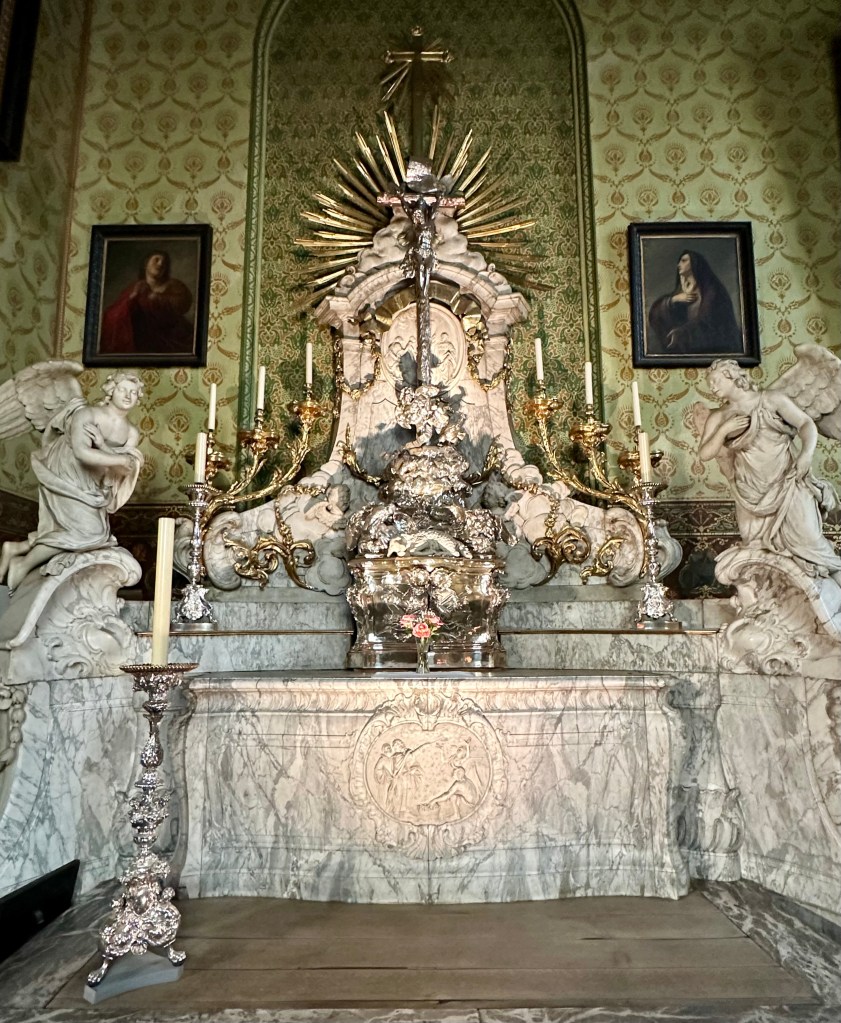
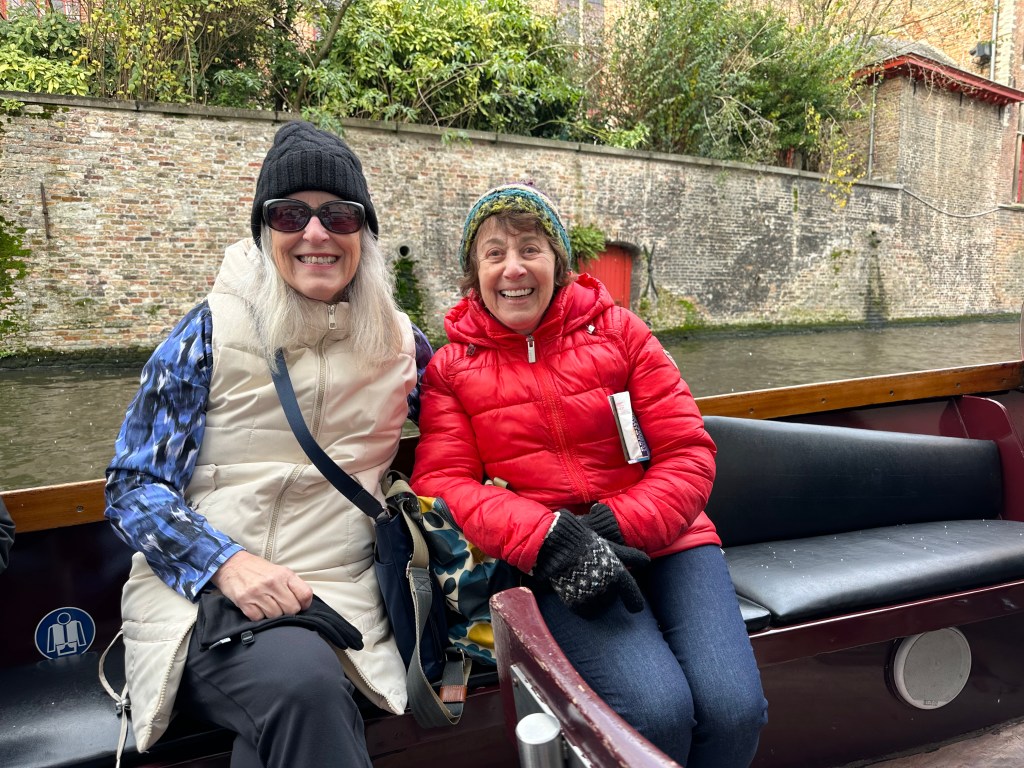
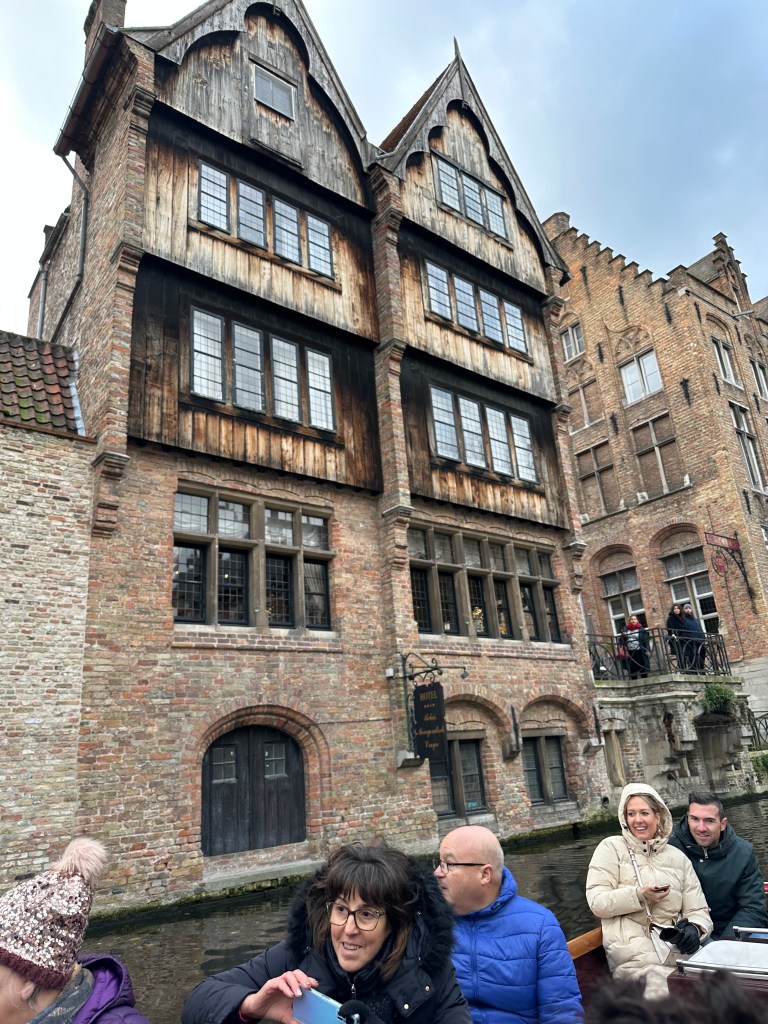
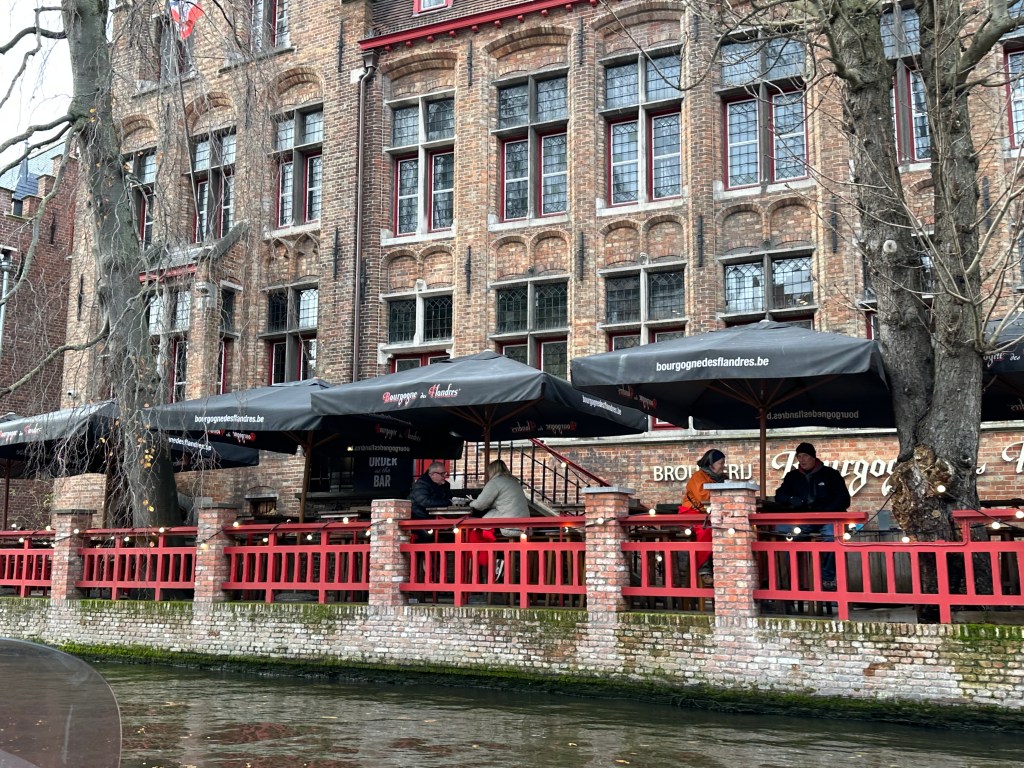
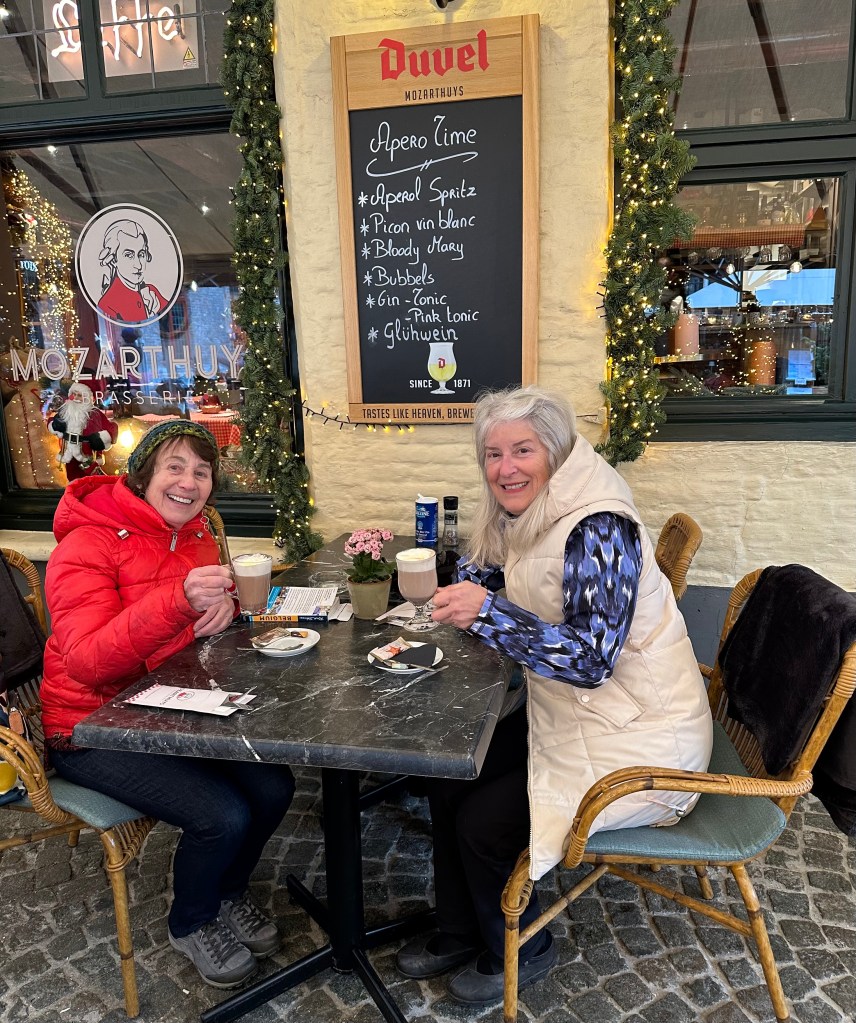
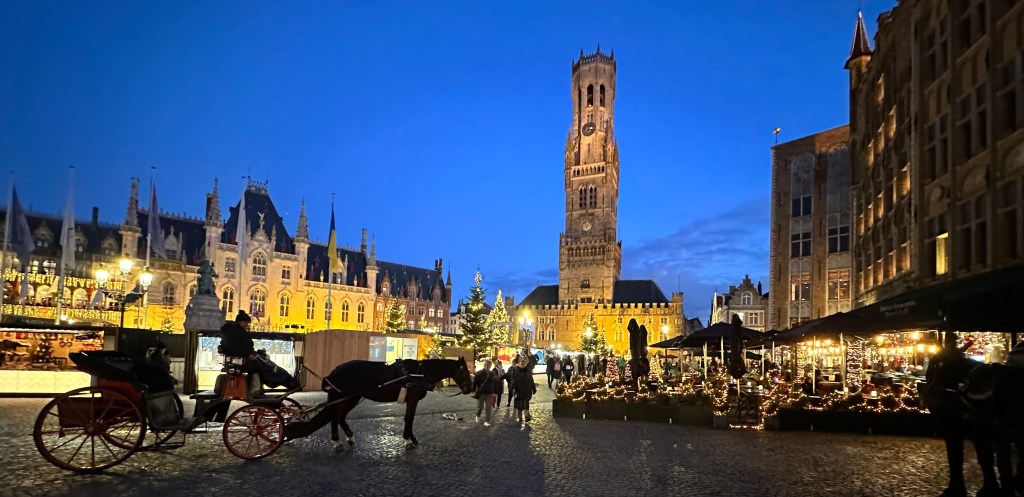
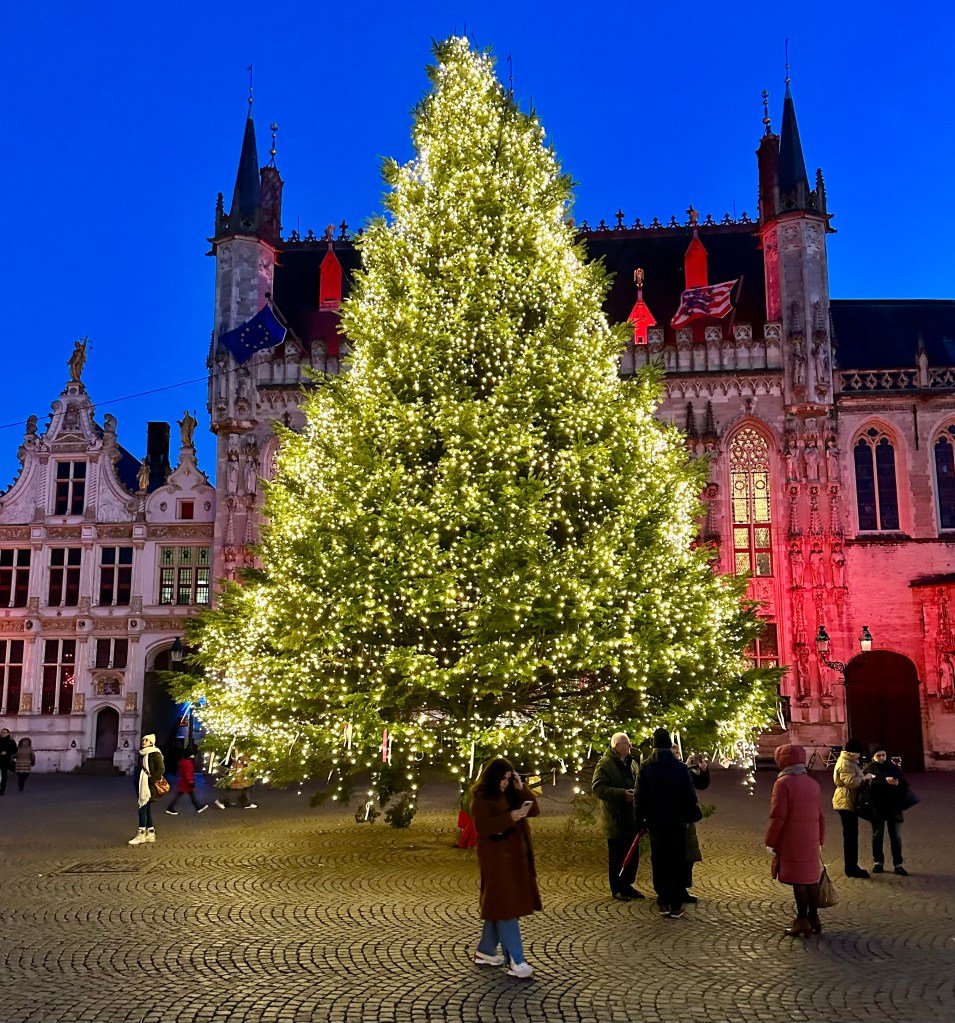
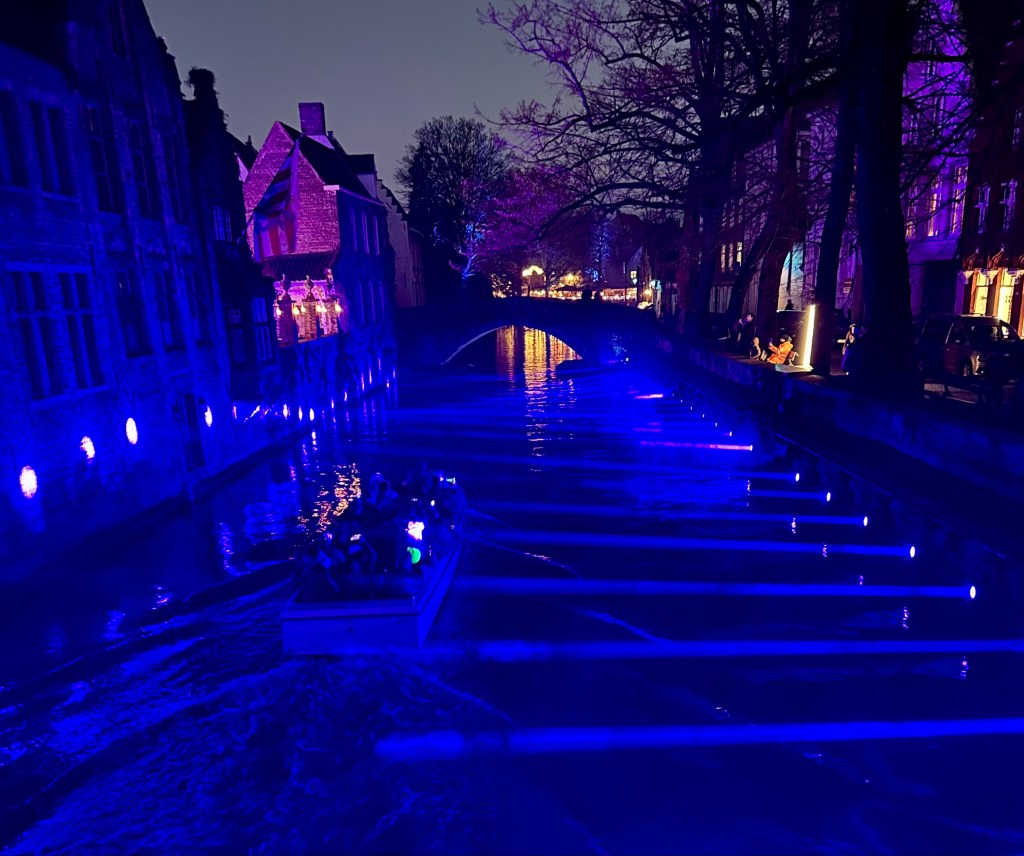
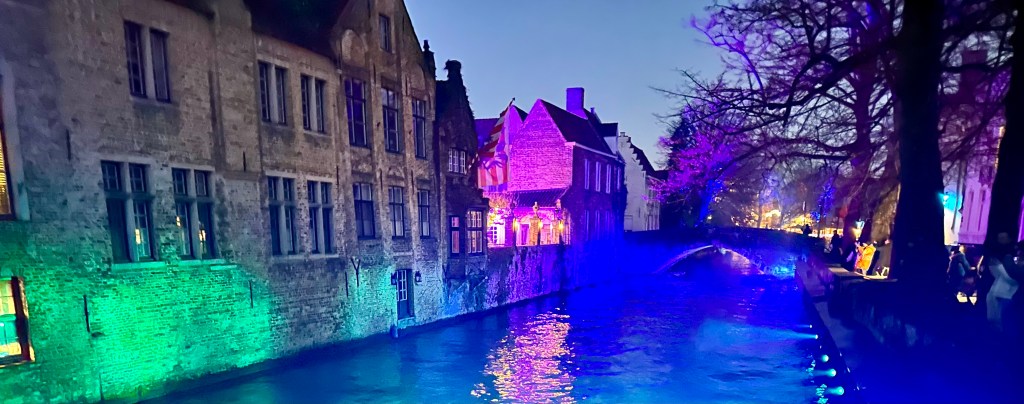
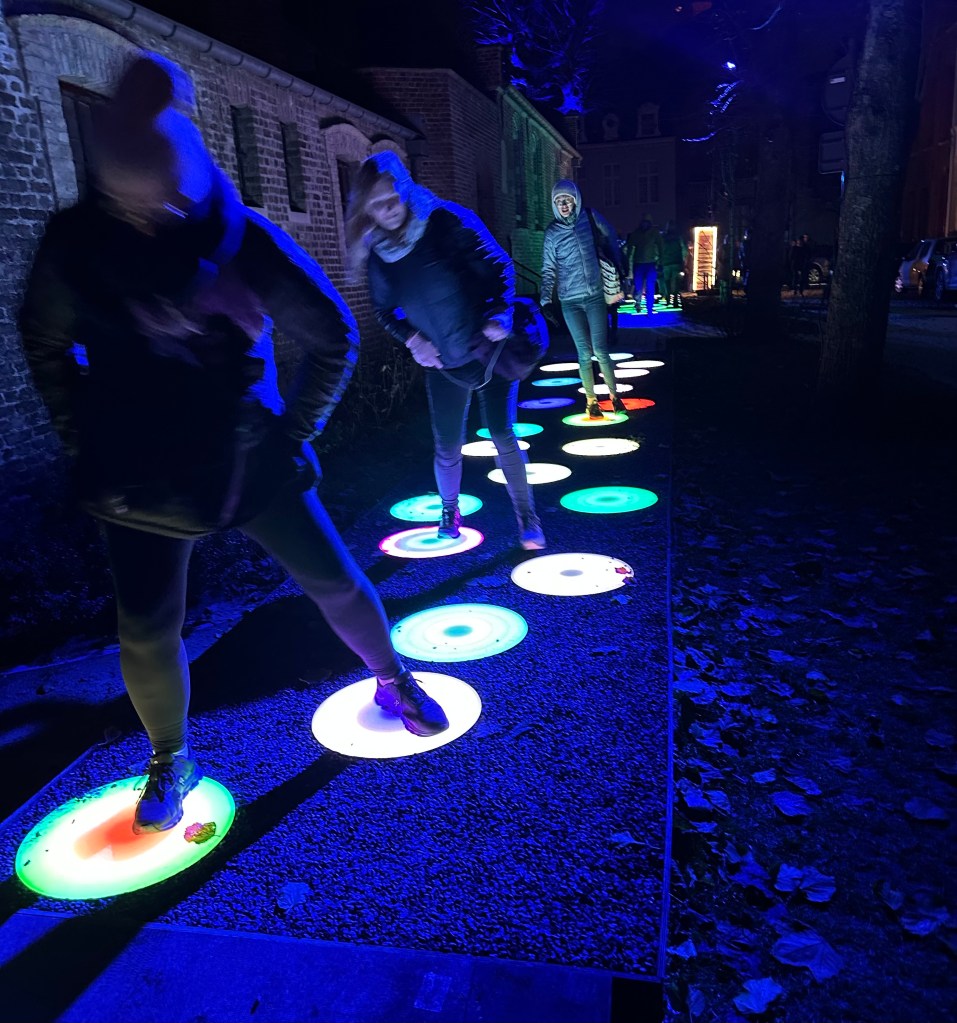
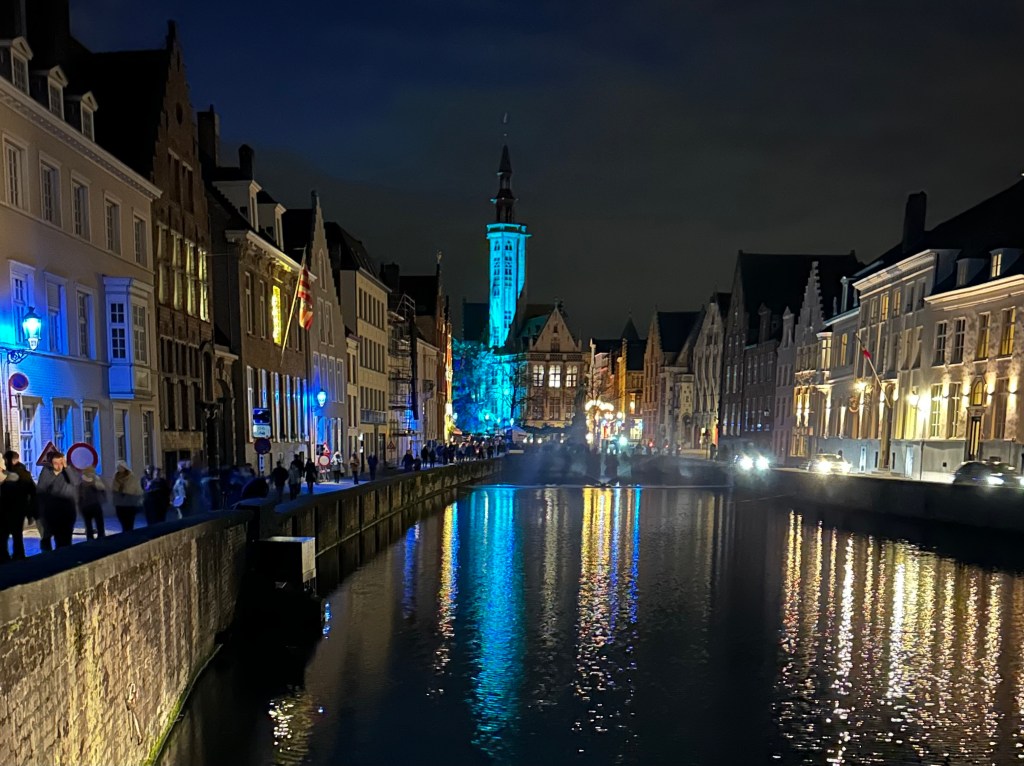
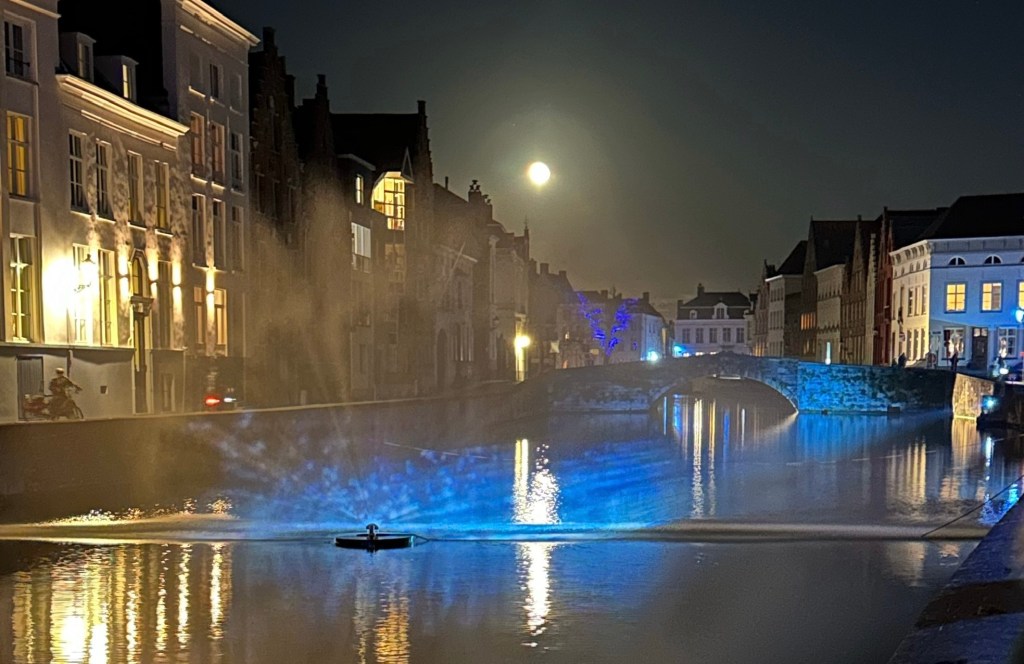
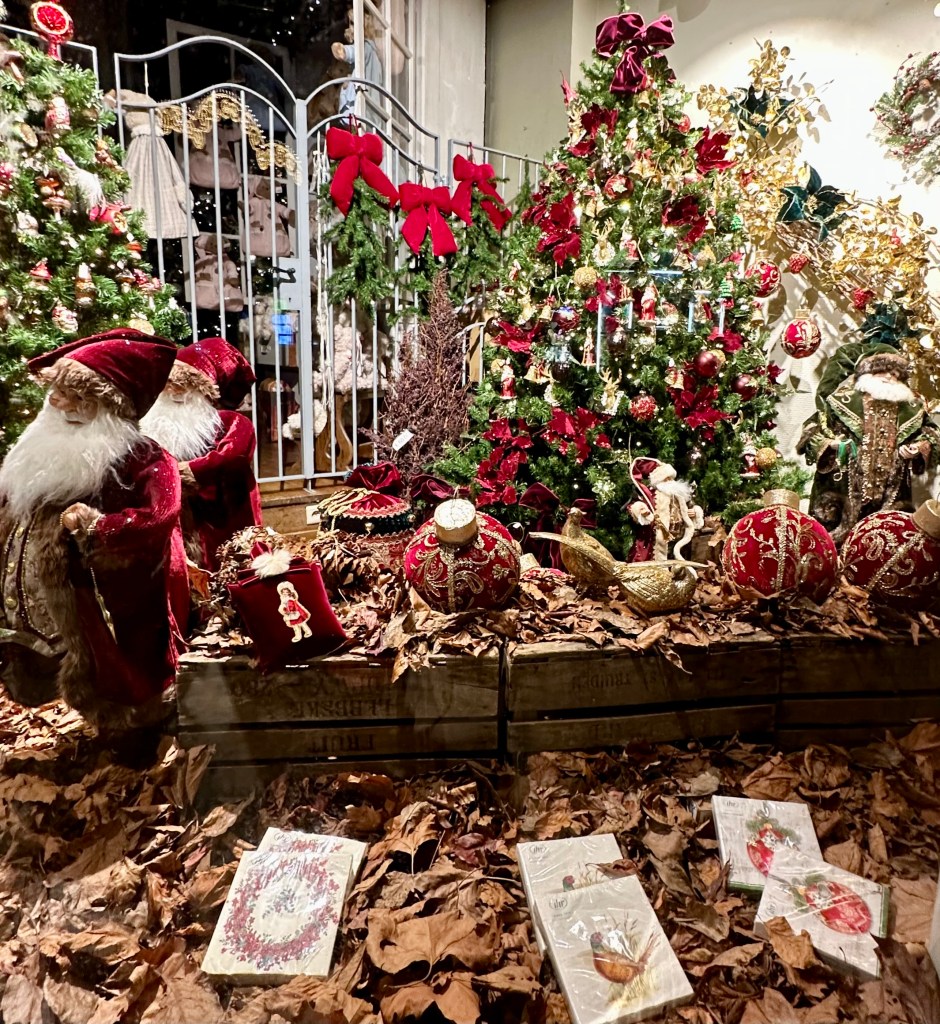
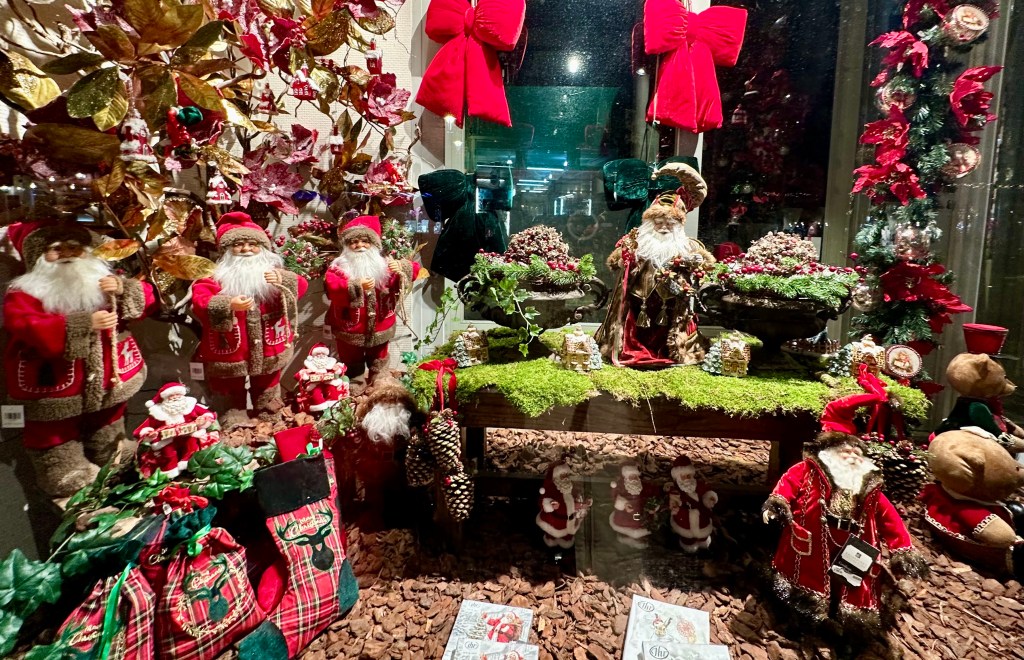
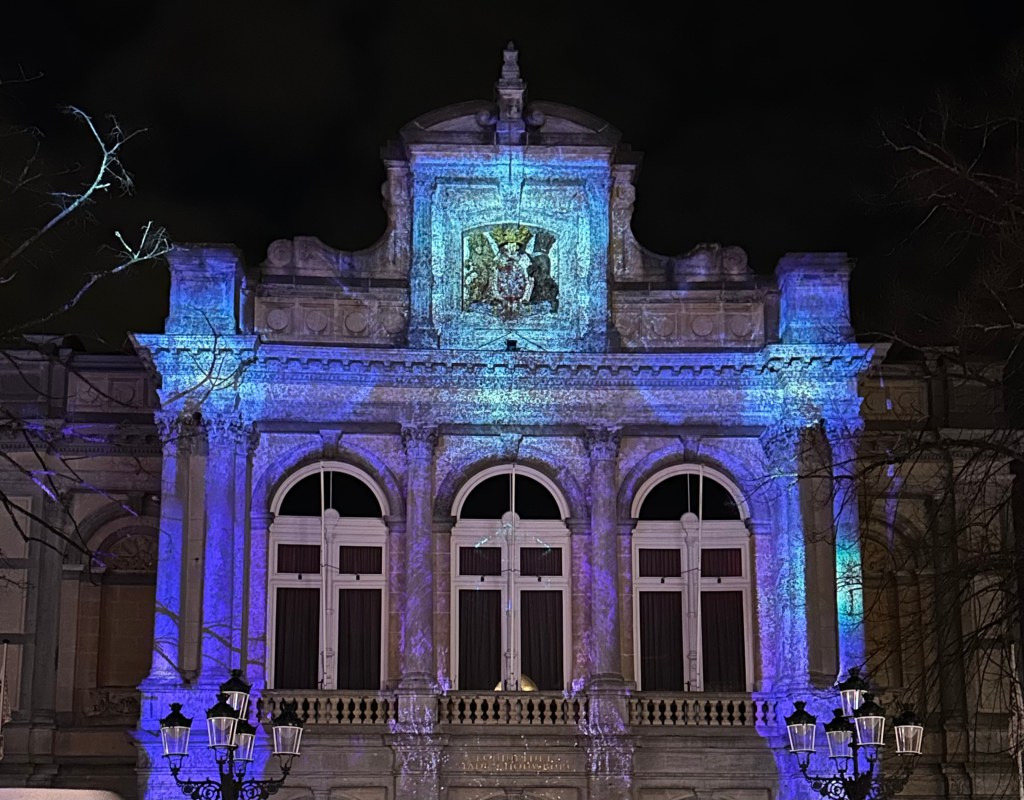
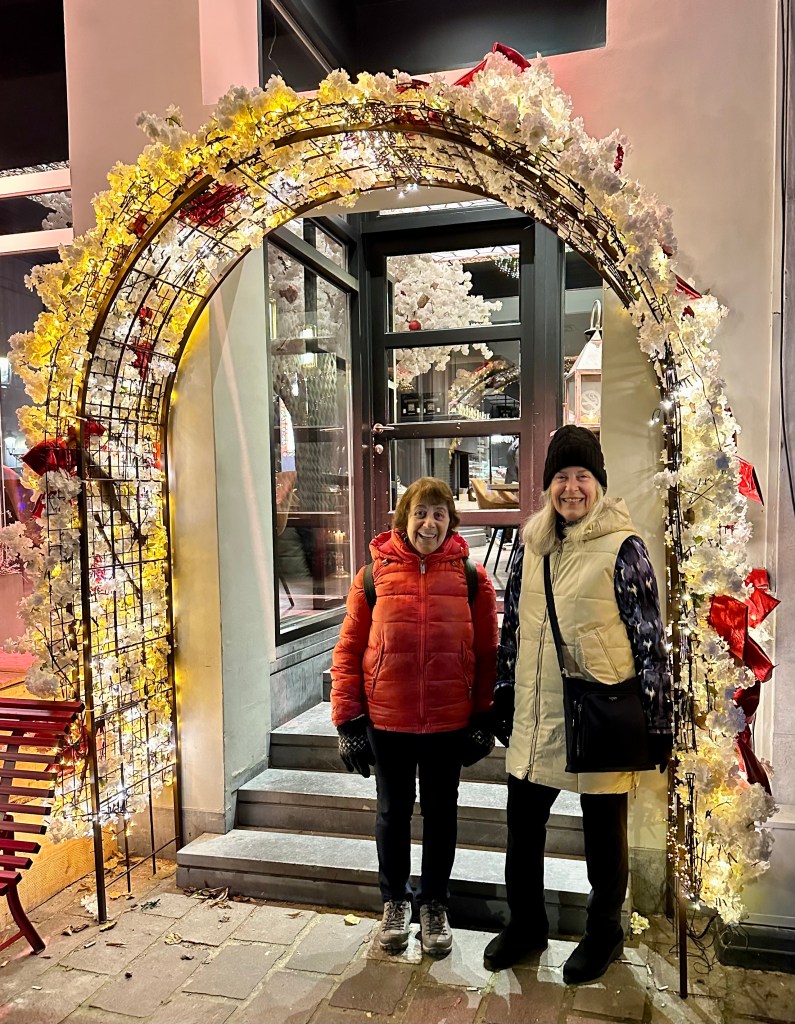
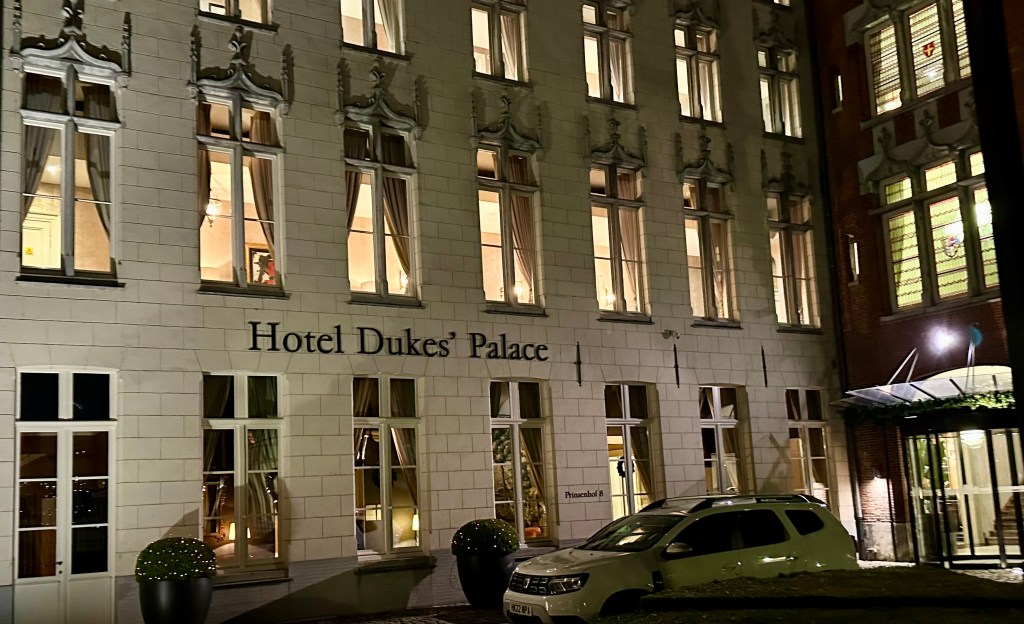
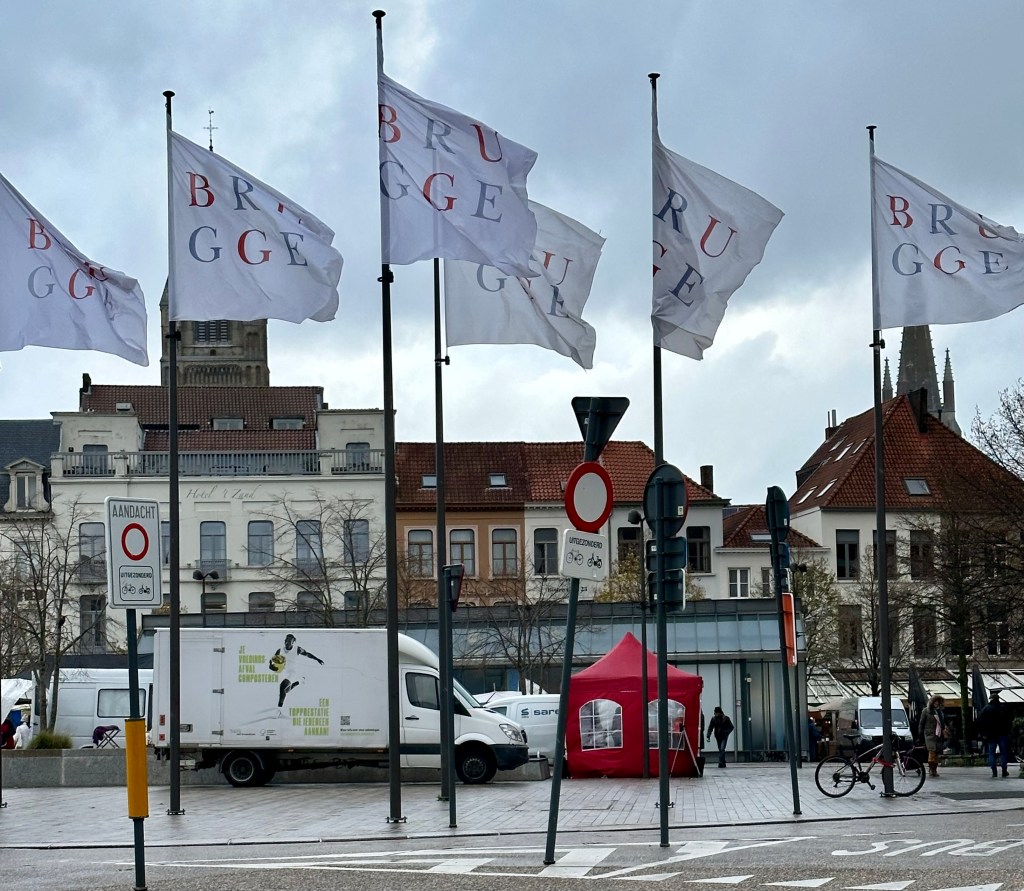
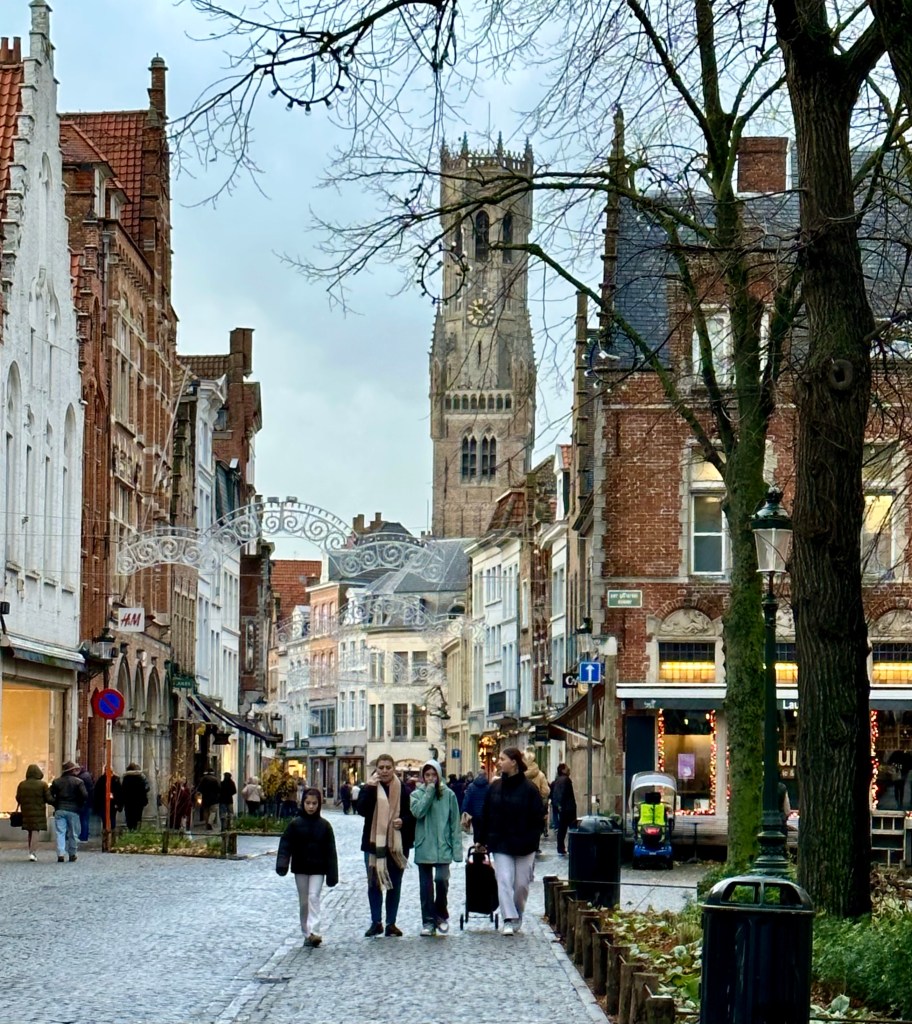
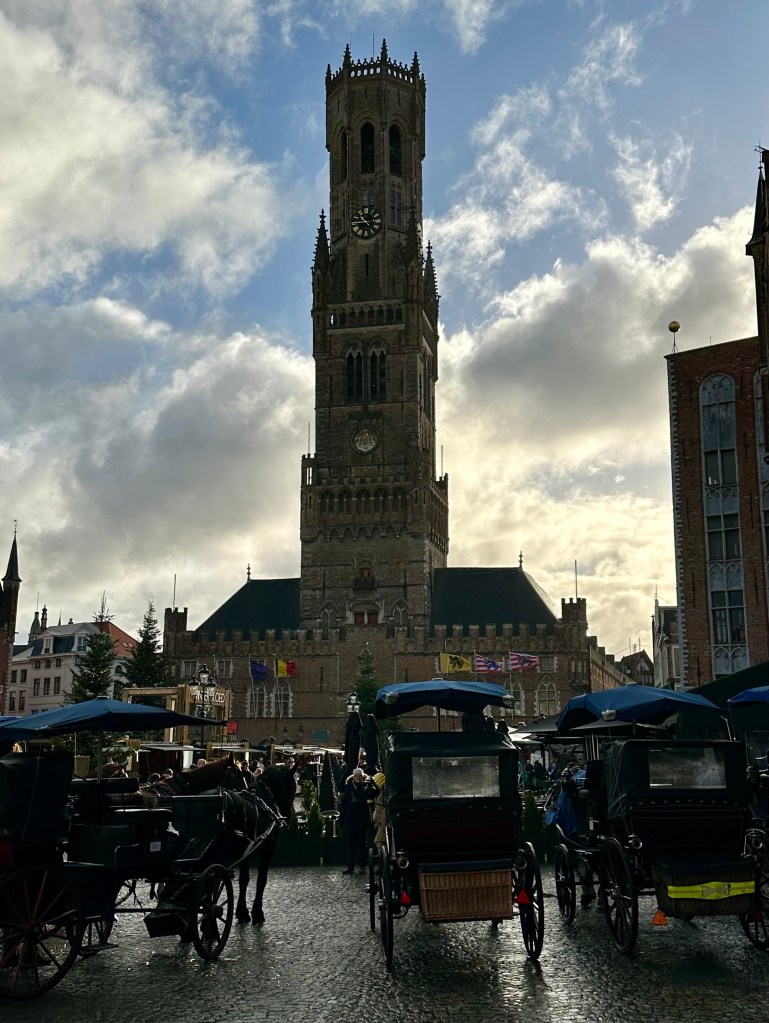
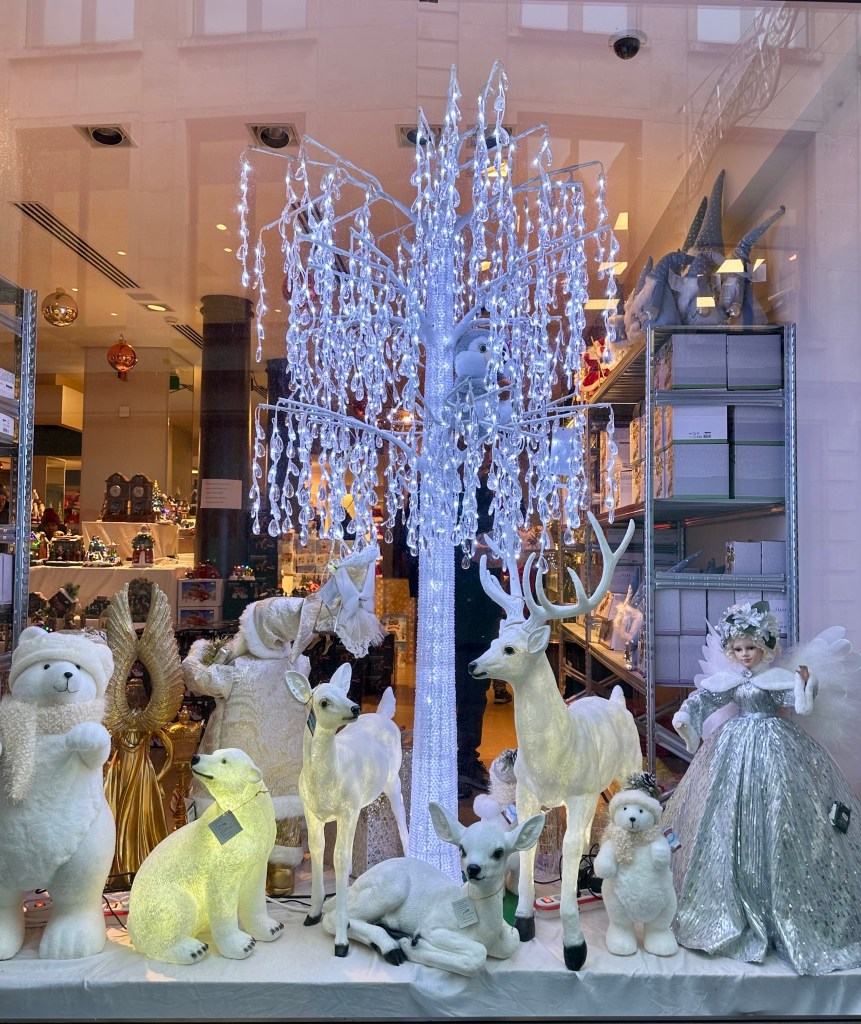
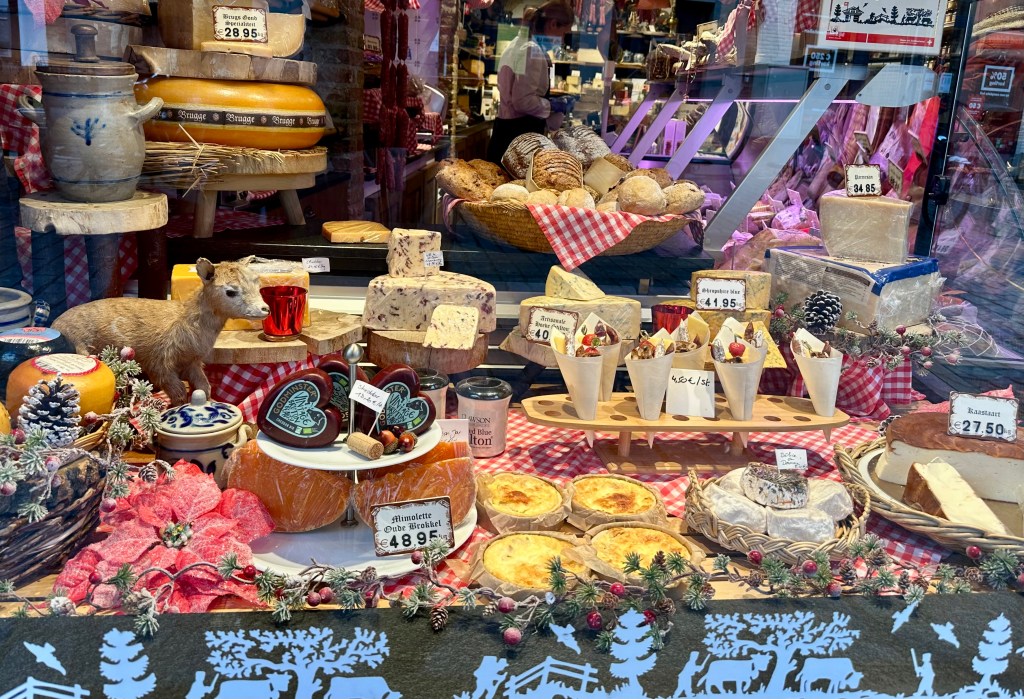
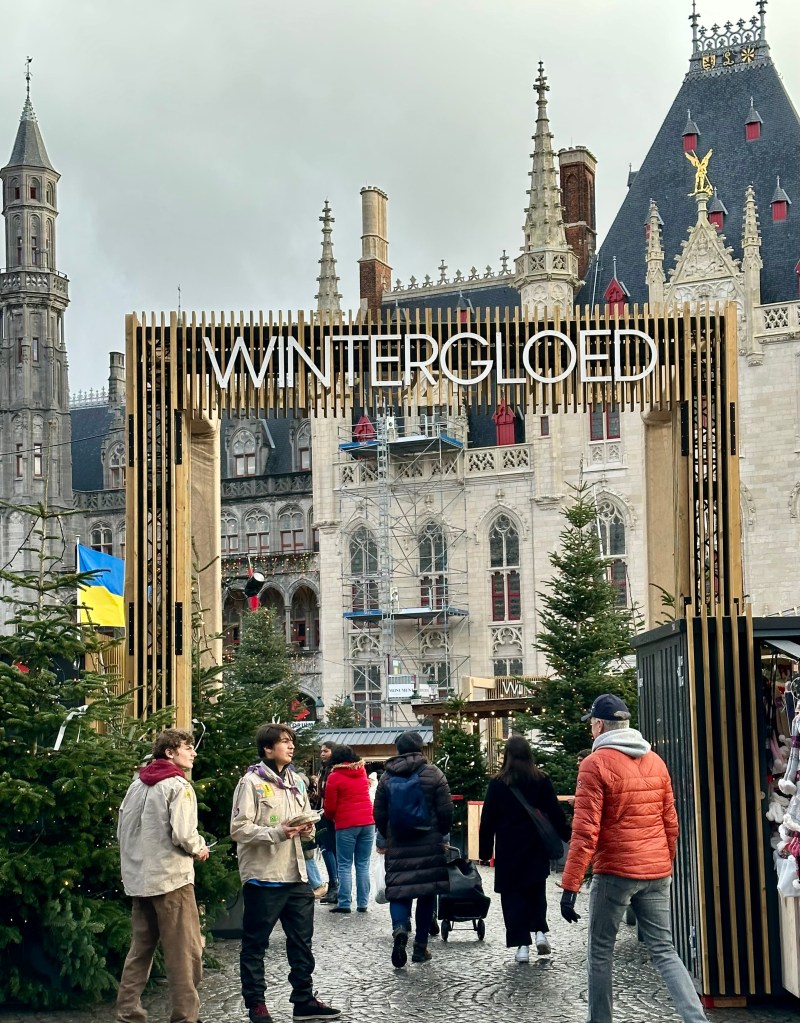
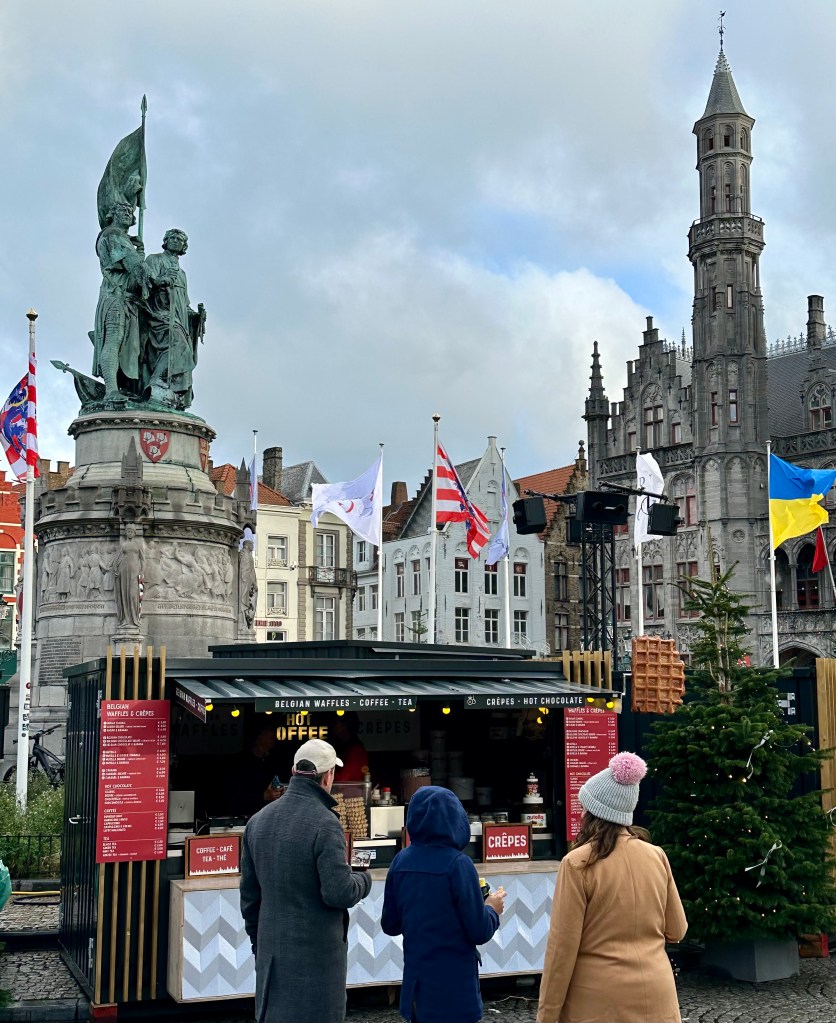
The Basilica of the Holy Blood.The basilica is best known as the repository of a venerated phial said to contain a cloth with the blood of Jesus Christ.Boat ride on the canal in Bruges. It started to snow!In Bruges hotel—from the movie. The luxurious 4-star Relais Bourgondisch Cruyce is the famous In Bruges movie hotel where Ray and Ken are forced to awkwardly share a small room together. The hotel is located by a postcard-perfect corner of Rozenhoedkaai, a corner that could well be the most photographed and painted place in Bruges.Hot chocolate cheers from Bruges after our canal boat ride.Market Square and Belford at night.Christmas tree in Burg Square.For the fifth year in a row now, Bruges shines during Winter Glow with a beautiful light trail. The new Light experience trail Aurora, inspired by the Northern Lights, is a warm winter walk along ten unique light installations. The route passes by some hidden yet surprising places in the city. Connected by a blue glow, you are immersed in a different world at each installation and experience a moment of emotion and wonder. Last boat ride of the evening with the light show starting.Light show on the canal.Christmas light show hopscotch.Christmas light show reflecting on the canal.Light show in the canal.Great Christmas window display.Another great window display.Under the Christmas arch.Drinks and apps at Hotel Dukes’ Palace this evening. It’s all we could afford there.
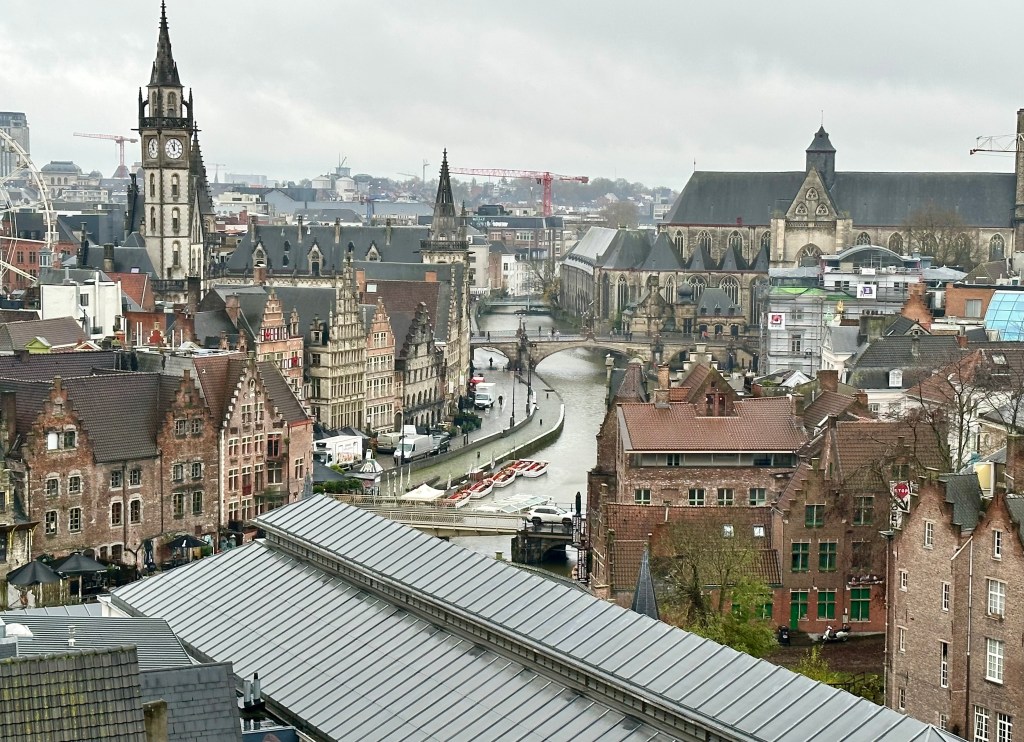
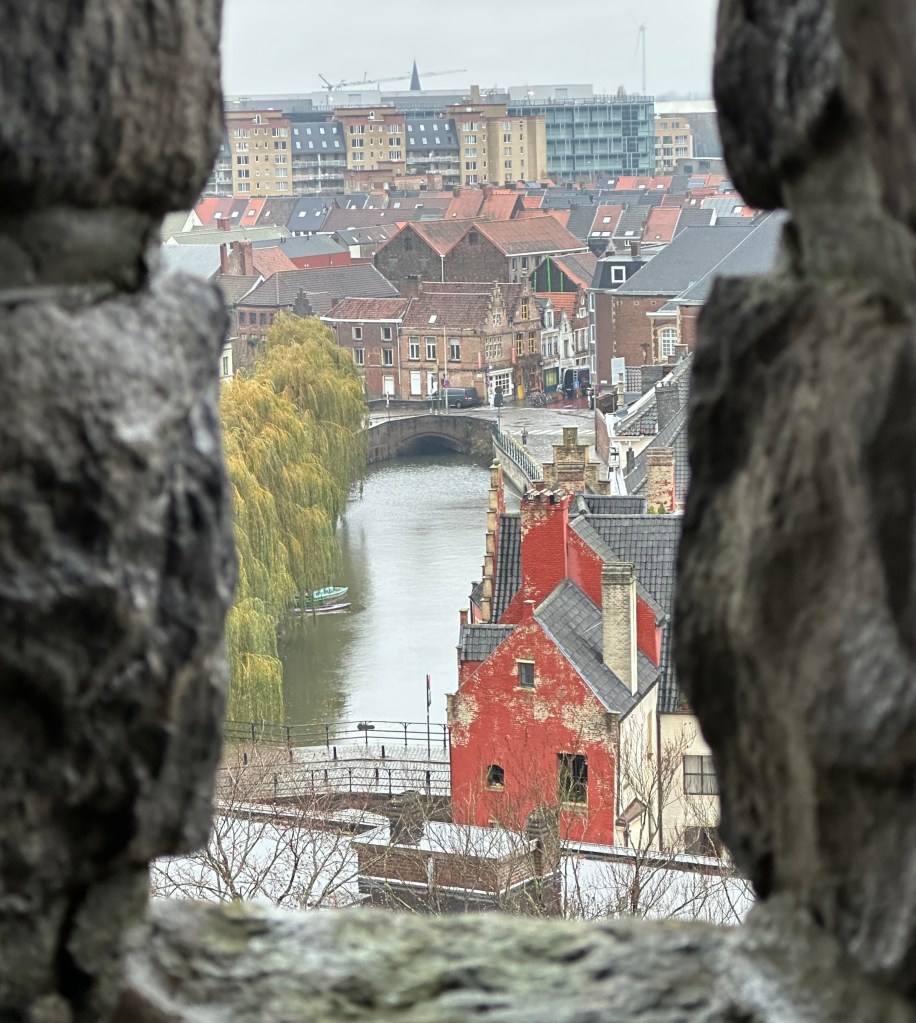
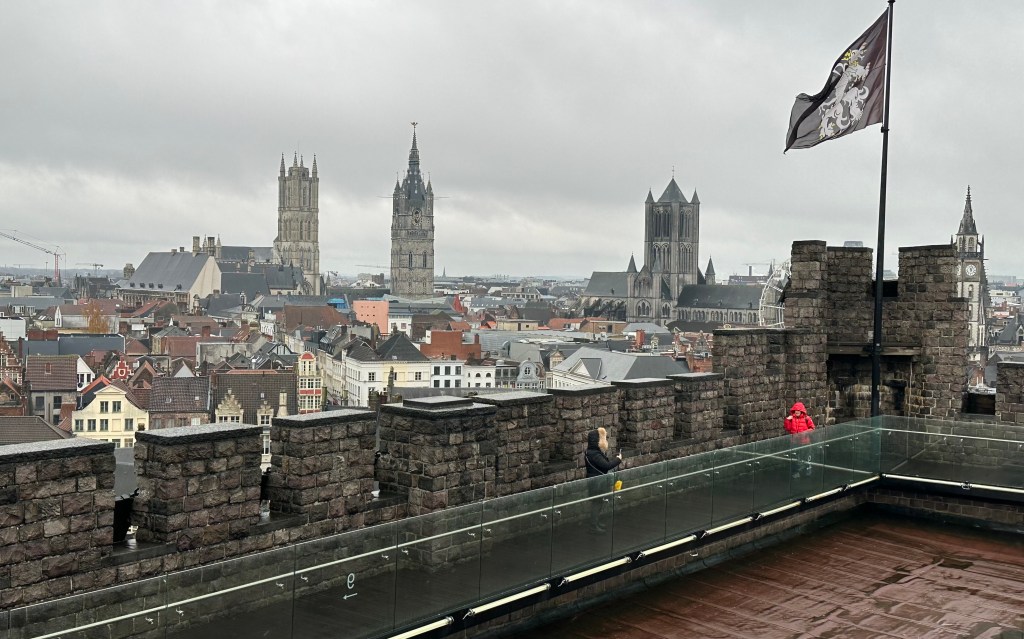
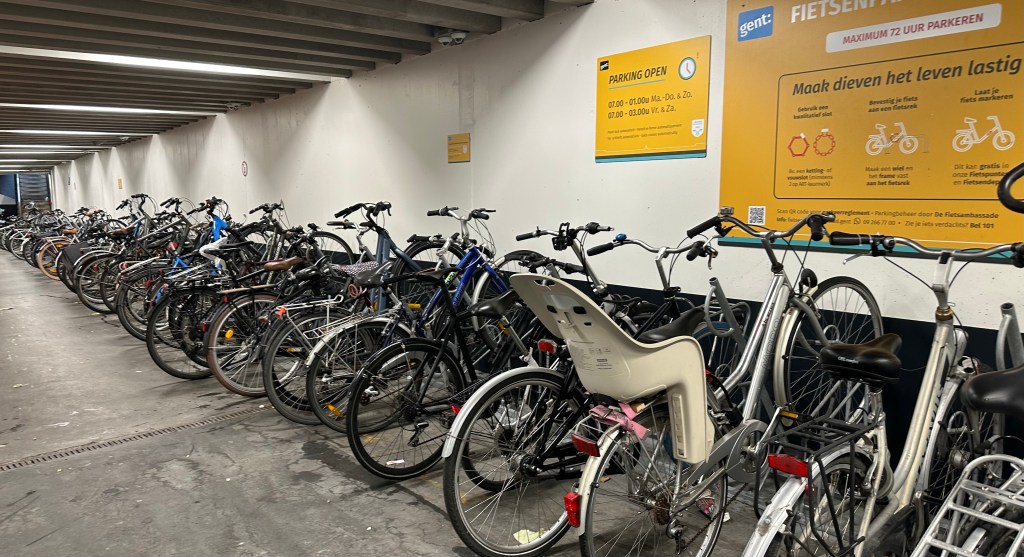
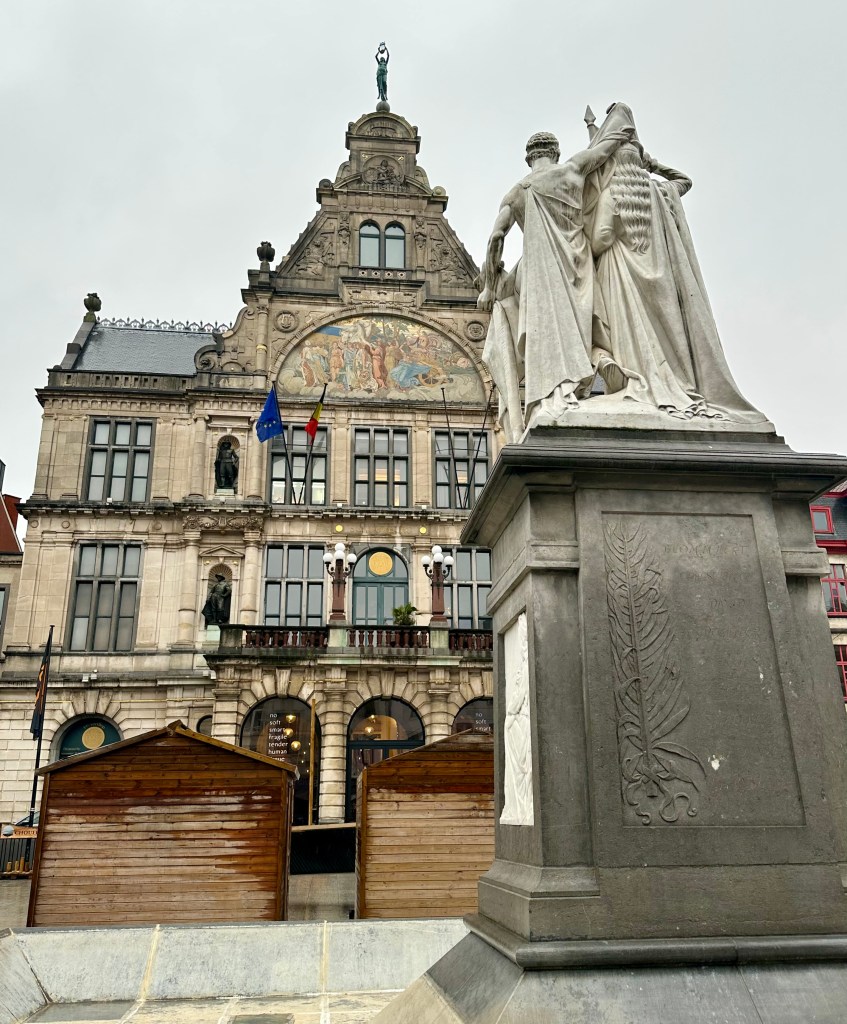
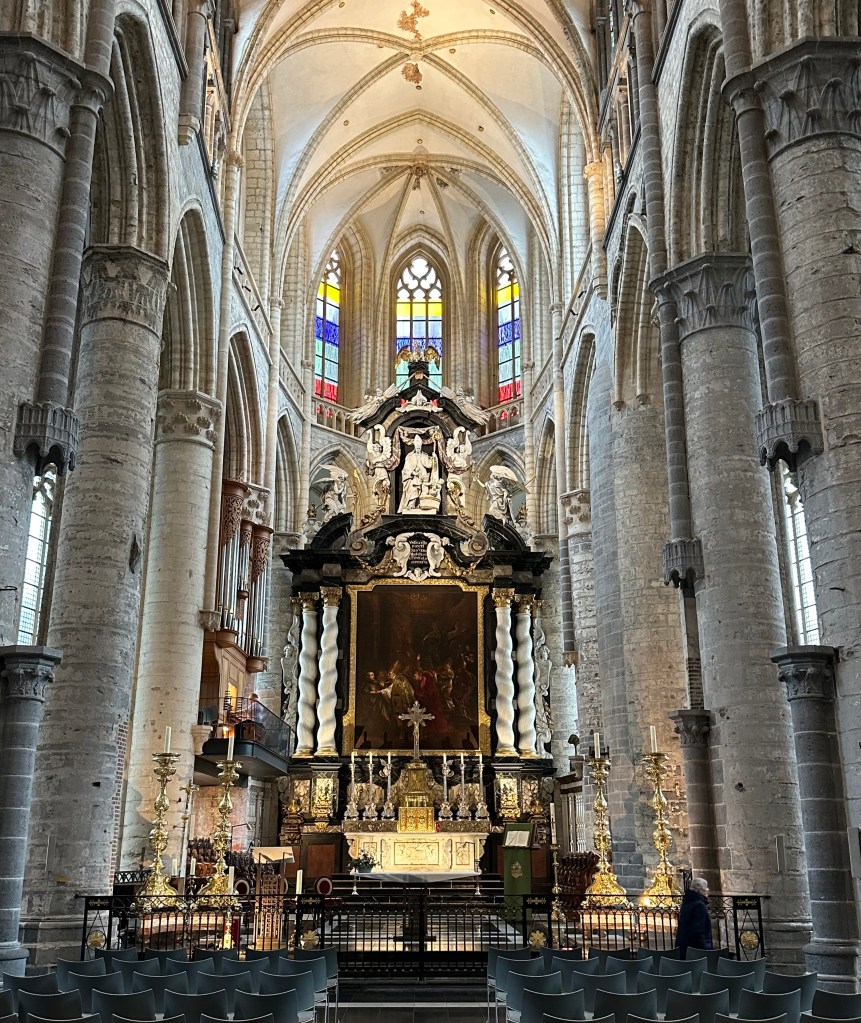
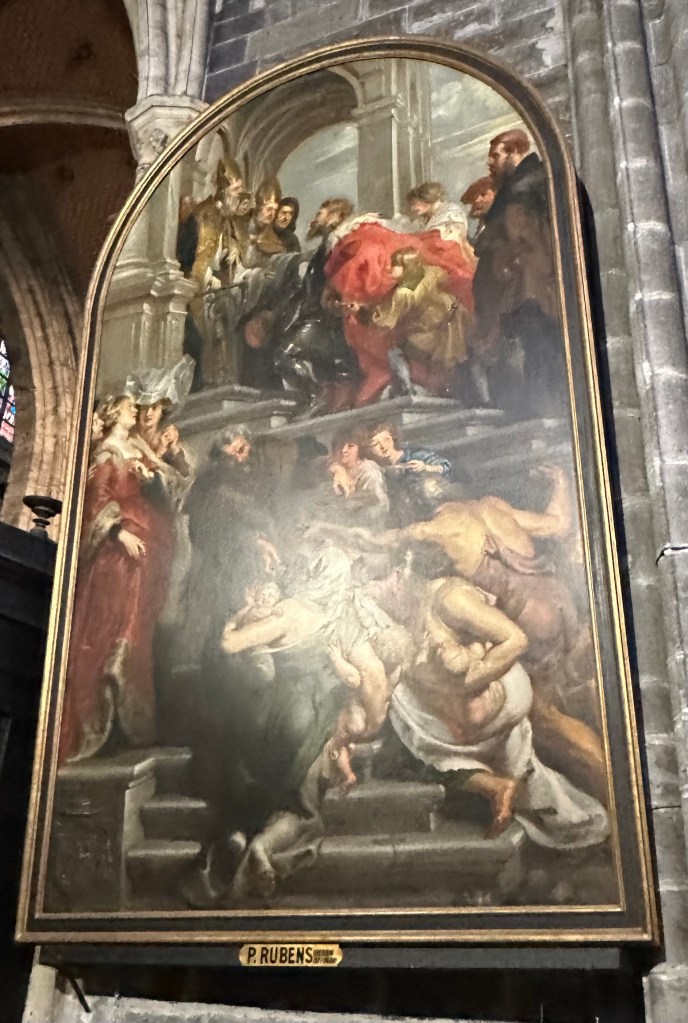
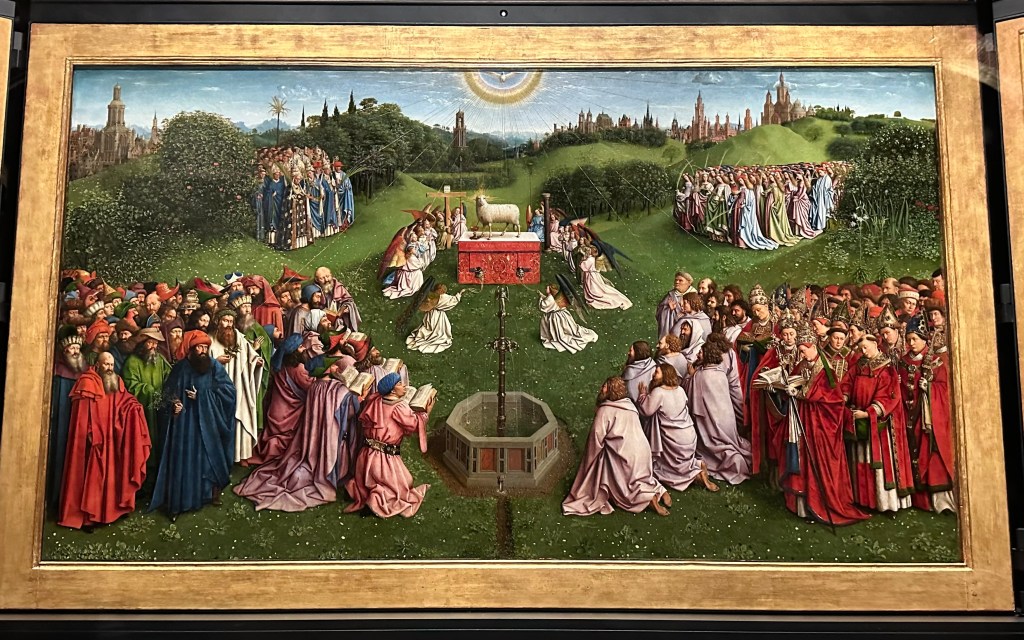
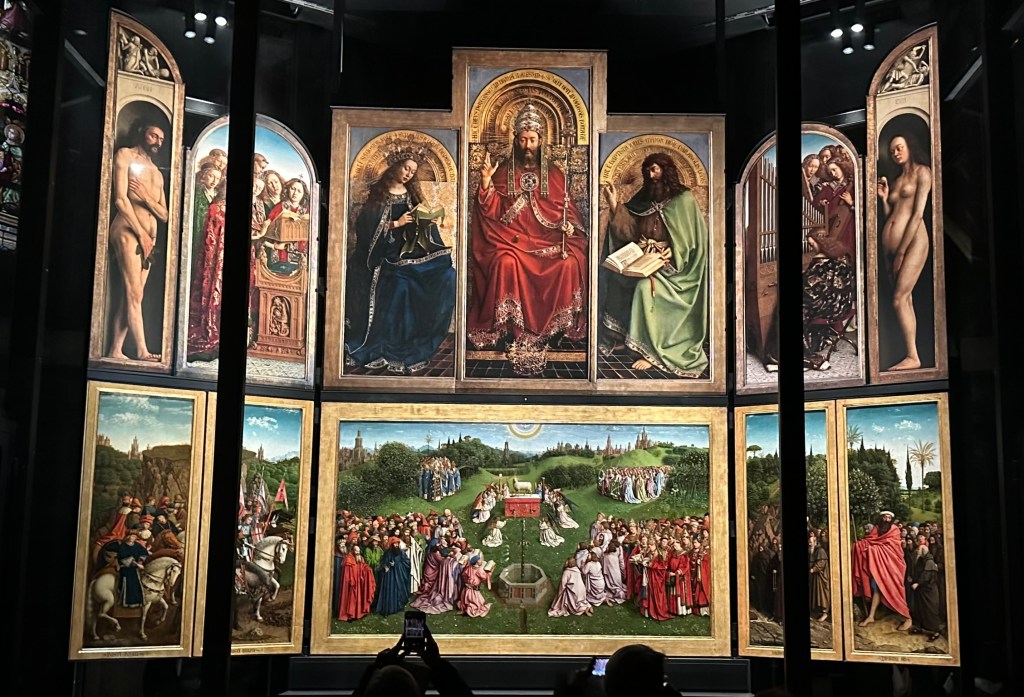
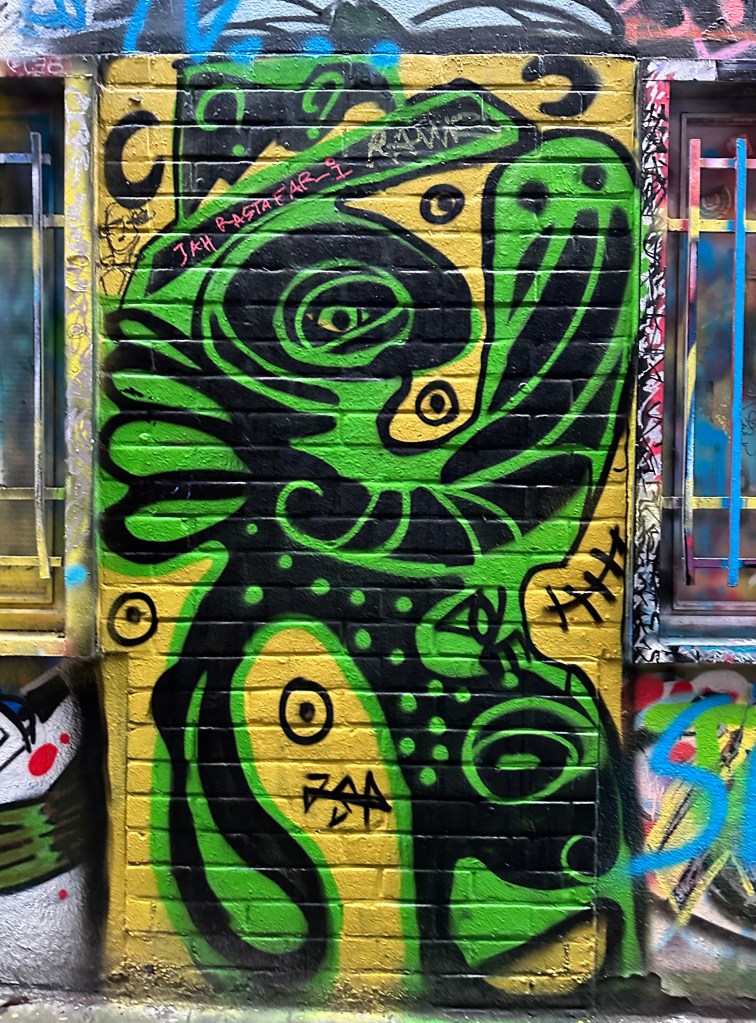
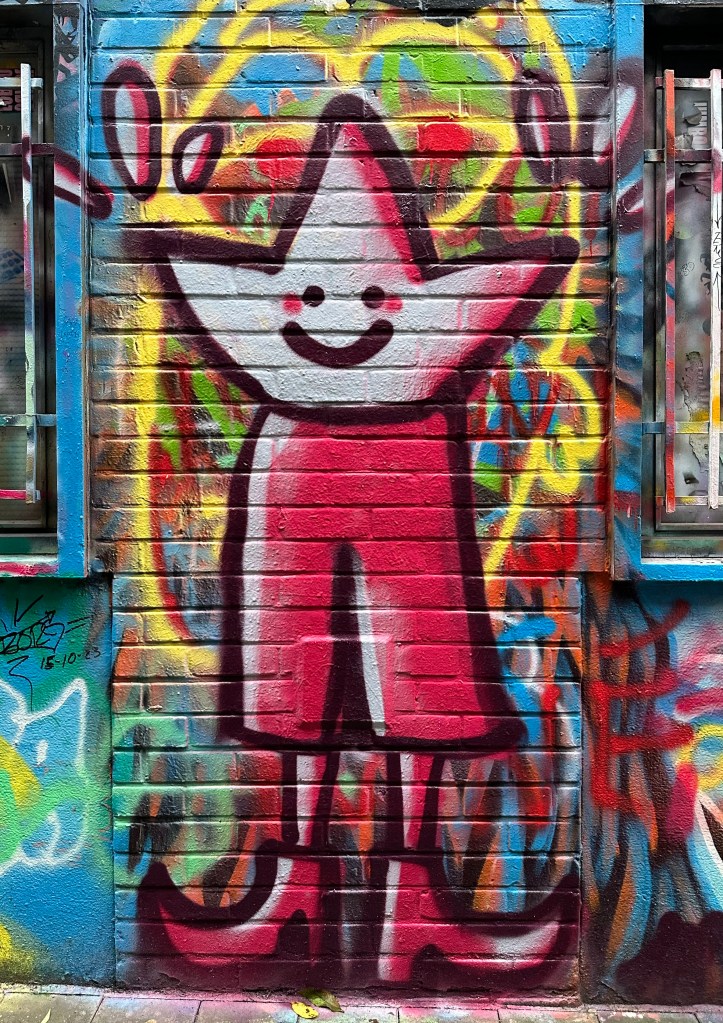
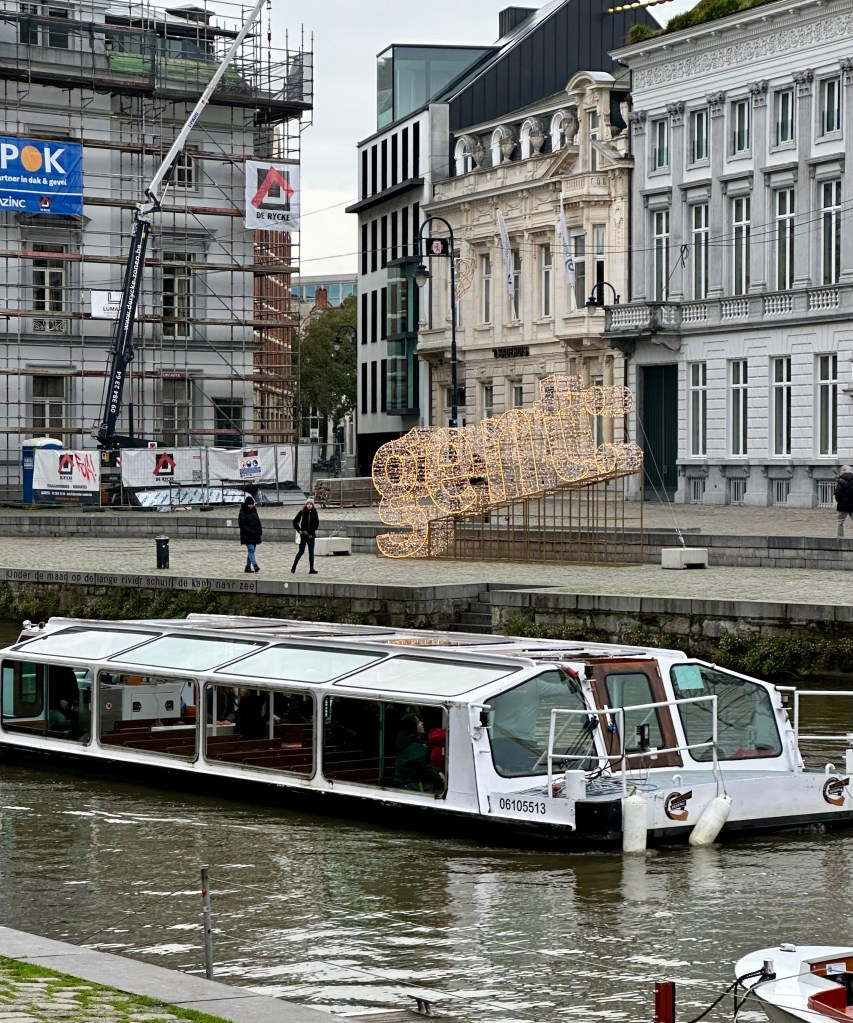
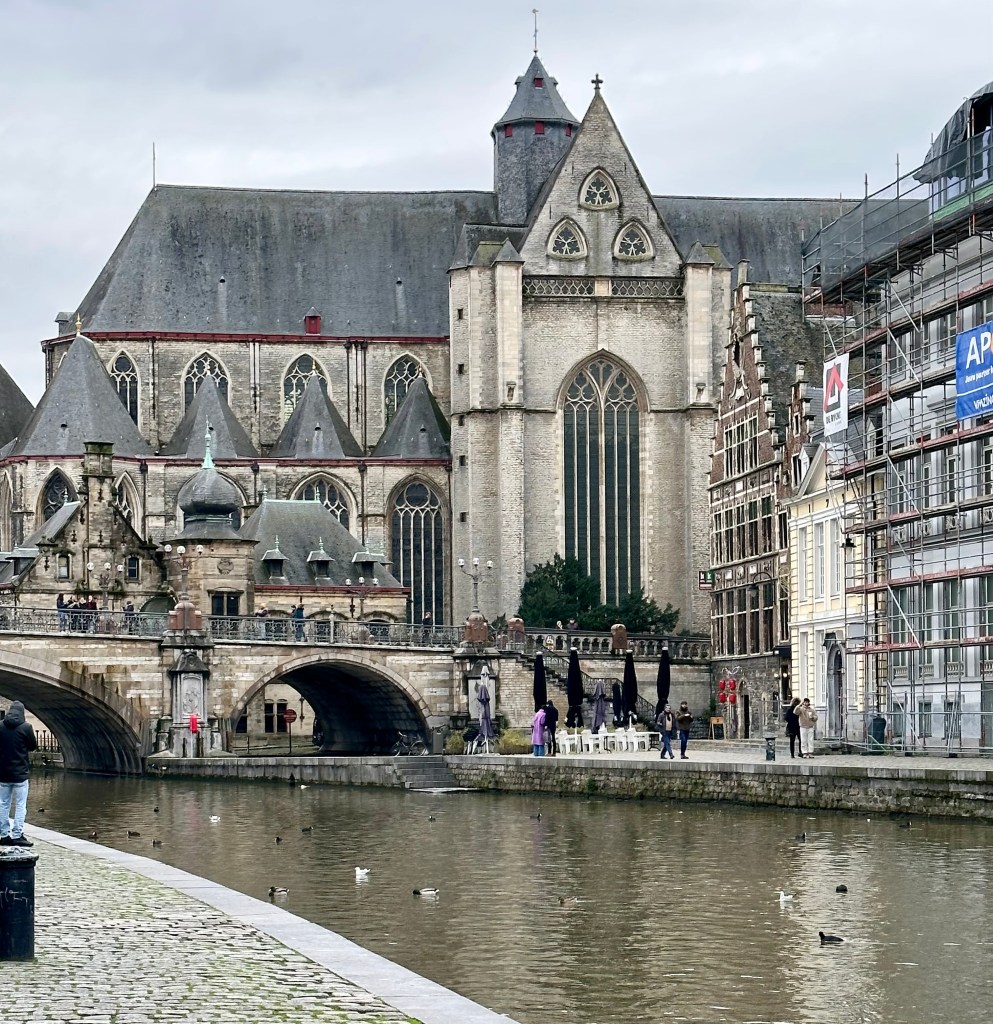
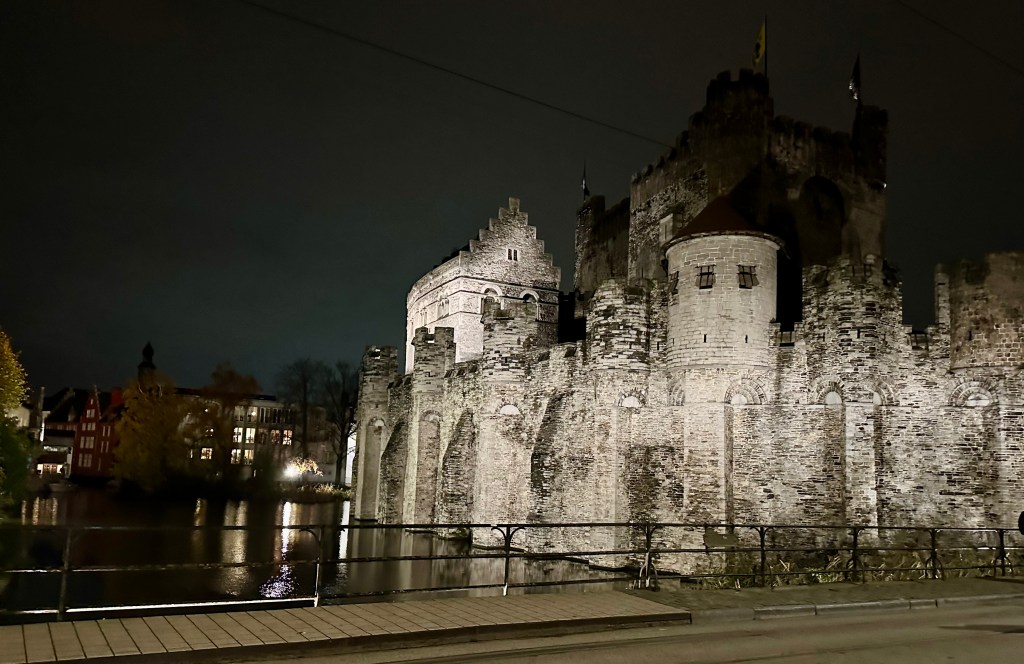
Good morning, Ghent!The Gravensteen is a medieval castle in Ghent, East Flanders, also known as the Castle of the Counts.Another rooftop view.Bike garage! It was huge. Bikers everywhere.Saint Bavo Cathedral in Ghent.Saint Bavo enters the Convent at Ghent by Peter Paul Rubens is an altarpiece dated 1623 – 1624. It was commissioned as the high altarpiece for Sint-Baafskathedraal in Ghent by bishop Antoon Triest (1577–1657). It is still in the cathedral today.Jan and Hubert van Eyck’s famous Adoration of the Mystic Lamb, better known as the Ghent Altarpiece of 1432, ranks among the most significant works of art in Europe. Housed at Saint Bavo Cathedral in Ghent, the large and complex altarpiece suffered a varied history over the centuries.The most frequently stolen painting in the world is not Rembrandt’s Portrait of Jacob de Gheyn III, stolen a measly four times from the Dulwich Picture Gallery in London. It is in fact the Ghent Altarpiece, also called Adoration of the Mystic Lamb, by Jan van Eyck. Completed in 1432, but begun by Jan van Eyck’s older brother, this masterpiece of 15th-century Flemish painting was the most famous artwork in Europe upon its completion, and an object of pilgrimage for artists and thinkers. It was the target of some 13 different crimes, including having been stolen, all or in part, six times. Its story is more bizarre than fiction could possibly invent—and new twists in the tale continue to come out todayGhent isn’t just another picturesque European city – juxtaposed against its historic old town is a vast collection of vibrant, modern street art. Buildings throughout the city are adorned with over 140 striking murals, mostly from local artists, as well featured works from international artists.Werregarenstraat—aka ‘Graffiti Alley’, Ghent’s most famous street art location. It is a living public gallery, opened to street artists in 1995.
A crisp winter day is giving me a warm, fuzzy feeling as I walk around Bruges. This pretty medieval city takes on fairytale airs as the temperatures drop. The intoxicating scent of fresh waffles and chocolates linger in the Bruges Christmas market. The streets are dressed like gingerbread houses with festive twinkle lights reflecting everywhere. Bruges really is a magical Christmastime destination.
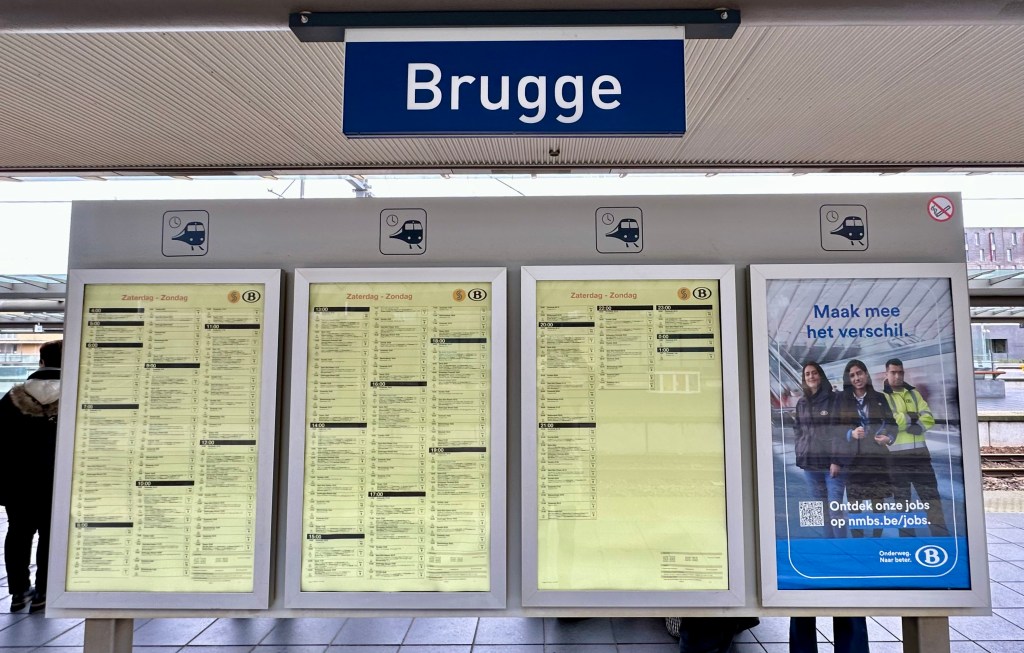
One day in Bruges and I am off to Ghent to meet Kaaren. Then back to Bruges tomorrow for a few days. Bruges, Brugge or Brugs.
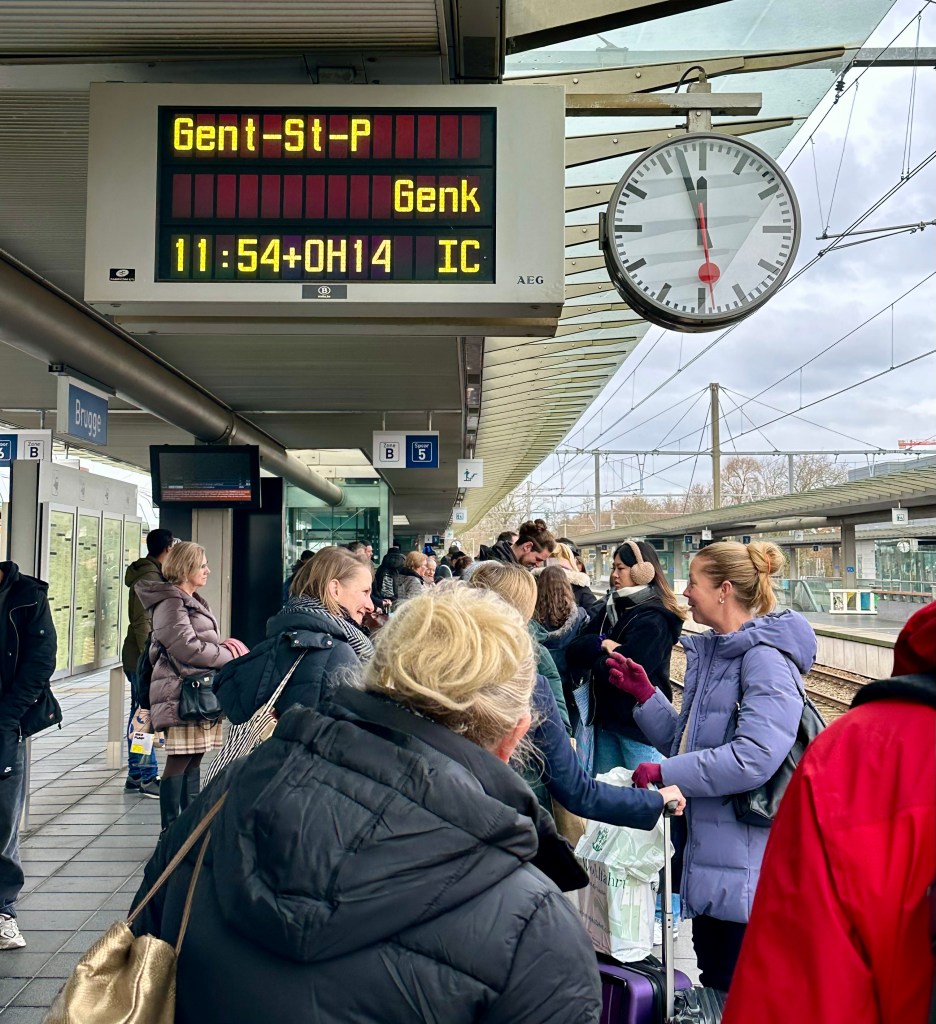
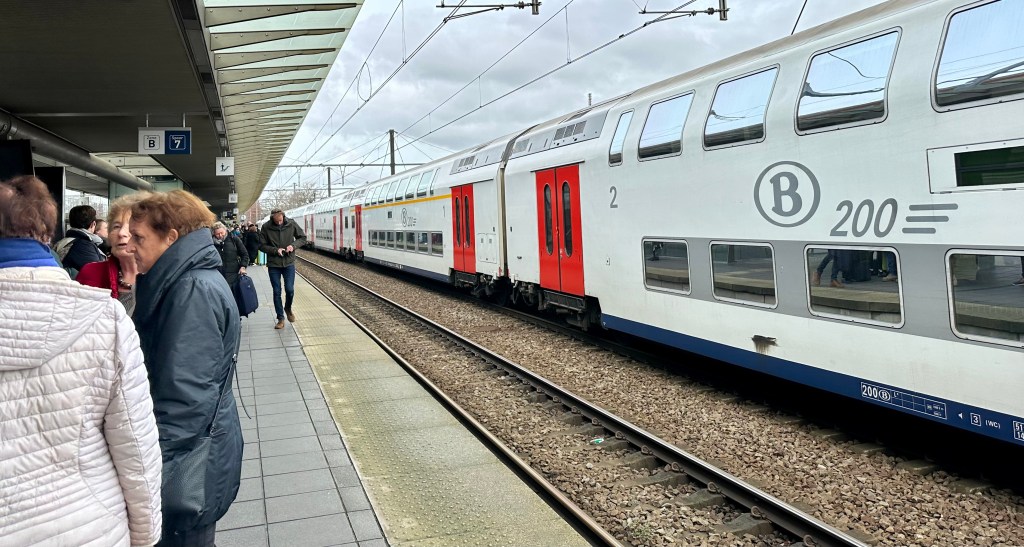
Shuttle from hotel to train station. Arrived at train station no problem, purchase a round trip ticket to Ghent. Get to my platform, EASY.I love taking trains in Europe. Having been a Philly and NYC commuter for many years, I love to get back on trains. So, my first notice that the train will be 14 minutes late.14 minutes turned into a change of platform and trains. Still pretty easy. I have a first class ticket so I opted for the upper level. And my car was not filled. 40 minutes to Ghent.
Today we give thanks. A day of reflection for such blessings as safe journeys, abundant harvests, family, friends and peace. We model our holiday on a 1621 harvest feast shared between the Wampanoag people and the English colonists known as Pilgrims.
It’s a holiday here in Tblisi too. Georgia celebrates the feast of St. George which until the year 2100 falls on May 6th and November 23rd (Gregorian calendar), respectively. So, Mike had the day off.
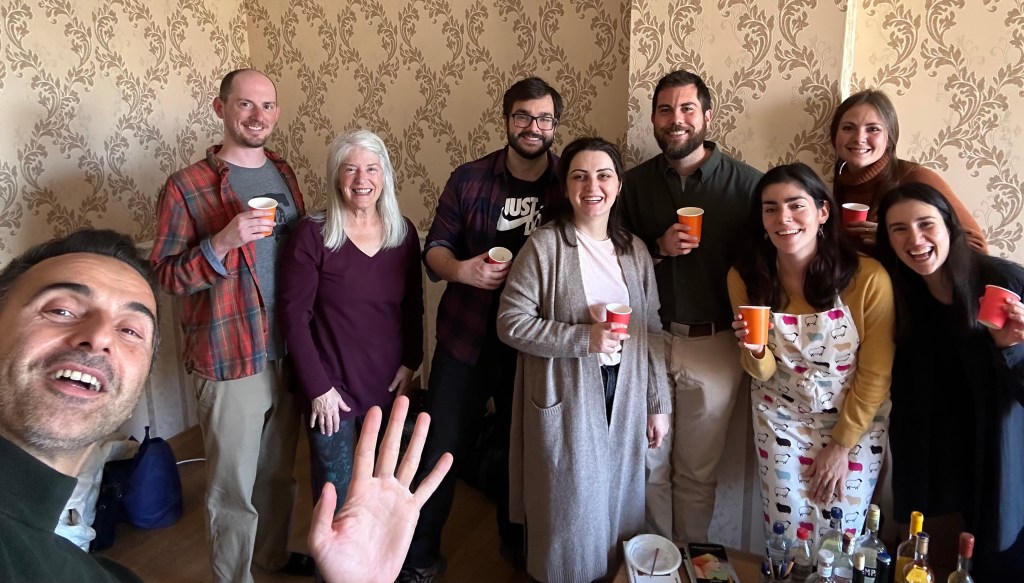
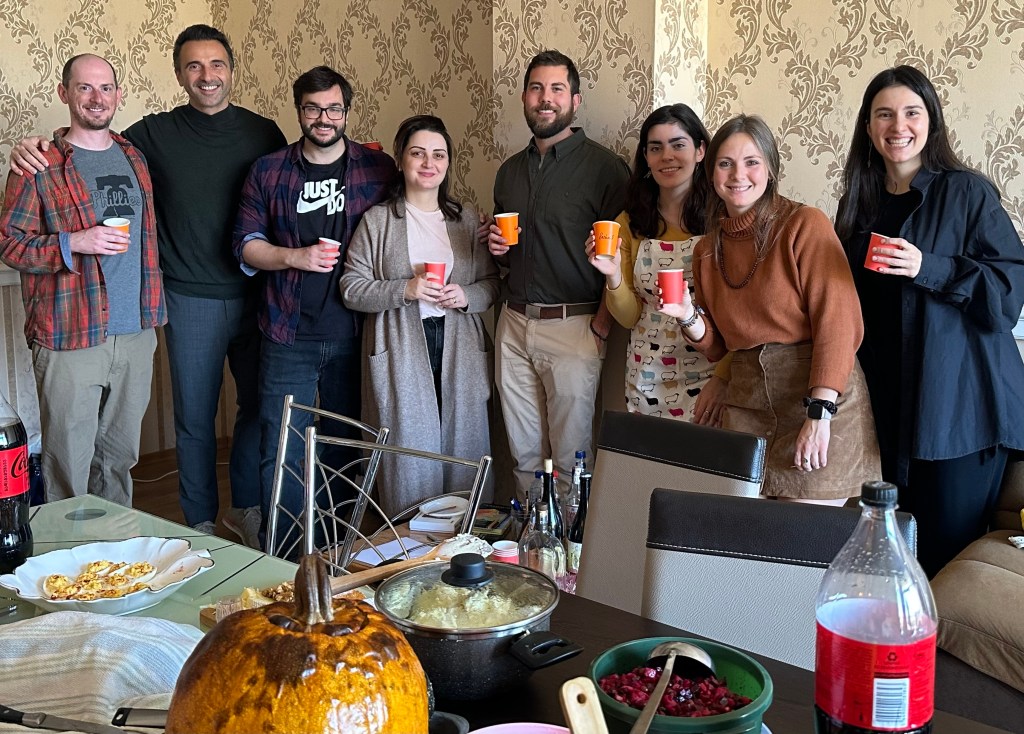
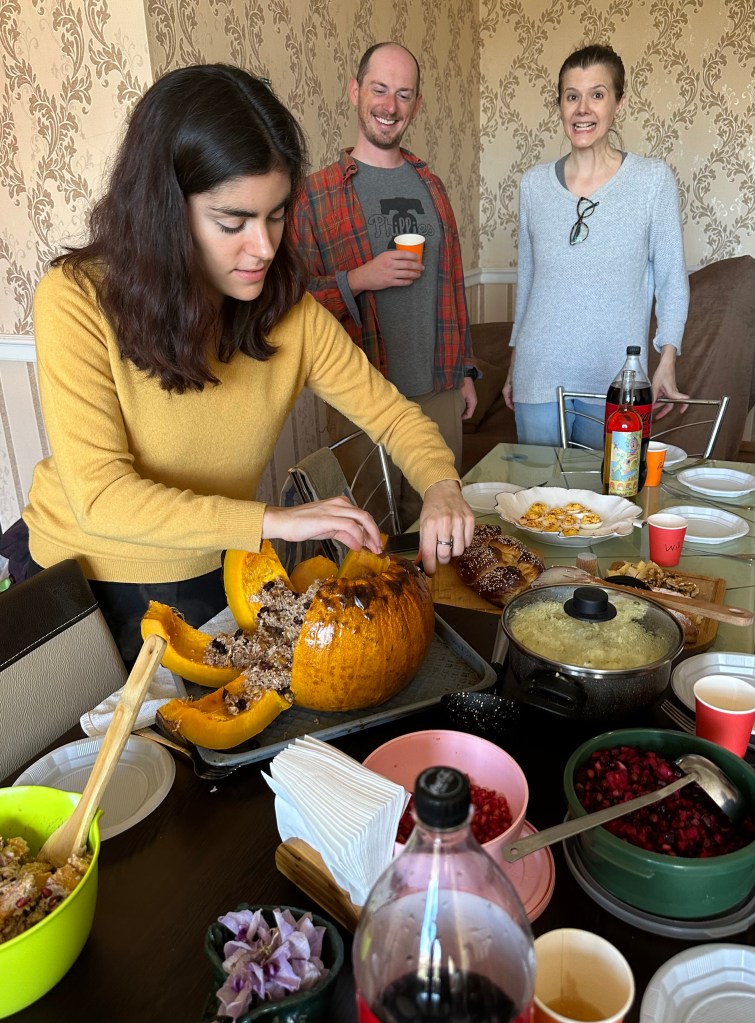
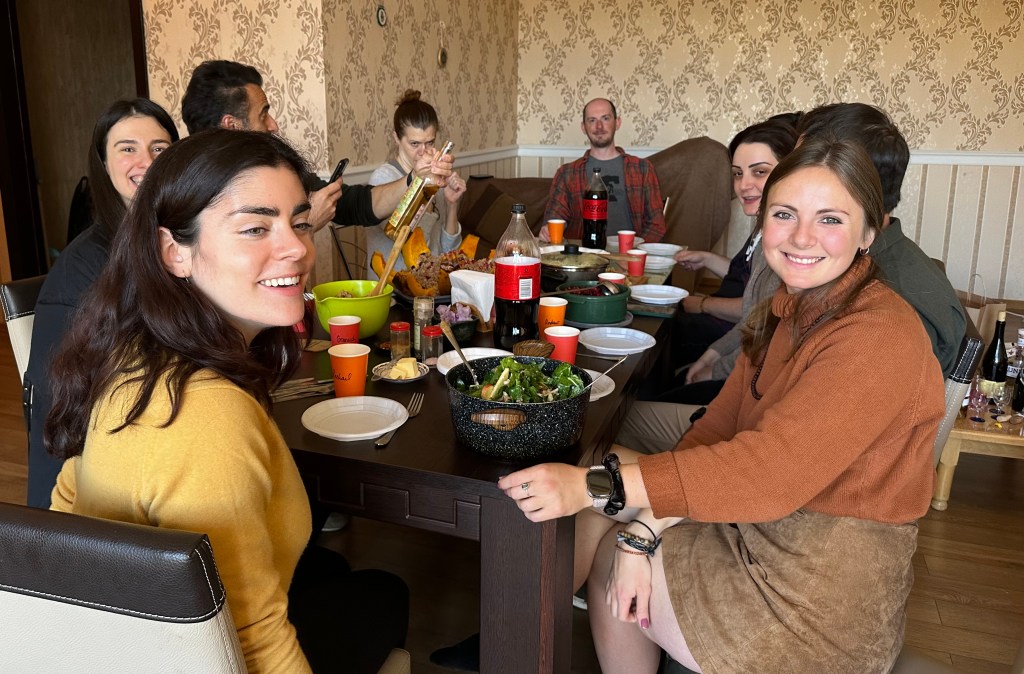
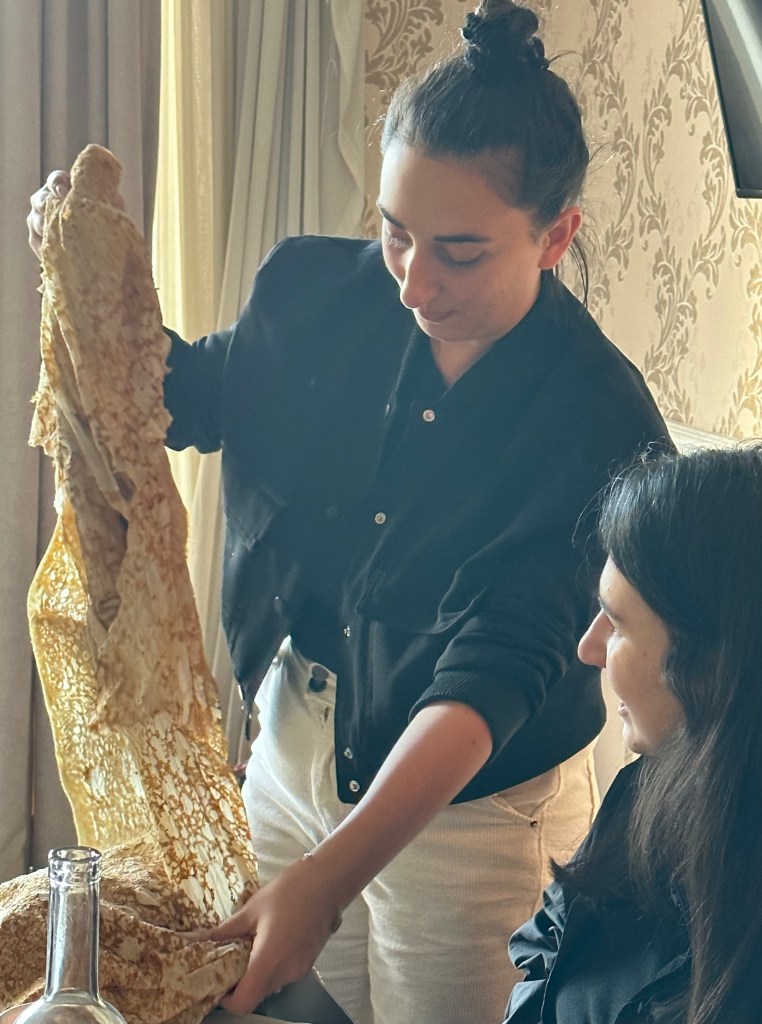
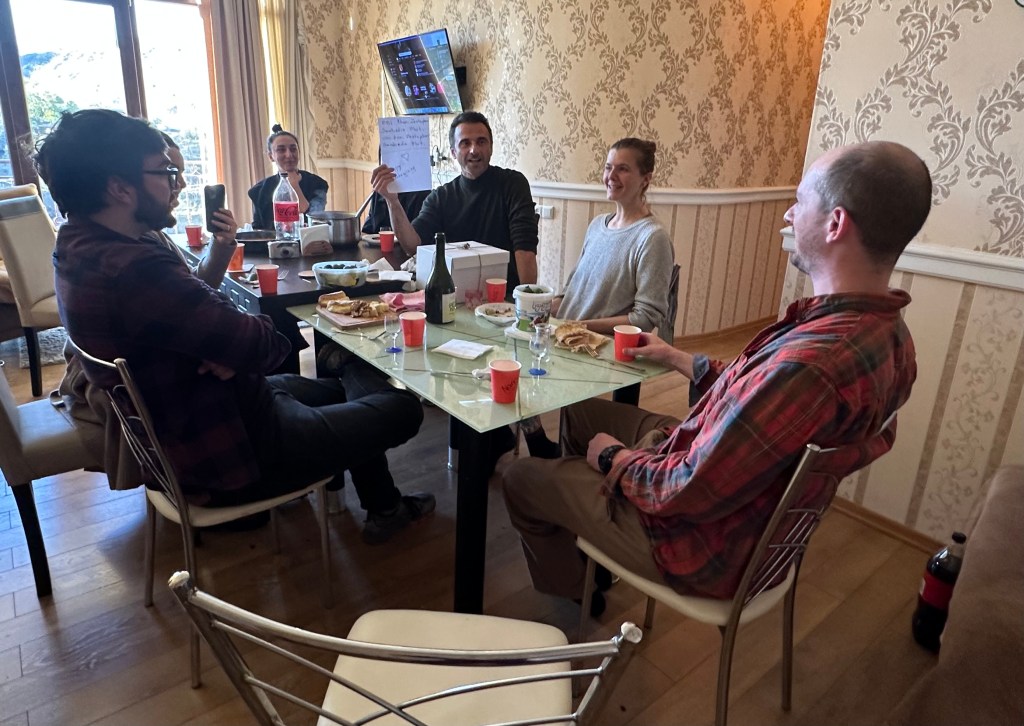
Most are here at this point.Thank you Rachael for hosting. Everything was delicious!Around the table. Good food; great friends.Armenian bread.Let the singing begin. 🎵 🎶
Thanksgiving was great. See you in a couple of days. Off to Bruges tomorrow.
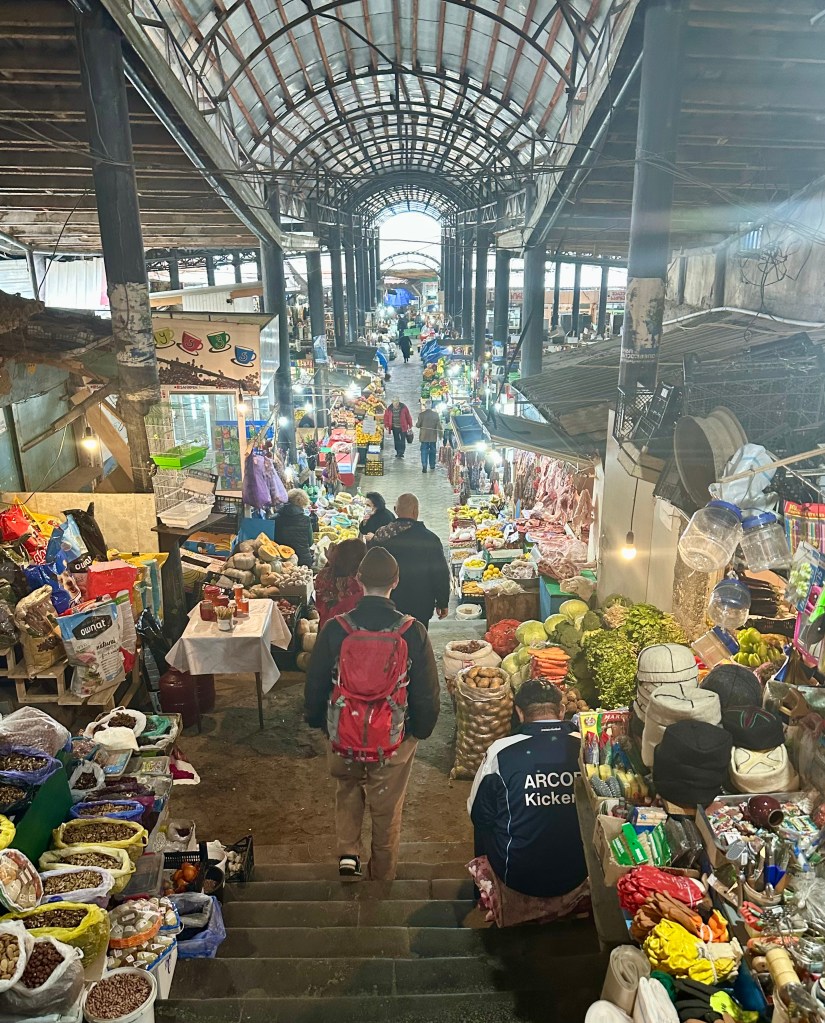
I have been wanting to get to this bazaar and today is the day. I have a few things I need to do early to get ready for Thanksgiving and leave for Bruges (on Friday) before I head off to the bazaar.
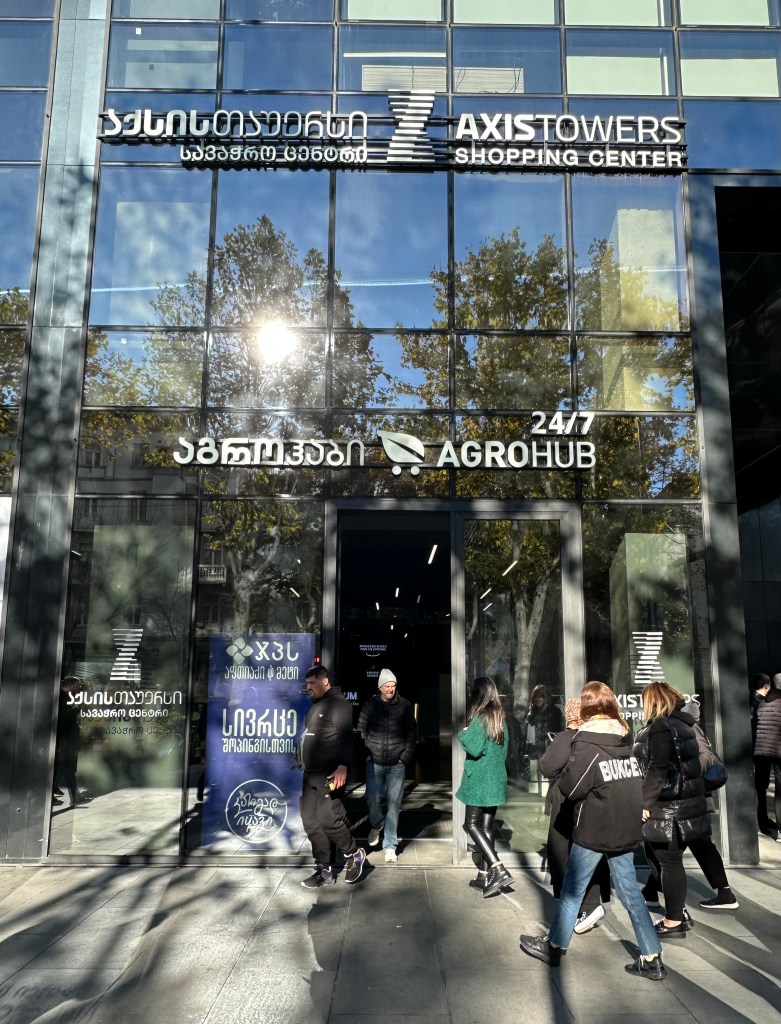
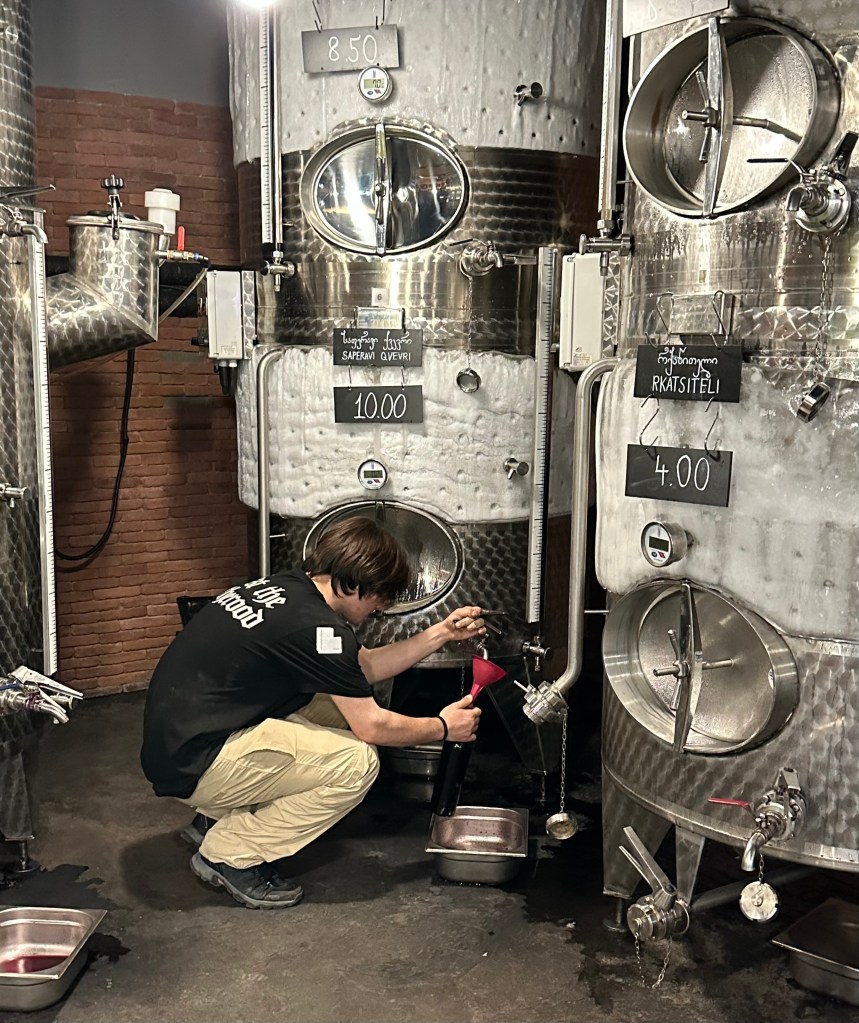
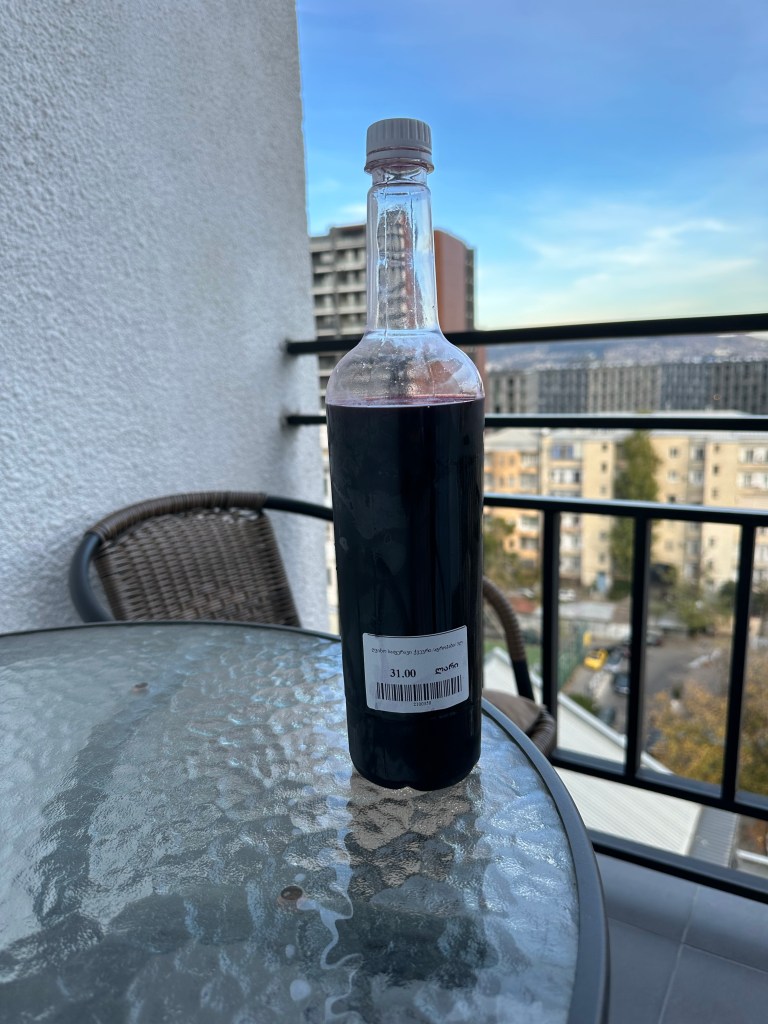
The Agrohub is my go-to grocery store. Very close to the apartment and has a great selection. FYI: we can’t find tofu in Georgia though. What’s up with that?You can buy regional wines right from the vat at Agrohub.And in plastic bottles. This saperavi qvevri was 31 GEL. That’s about $12 a bottle for us.
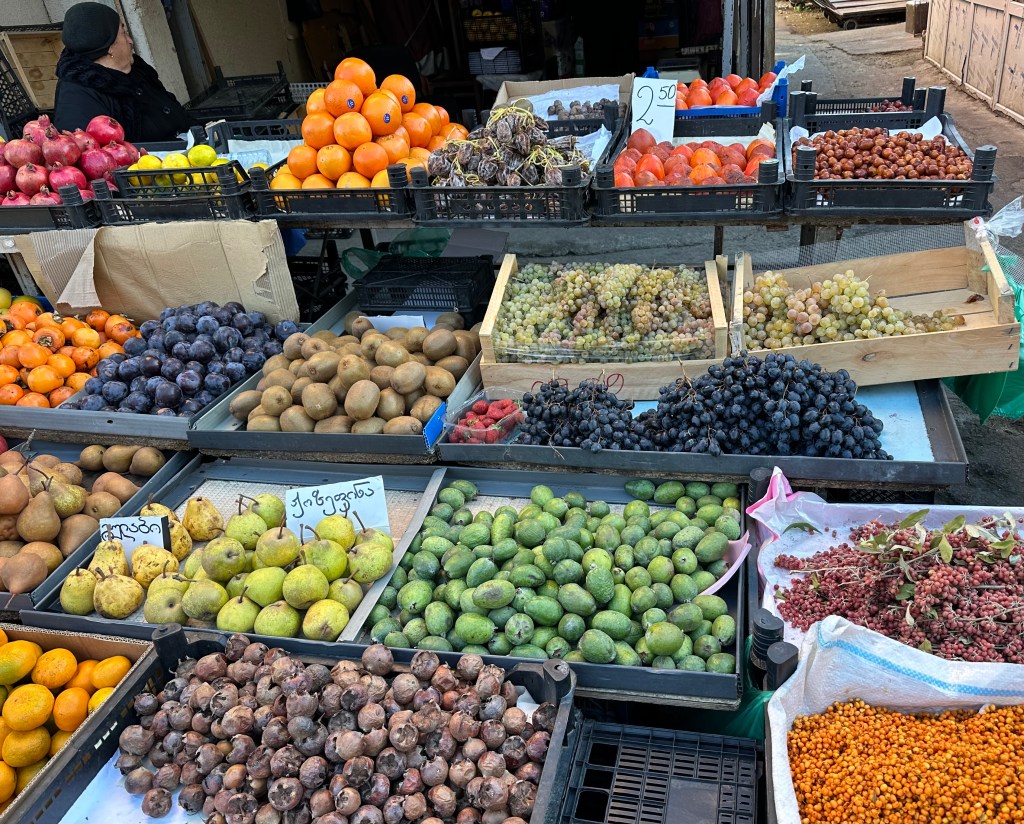
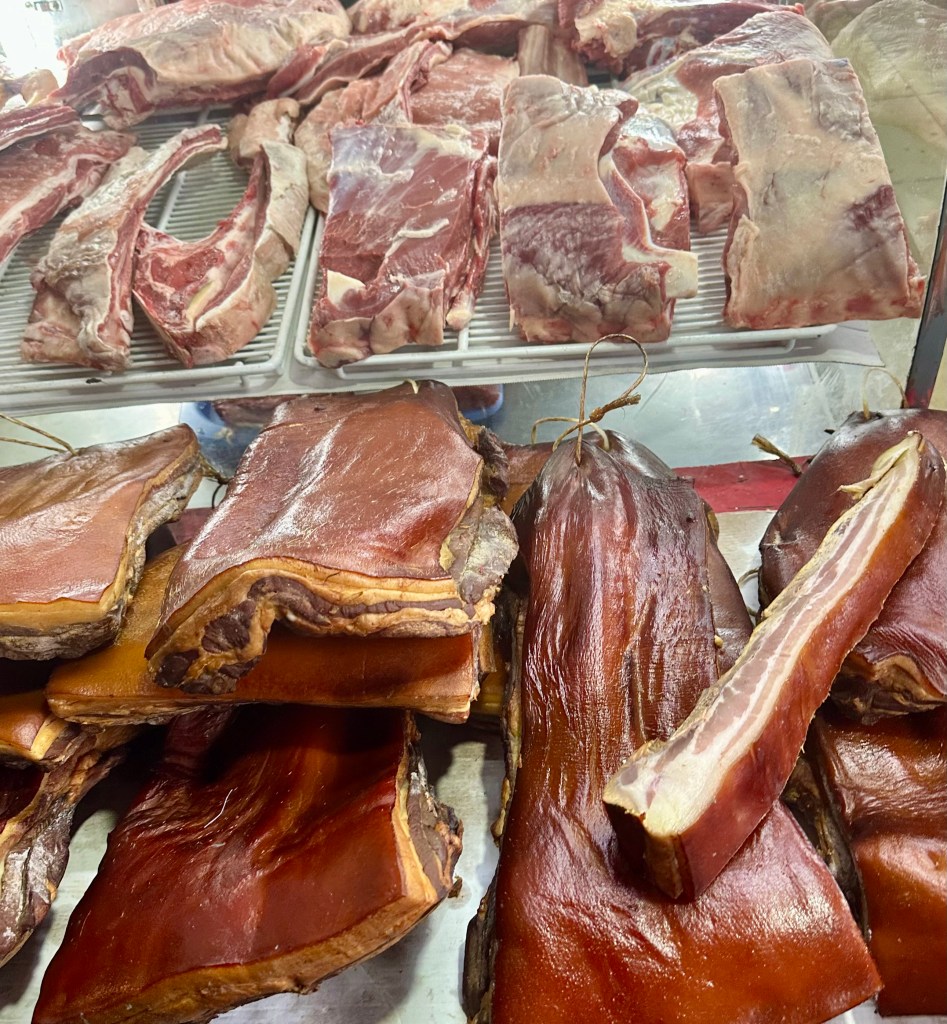
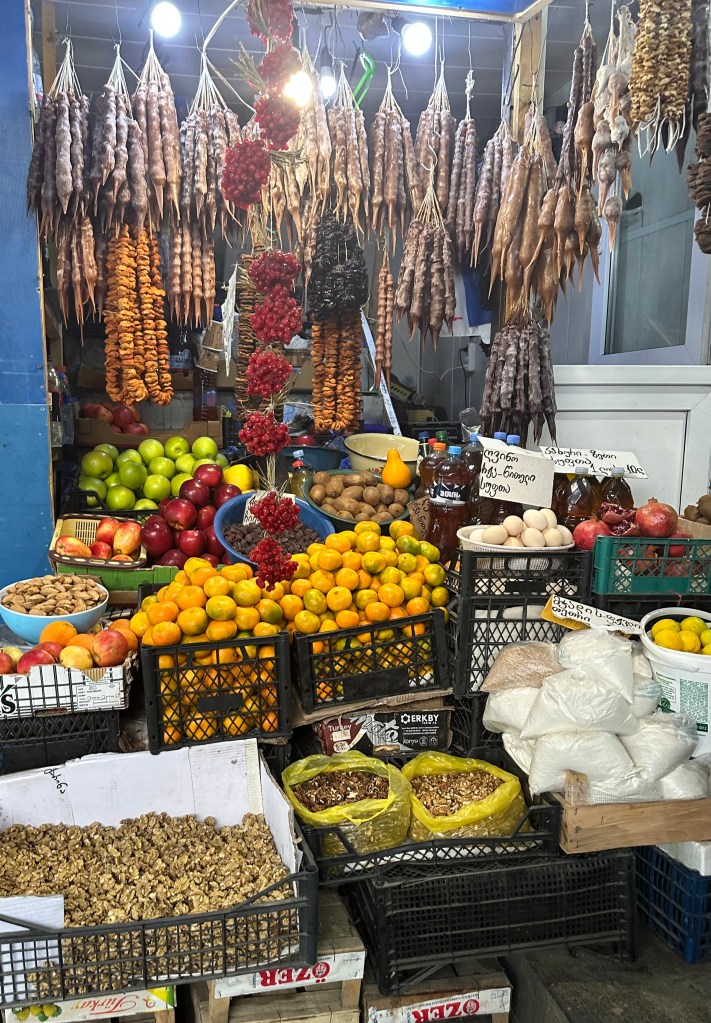
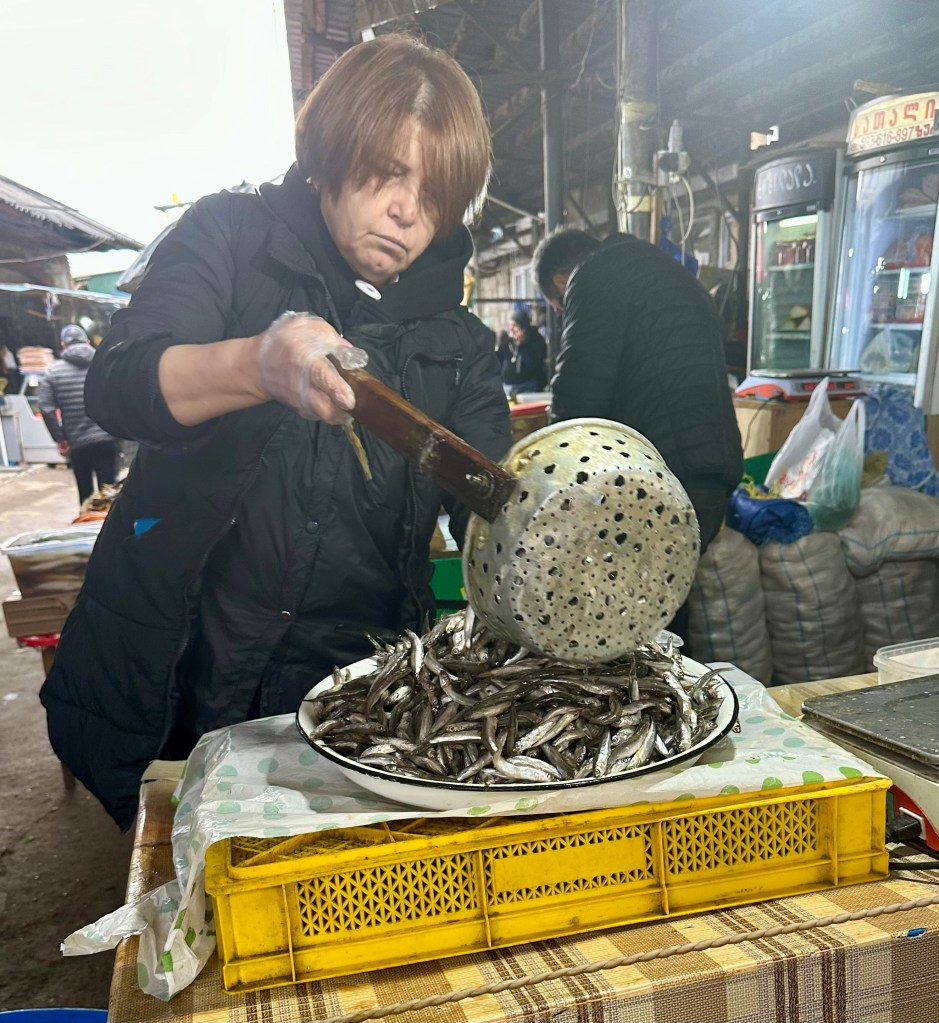
Food is integral to Georgian life and culture, so what better place to experience this than the most vibrant food market in Tbilisi. The cuisine is fiercely regional and locally grown/slaughtered/brewed/prepared/ pickled ingredients feature prominently in most recipes. And all of them can be bought here.
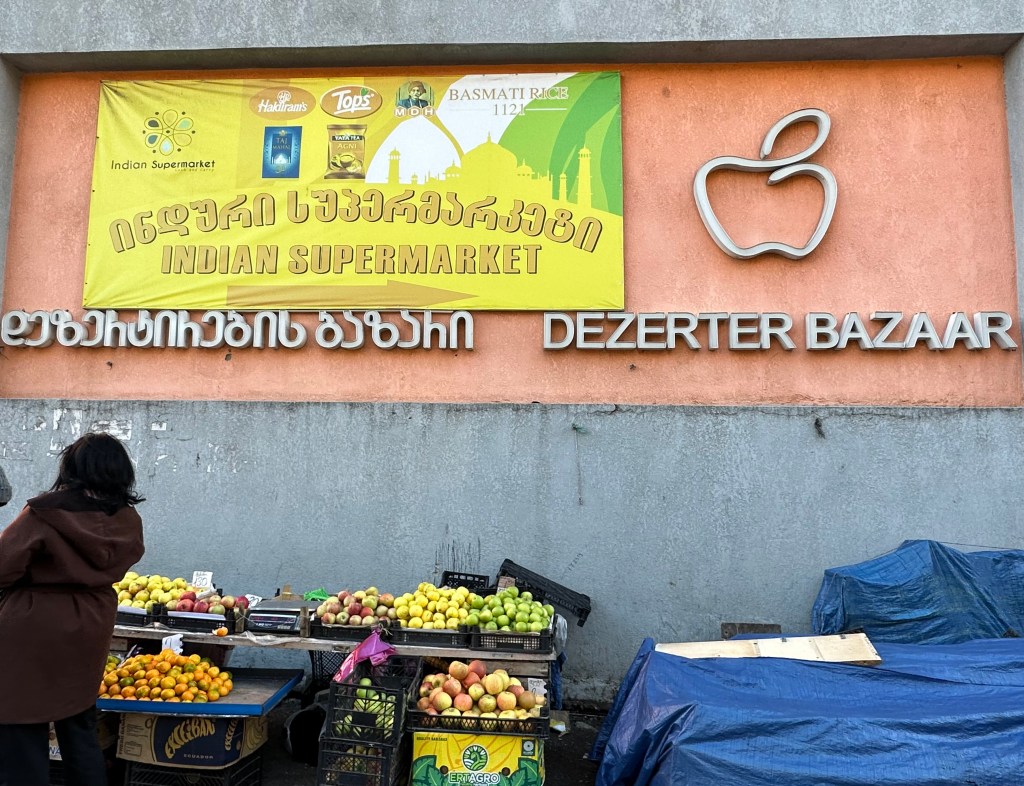
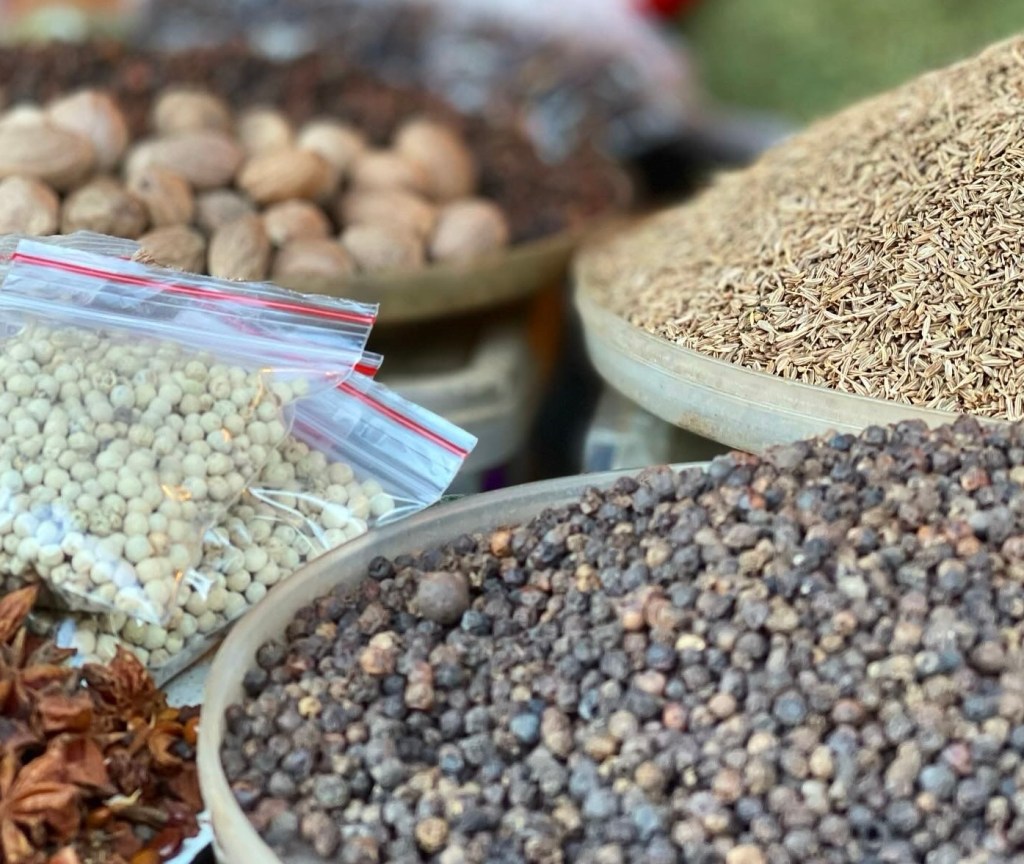
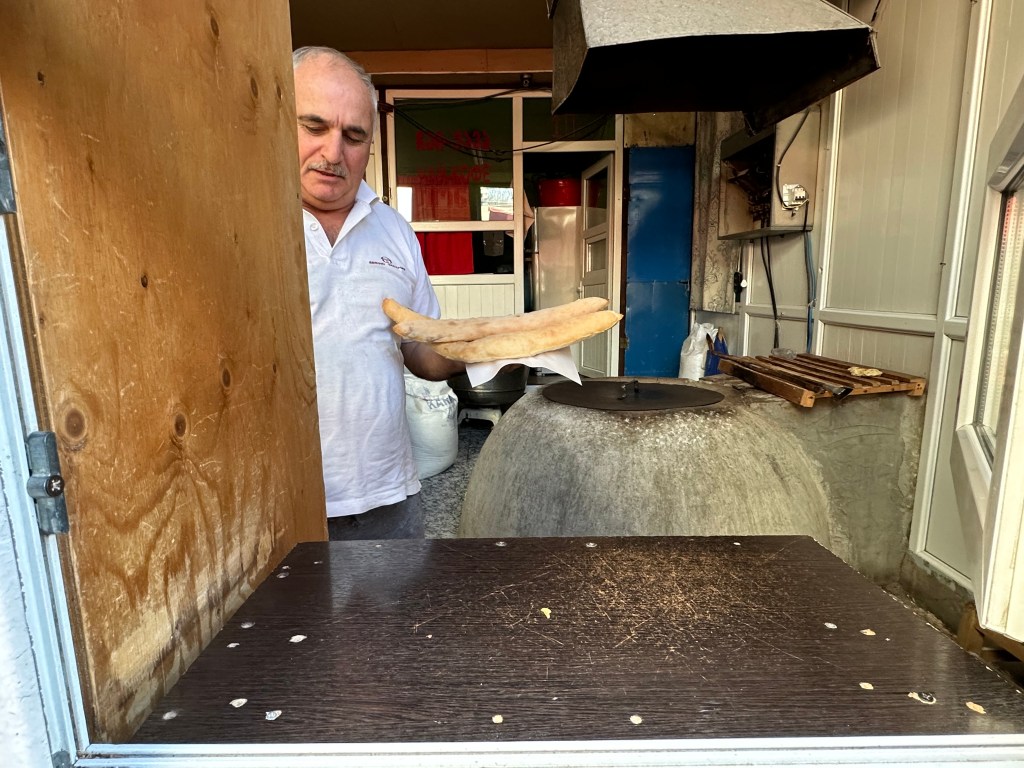
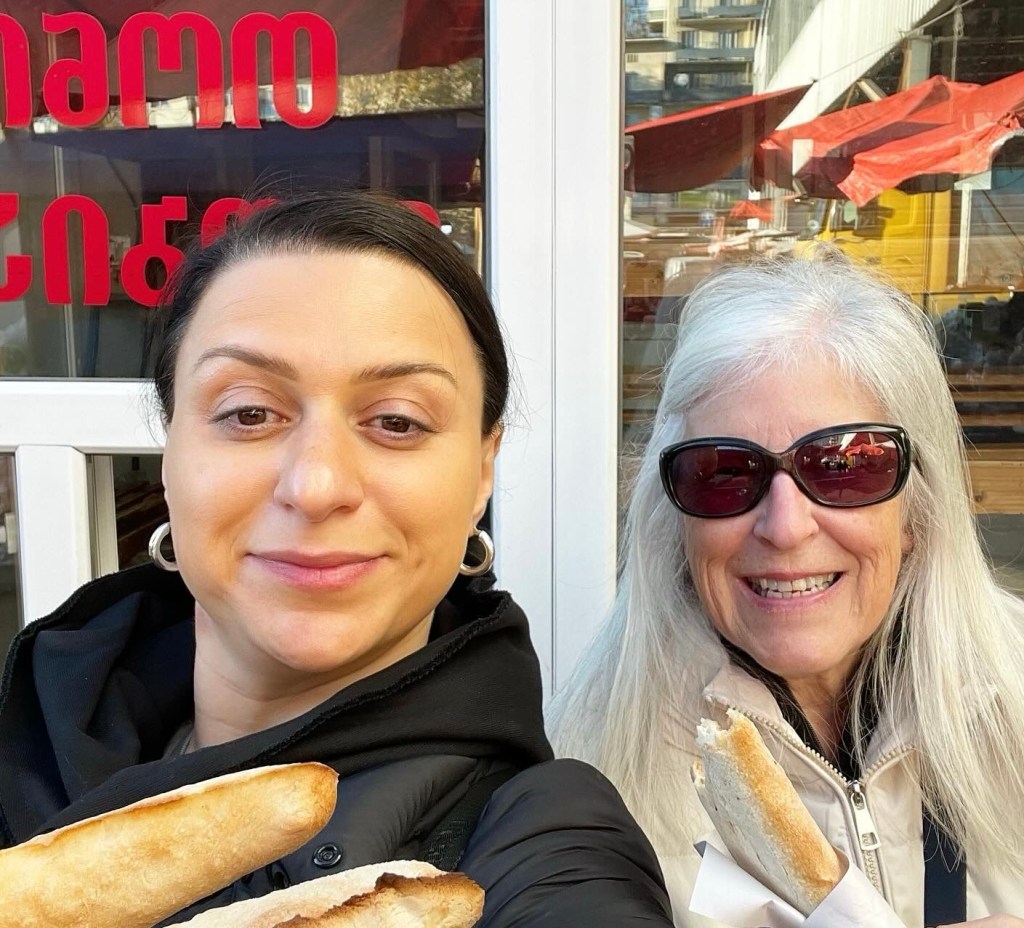
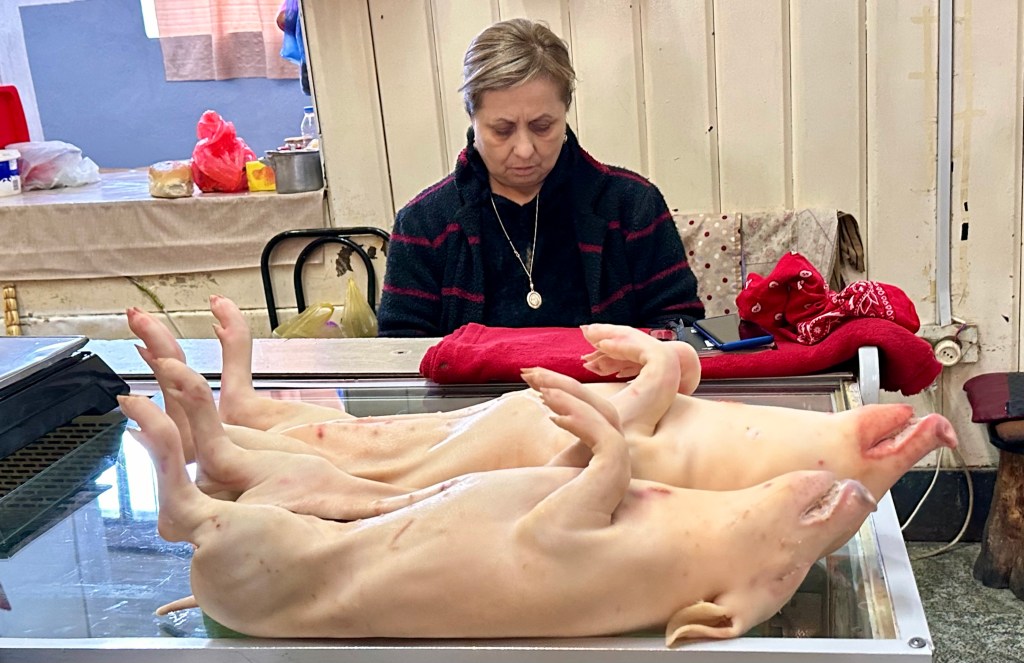
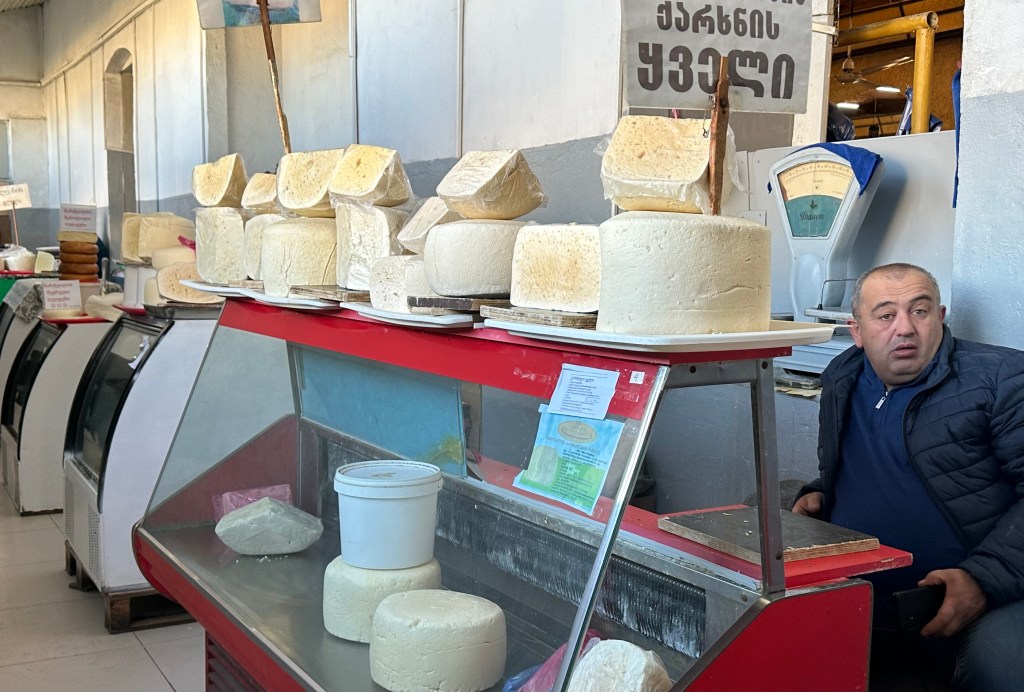
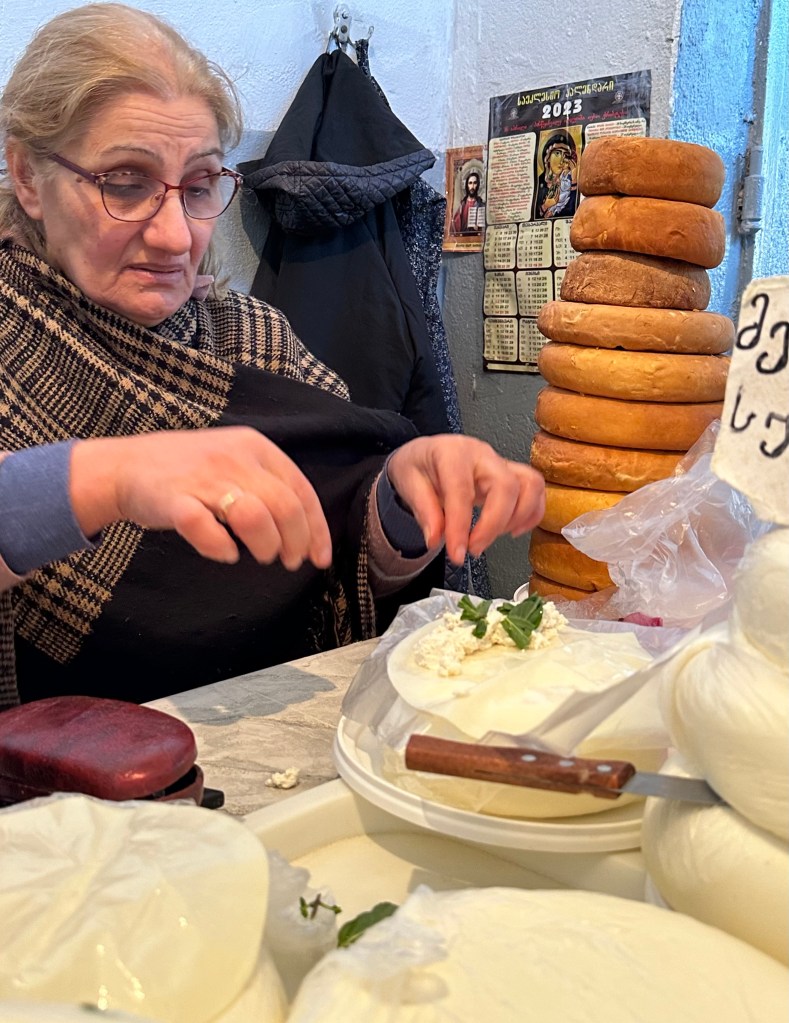
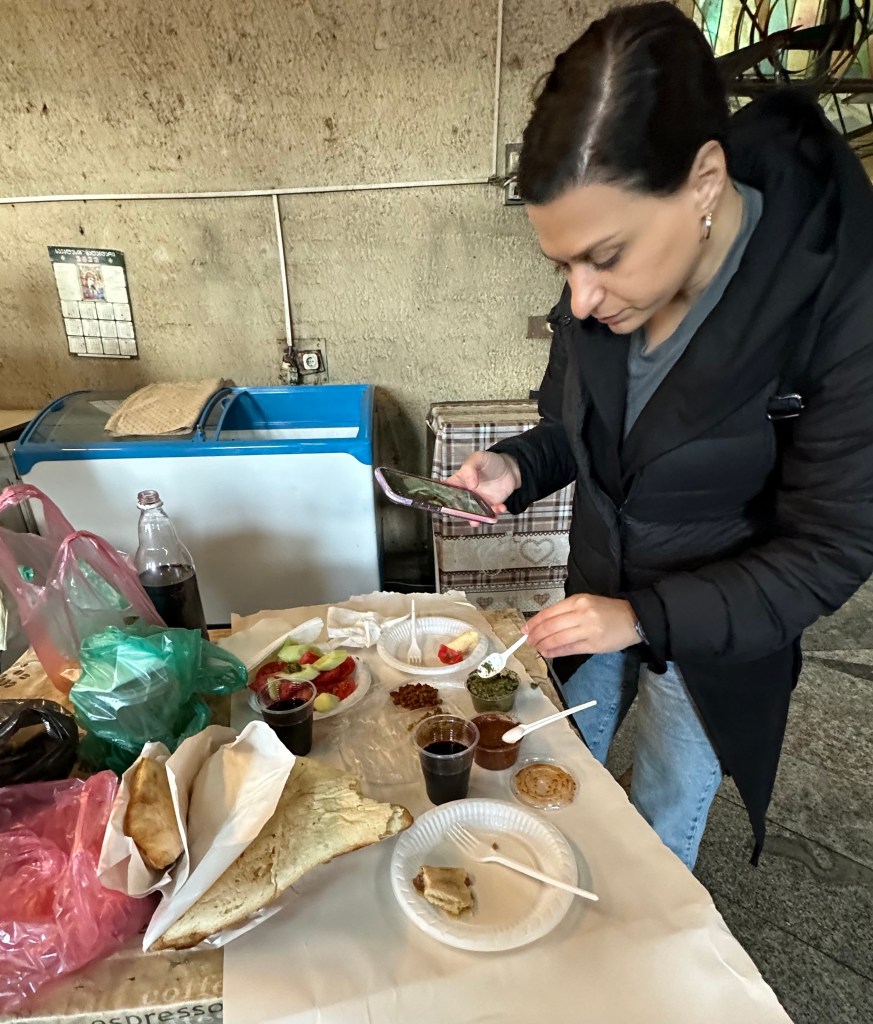
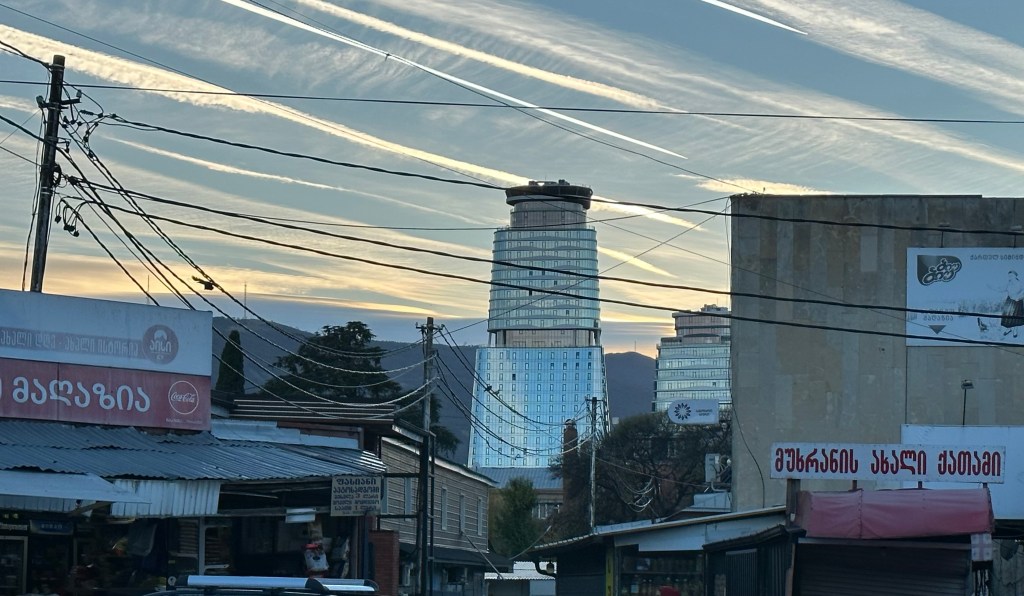
I met Keti at one of the entrances to Dezerter Bazaar.Everything was so fresh. We kinda ate our way through the bazaar.Georgian bread is called puri and is traditionally baked in a deep circular clay oven called a tone. Traditional bread, especially the long pointed bread called shoti puri, is very popular and usually served with every meal.This was kinda gross to watch. Not for me. ; )Now we are talking. Cheese, cheese and more cheese.Gebzhalia. For preparing you’ need fresh cheese—Georgian sulguni. To make the filling, chop fresh mint and (a kind of) cottage cheese or ricotta. Add filling to sulguni thin slice and roll. Voilà, gebzhalia, usually served as a starter. It was delicious. Sulguni cheese is a tad salty.Last stop, supra. Georgian salad—cucumbers, tomatoes, red onion, parsley, cilantro and, of course, walnuts with a sunflower oil drizzle; shoti puri and lobiani. Spices for the bread. And wine—a homemade local village red. Keti digging in.As I left the bazaar, I caught a beautiful evening sky.
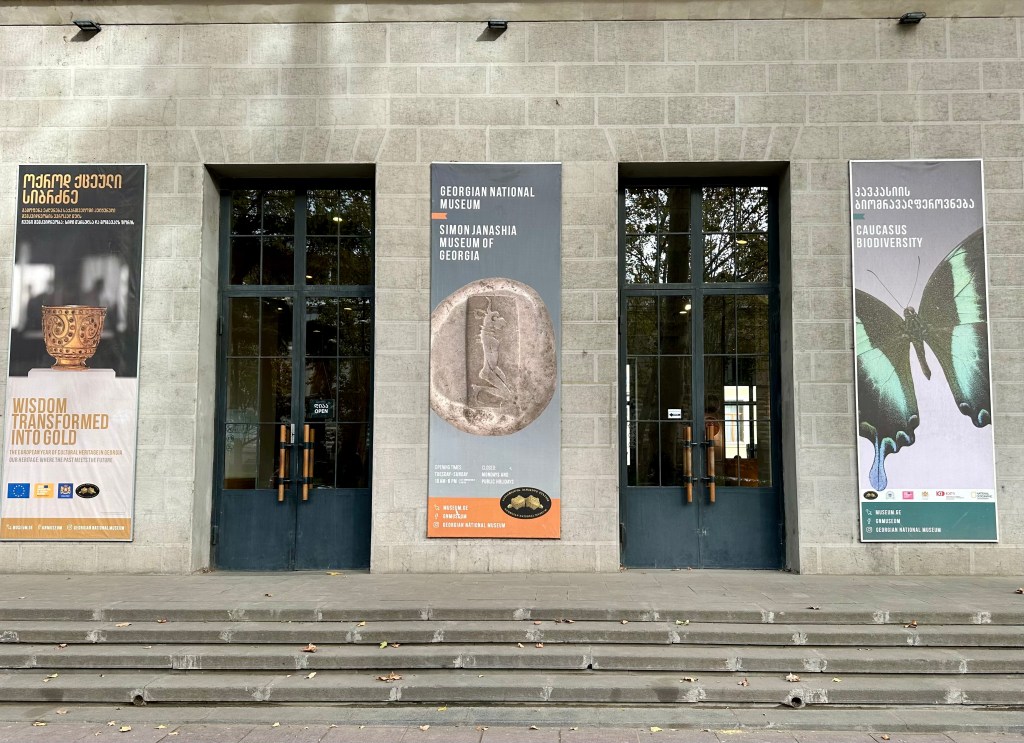
Georgian National Museum and Georgian National Art Gallery.
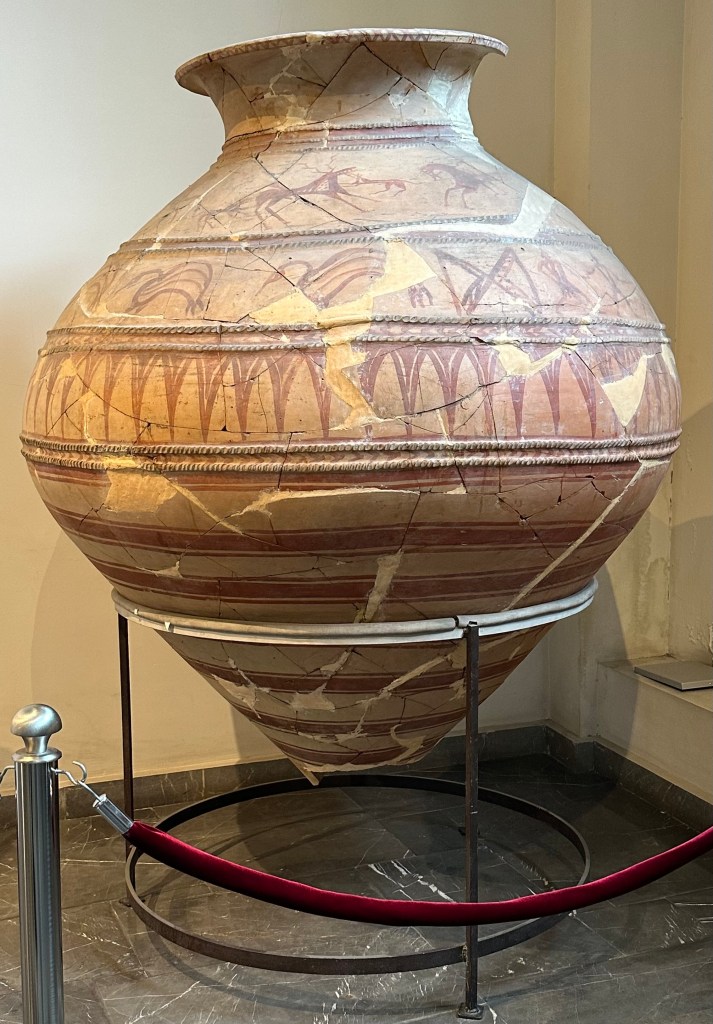
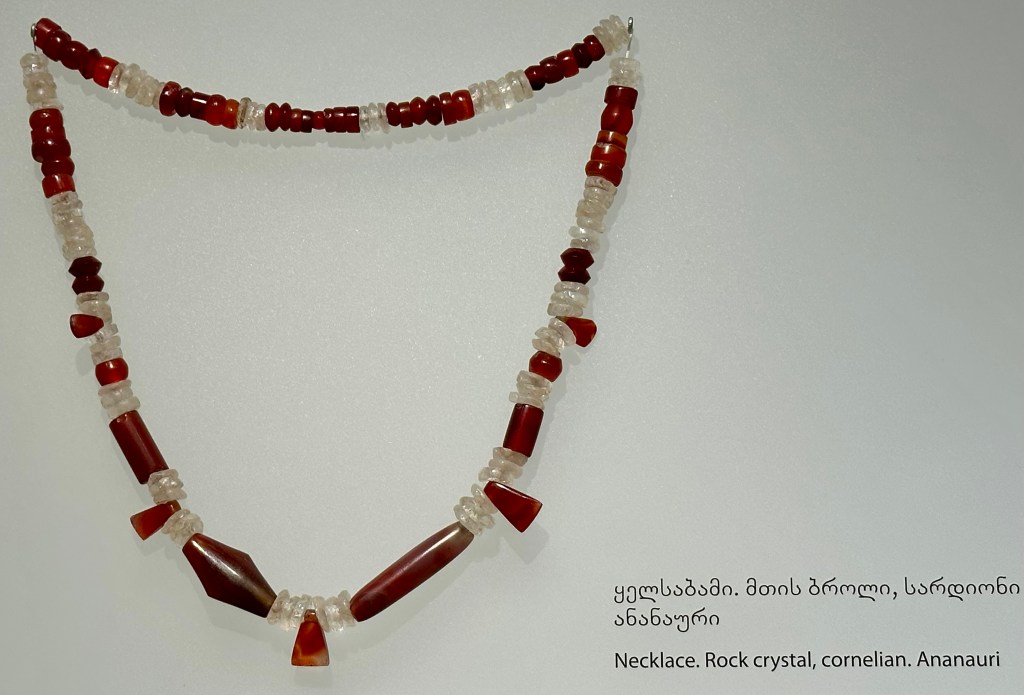
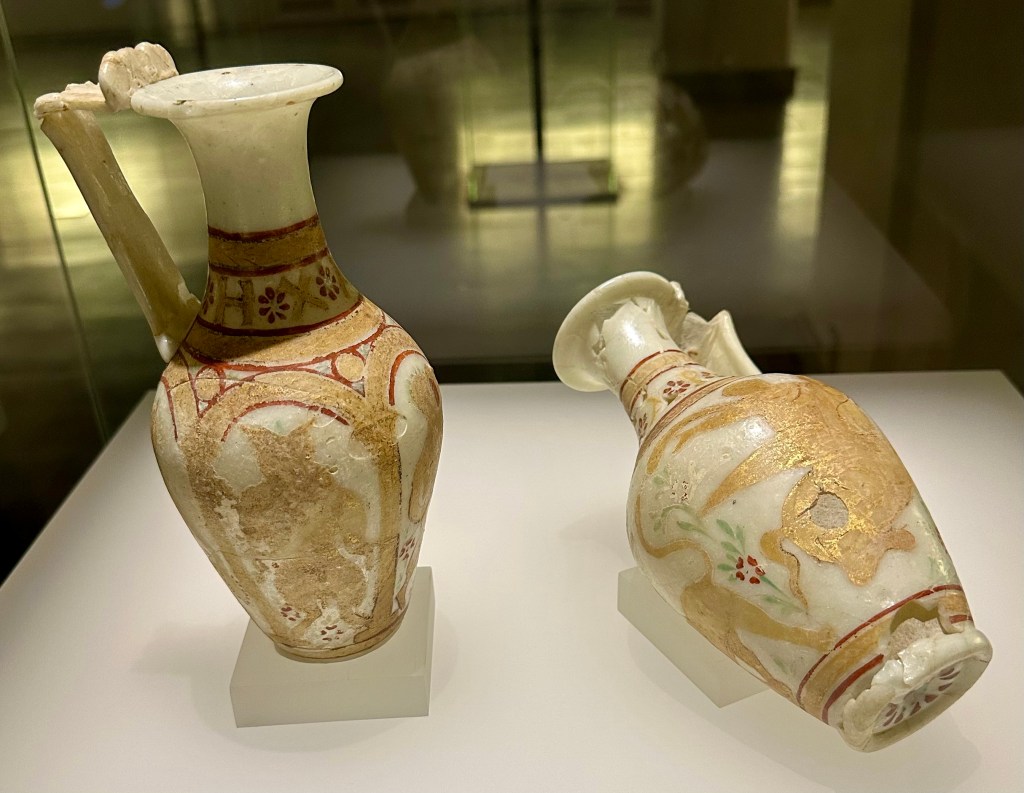
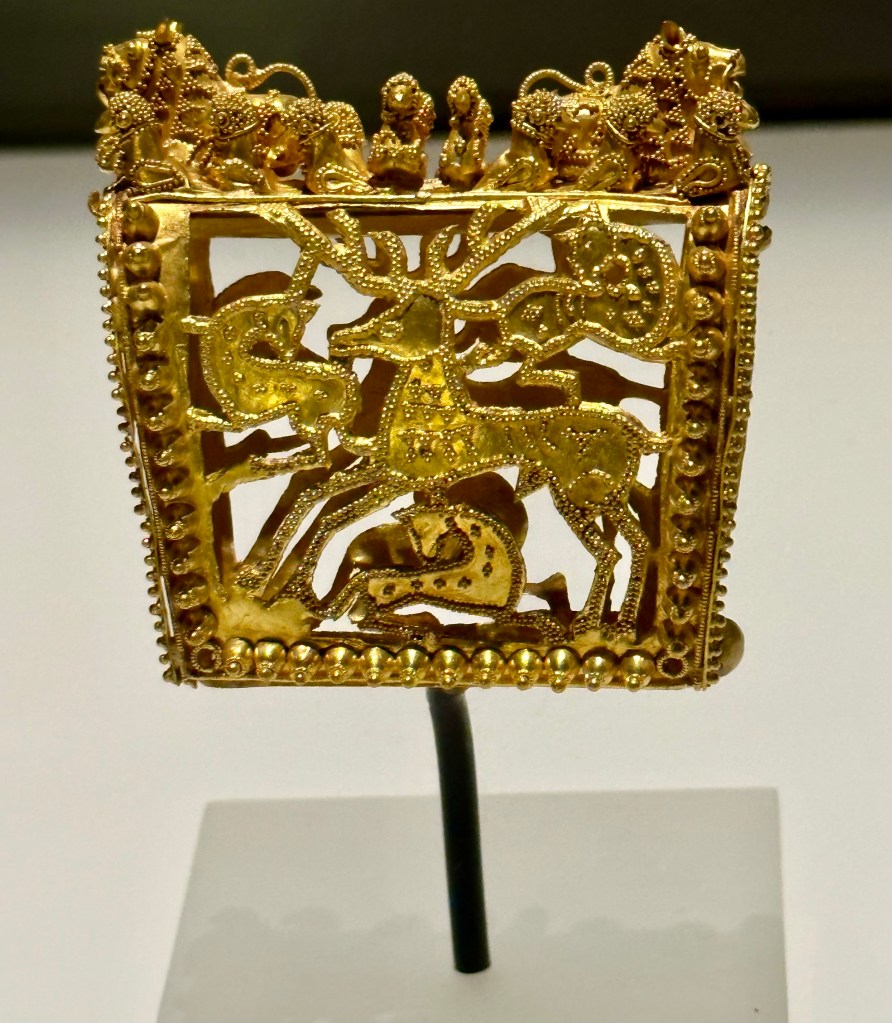
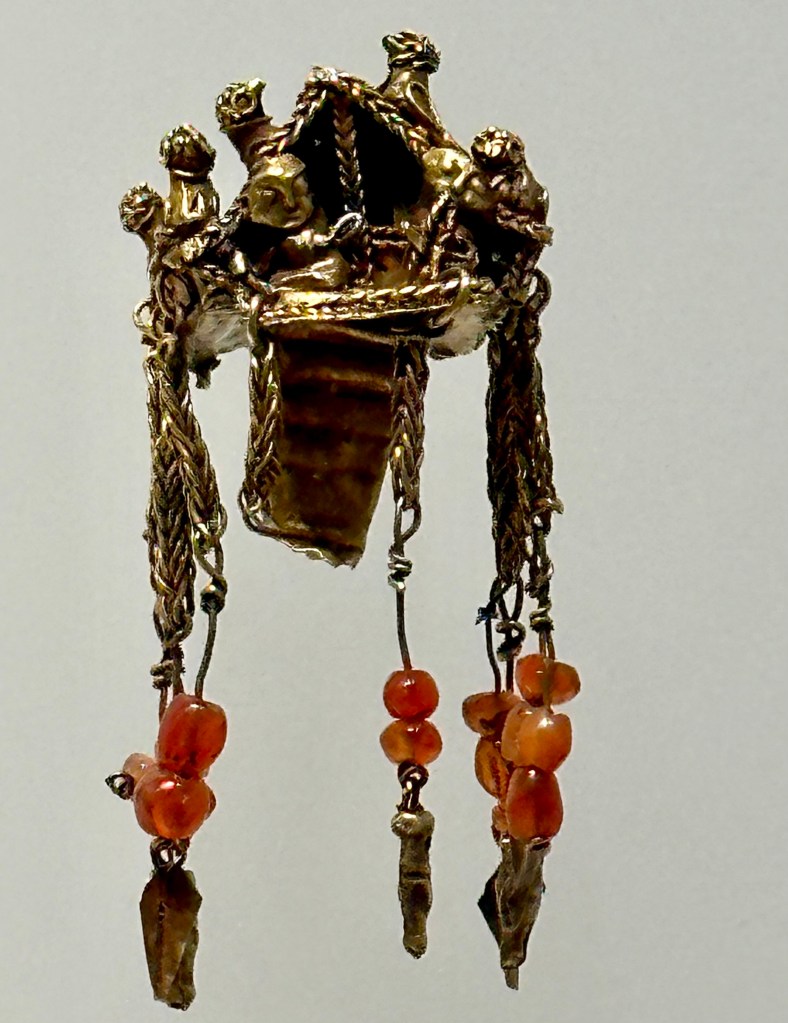
Georgian National Museum. The museum opened around 1920 and has an impressive permanent collection of more than 140,000 stunning items. The highlight of this impressive collection is in the basement. Archaeological Treasury, displaying a wealth of pre-Christian gold, silver and precious-stone work from burials in Georgia going back to the 3rd millennium B.C. Most stunning are the fabulously detailed gold adornments from Colchis (western Georgia).Georgians love their qvevri(s). And rightly so!3rd Millennium B.C.Painted and gilt white glass pitchers. One bears the image of Dionysos, the god of wine making, of course, Syrian workmanship. 3rd century A.D.A unique piece of Colchian goldsmithery(sp?), one of the earliest examples of making patterns in the sheet gold by cutting out portions of metal in the jeweler’s art of the Classical period. Burial headdress. End of the 4th Century B.C.There were so many beautiful pendants, headdresses, rings, earrings . . . The room is arranged chronologically. Many items are currently on loan to a museum in Brussels. Stay tuned, we may get to see more.
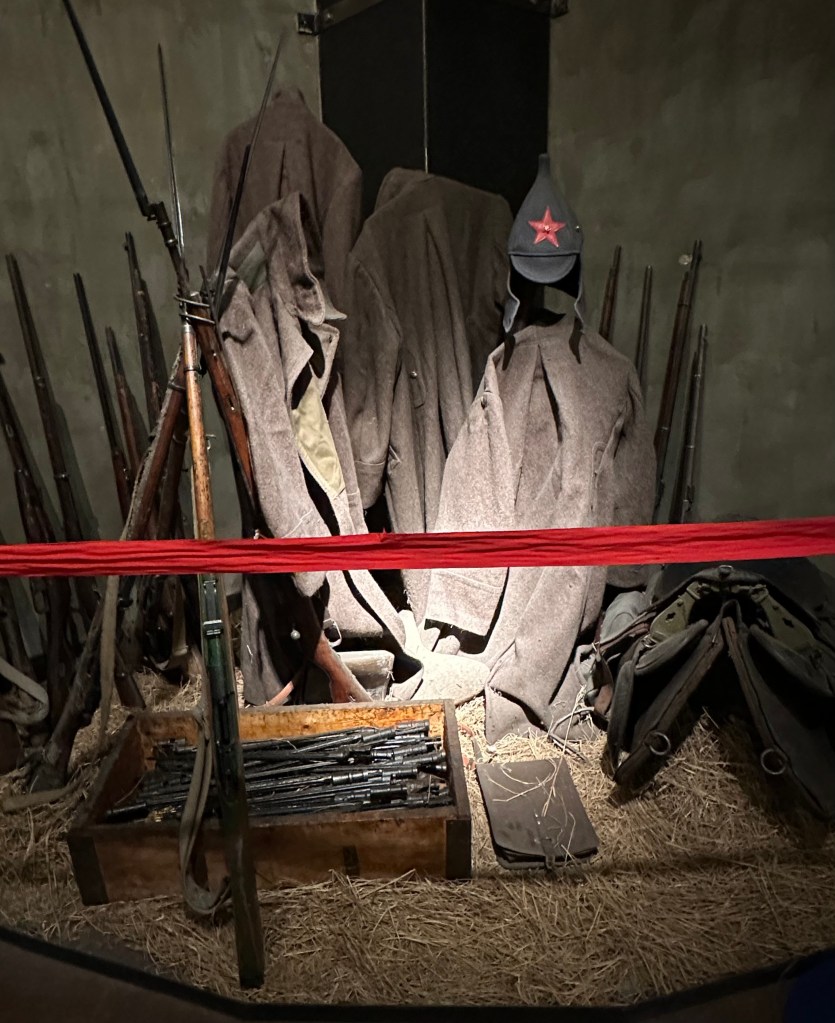
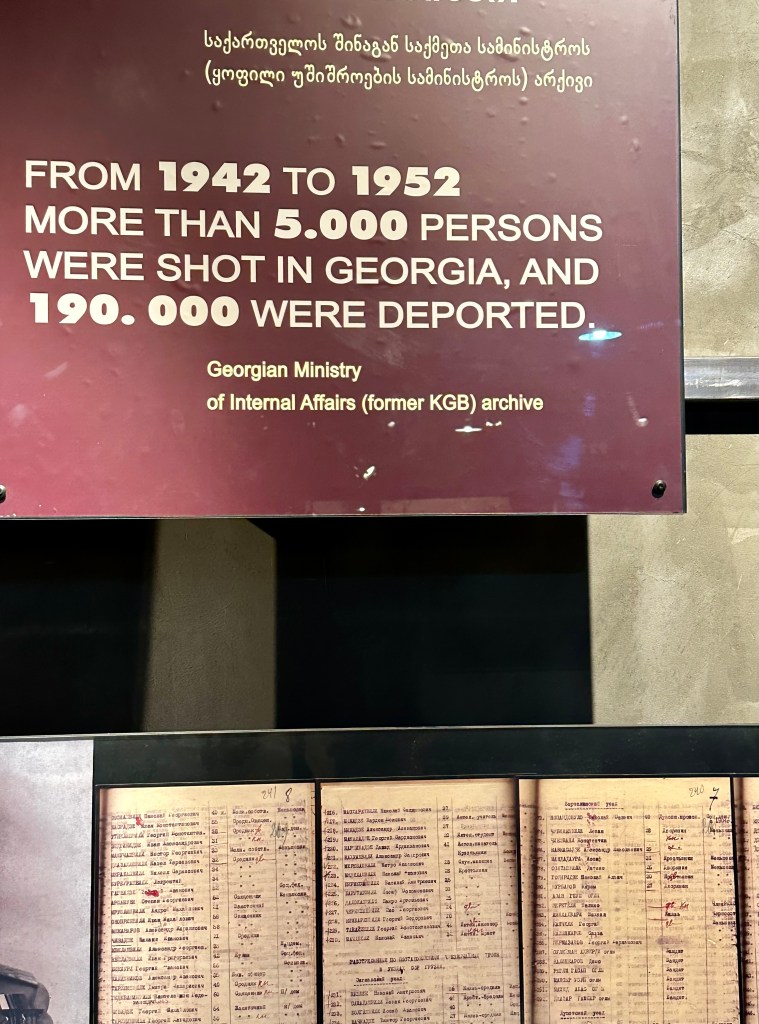
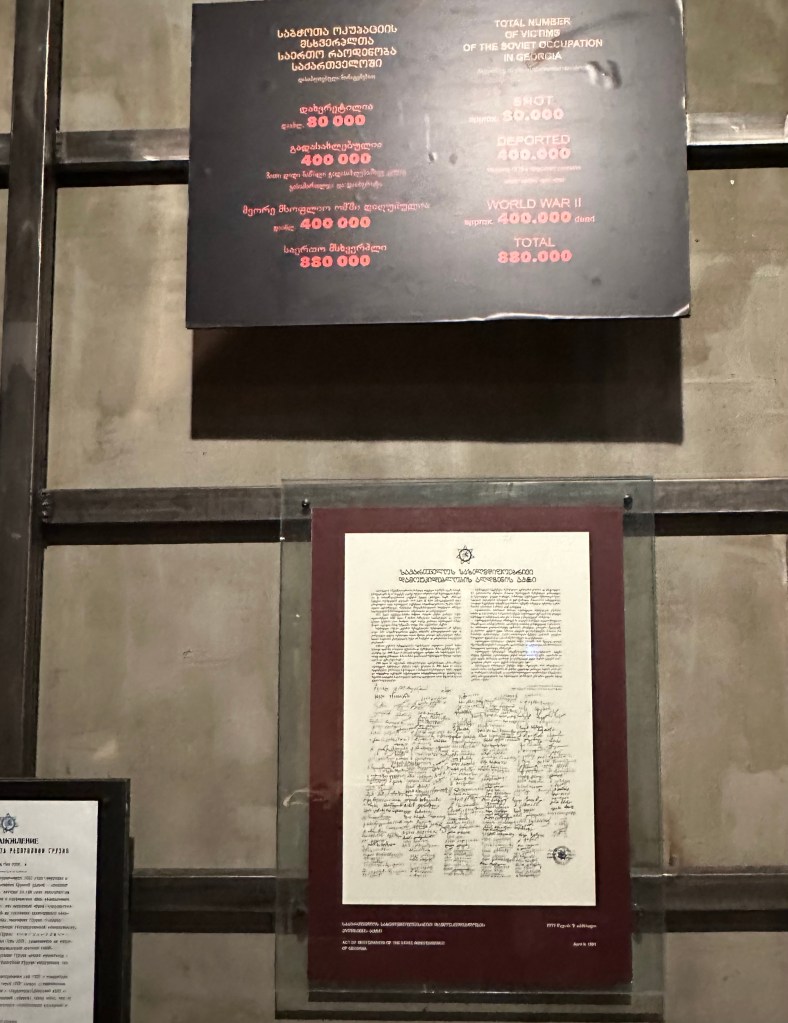
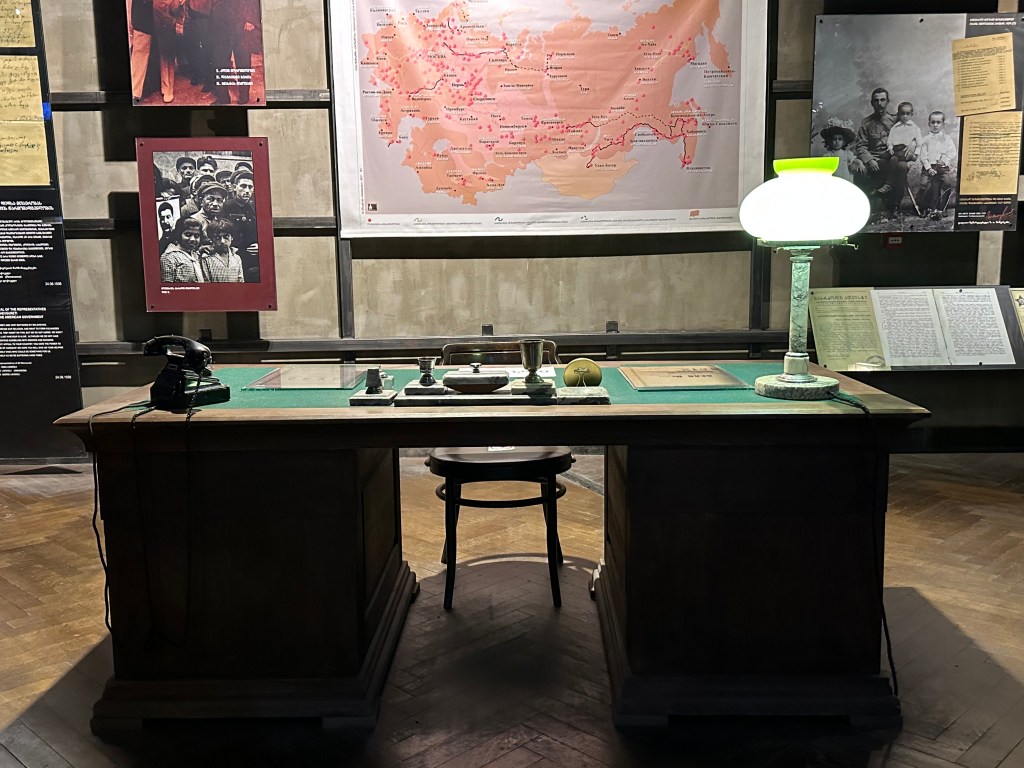
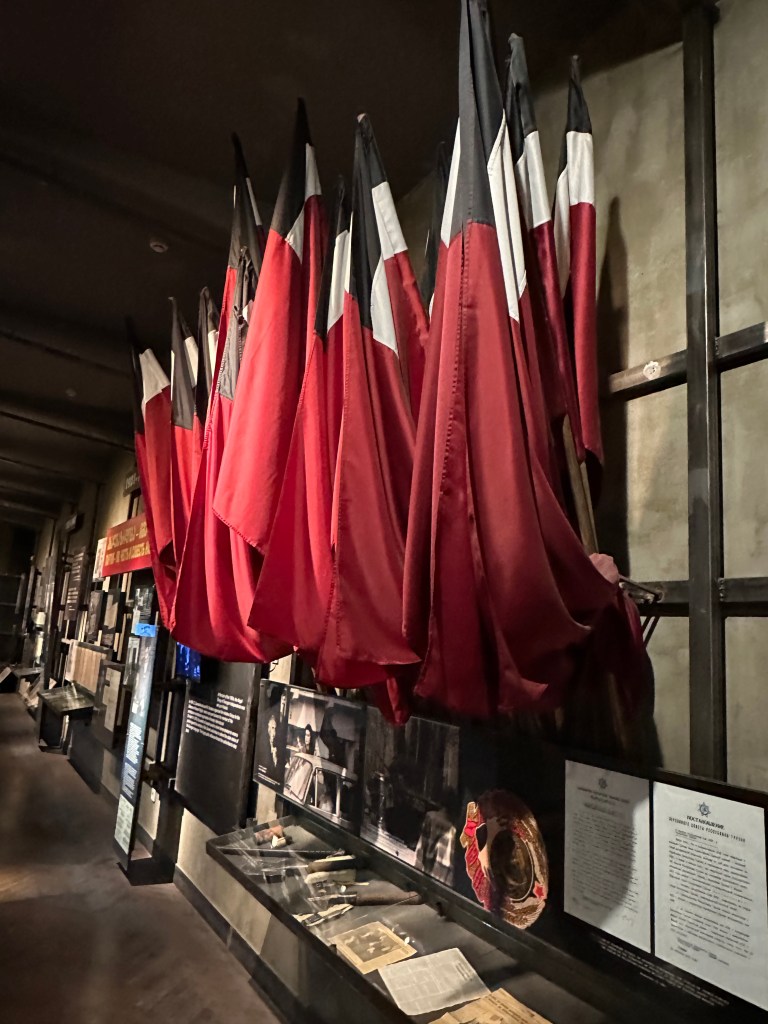
The top floor of the museum is devoted to the Soviet occupation. And has copious details on Soviet repression and local resistance to it.
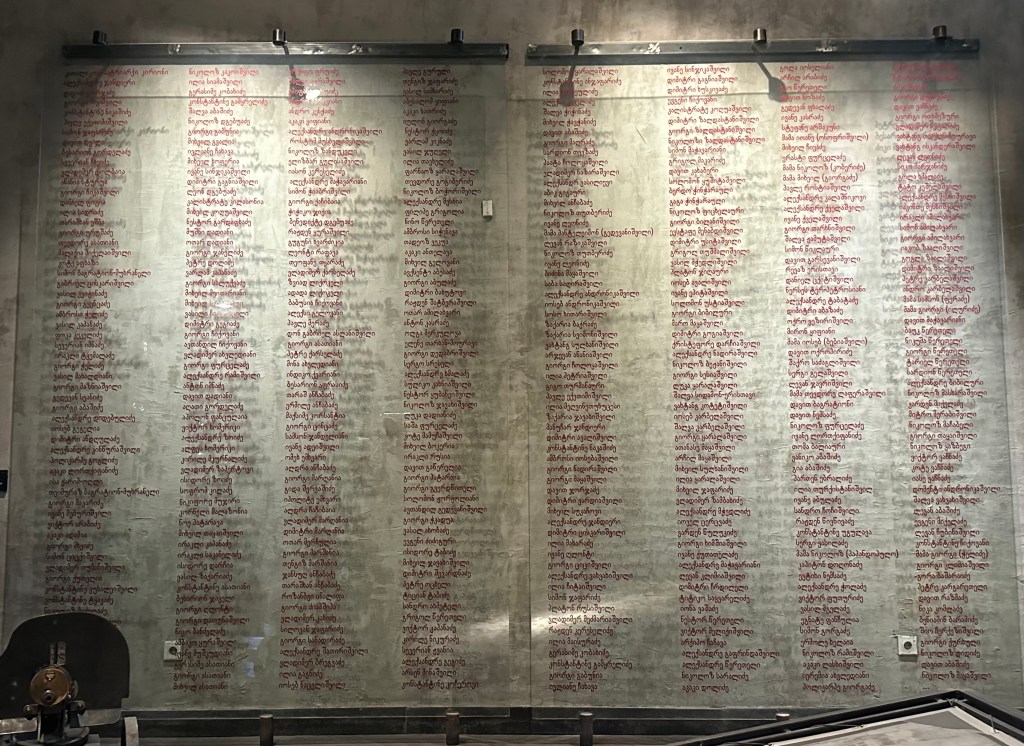
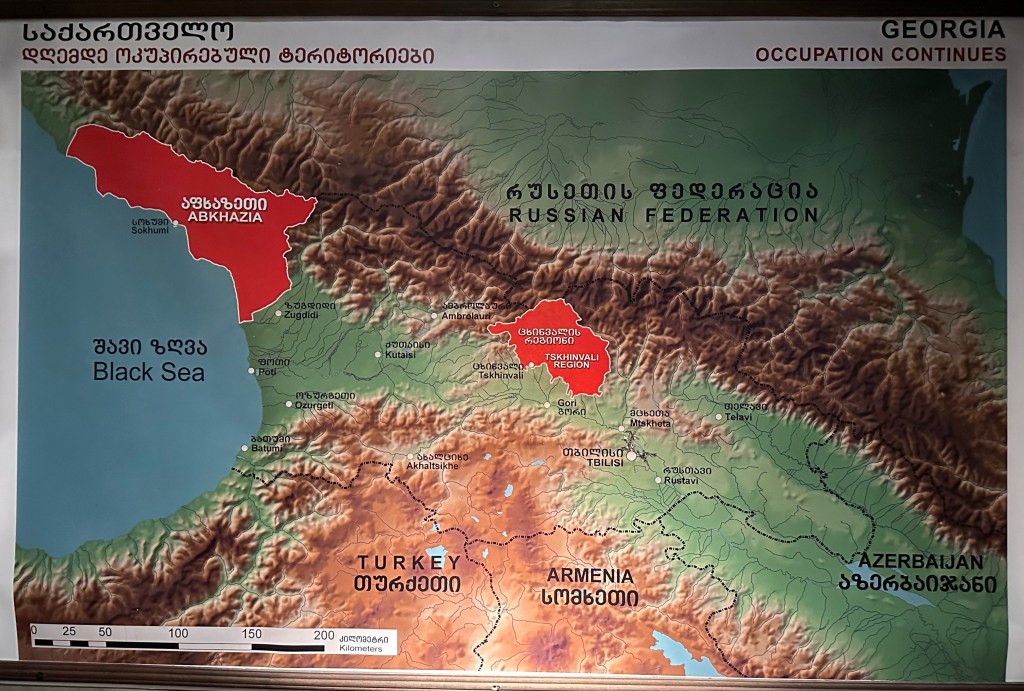
The period of 1921 to 1926 saw a predetermined extermination of the elite of the Georgian society, including aristocracy, clergy, intelligentsia and rich peasants.This floor houses materials, representing the period of Georgian history during the Soviet occupation, 1921-1991.Incomplete list of public figures and citizens shot during the period of Soviet occupation.The Democratic Republic of Georgia (DRG) was the first modern establishment of a republic of Georgia, which existed from May 1918 to February 1921. Recognized by all major European powers of the time. Although short-lived, DRG continues to be an inspiration for modern day Georgia due to its legacy of democracy and pluralism.Occupation seems to continue.
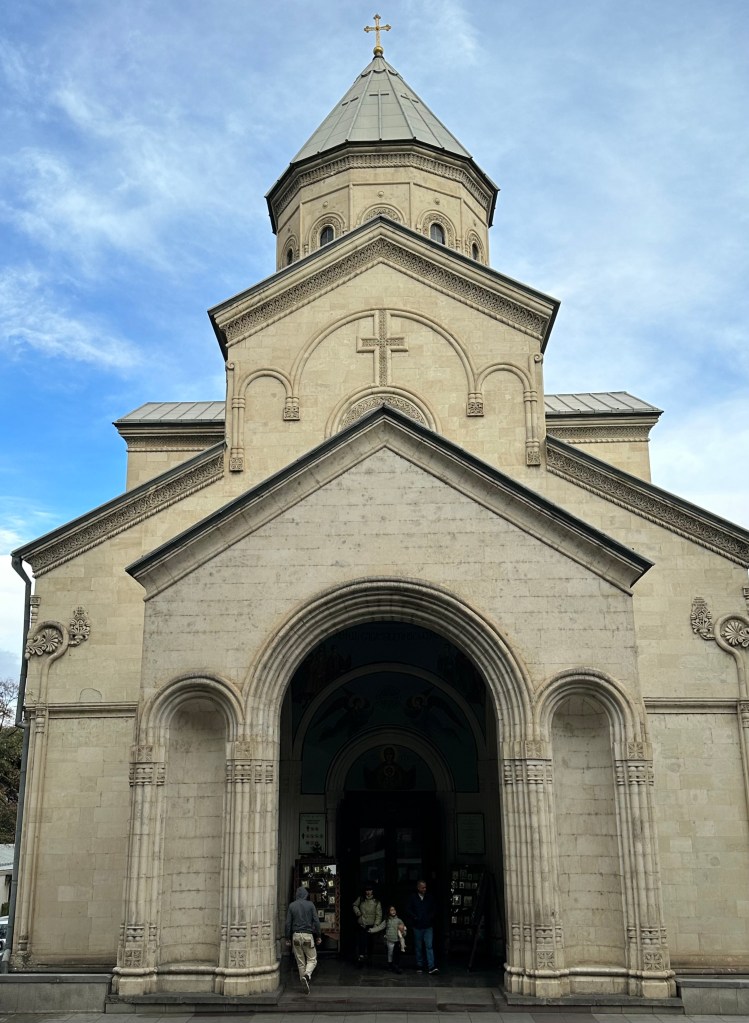
Kvashveti Church of St. George. Passed this beautiful church on my walk from the Georgian National Museum to the National Art Gallery.
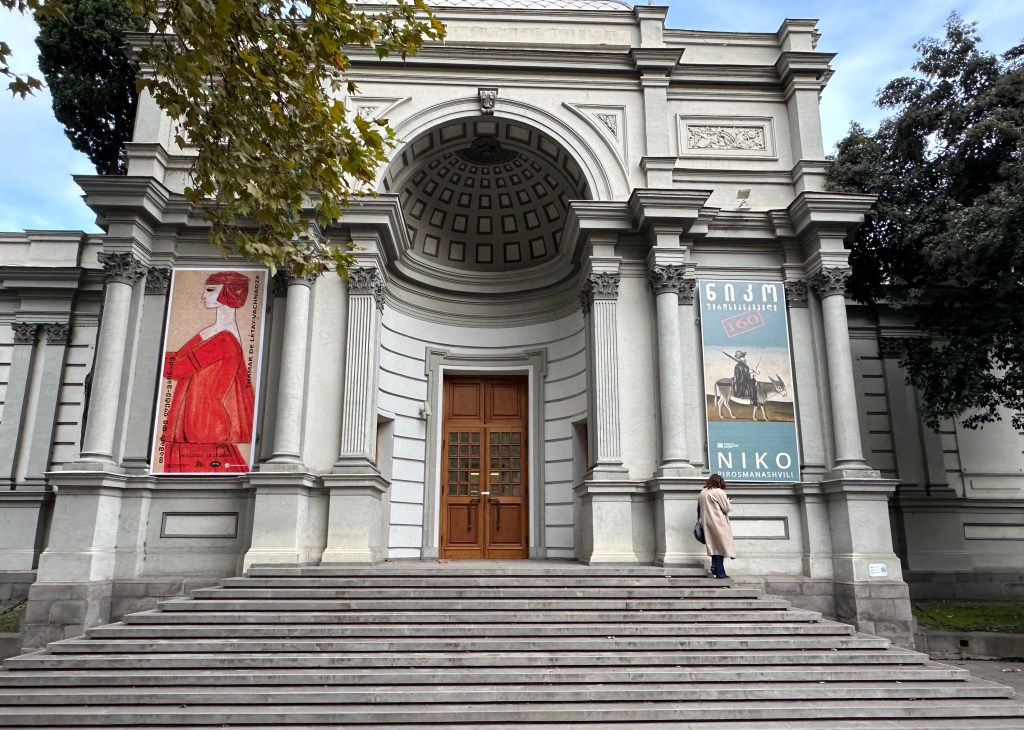
Georgian National Art Gallery.
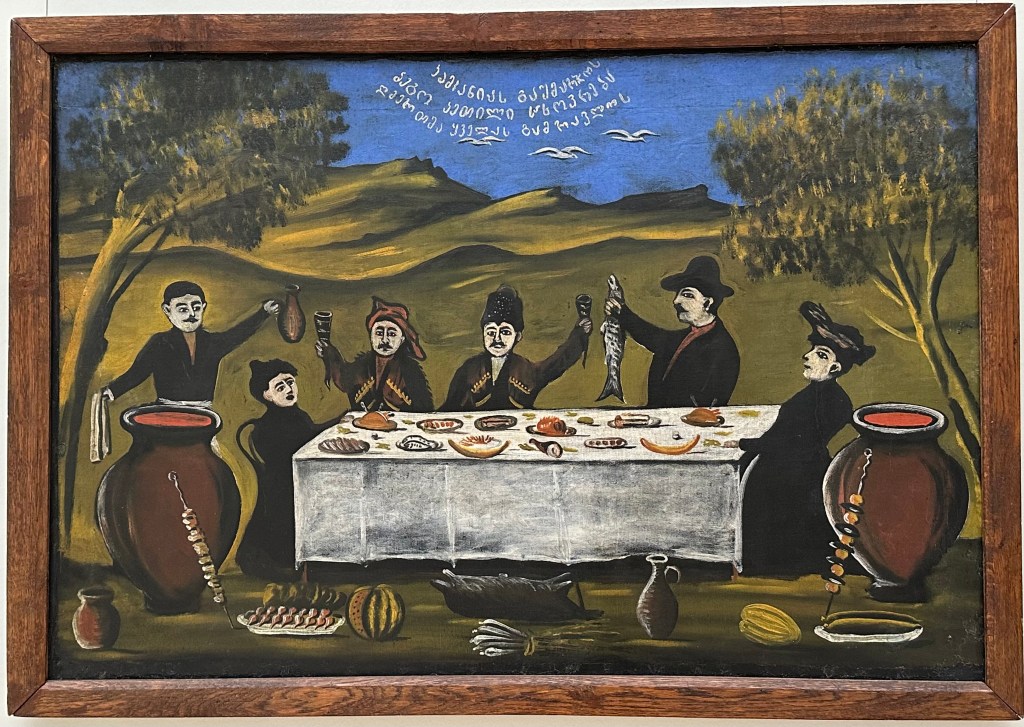
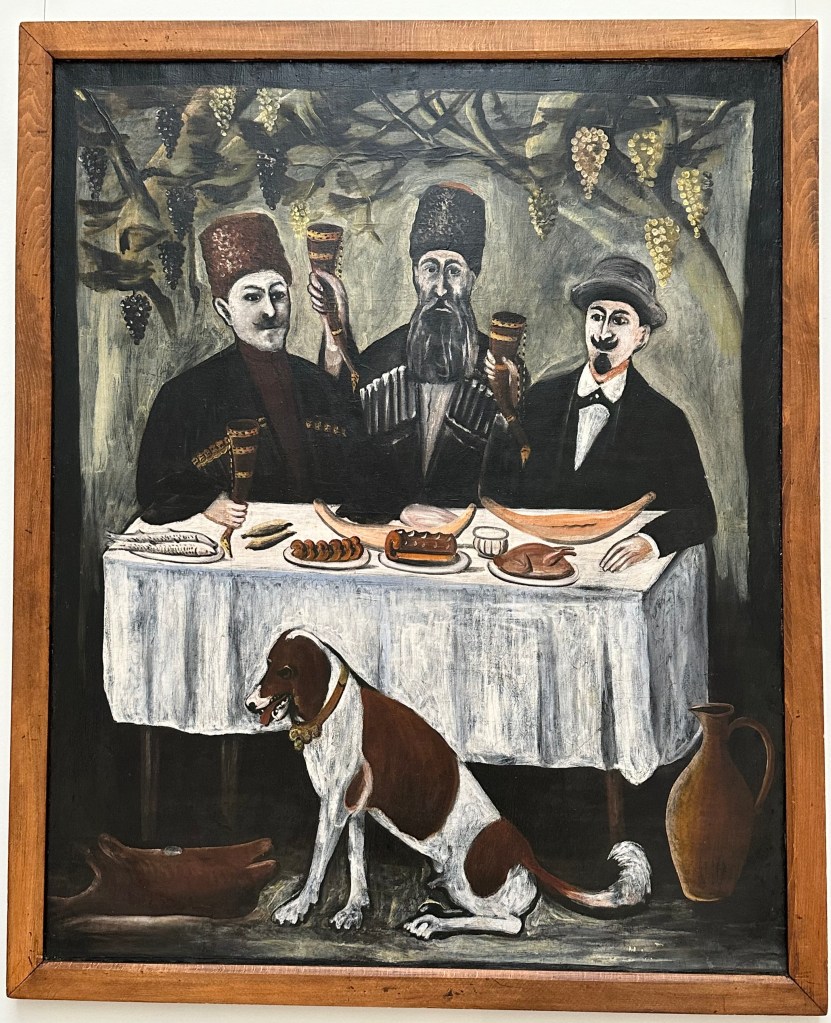
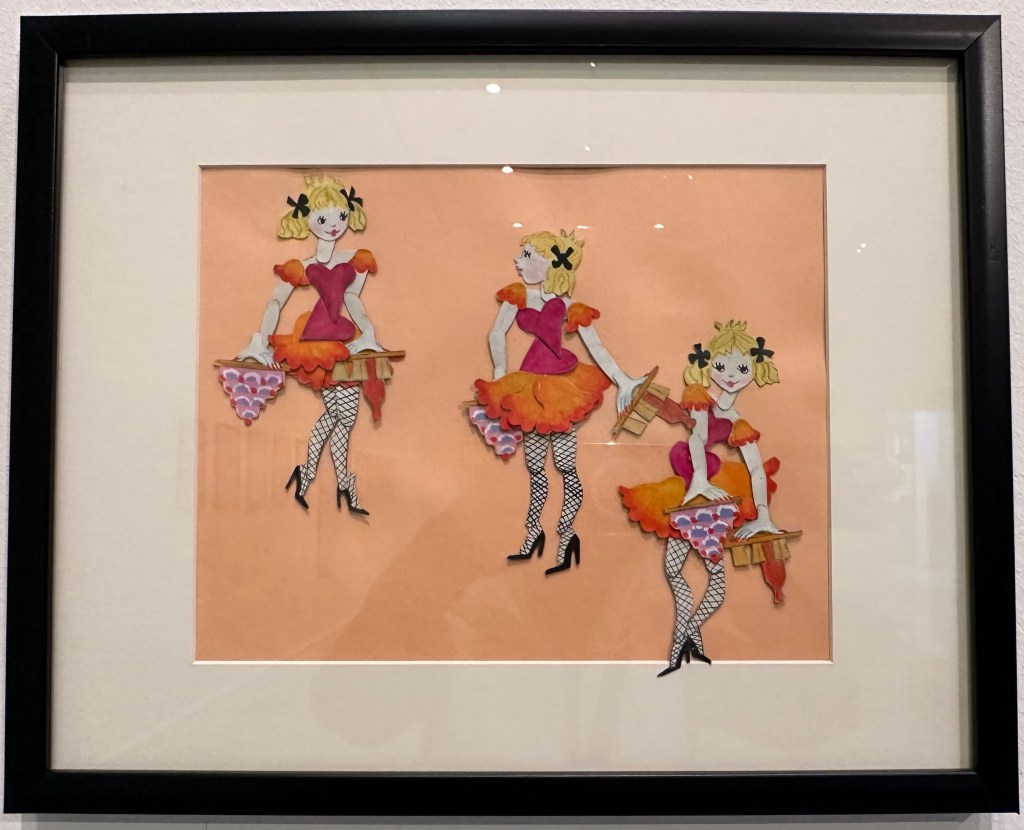
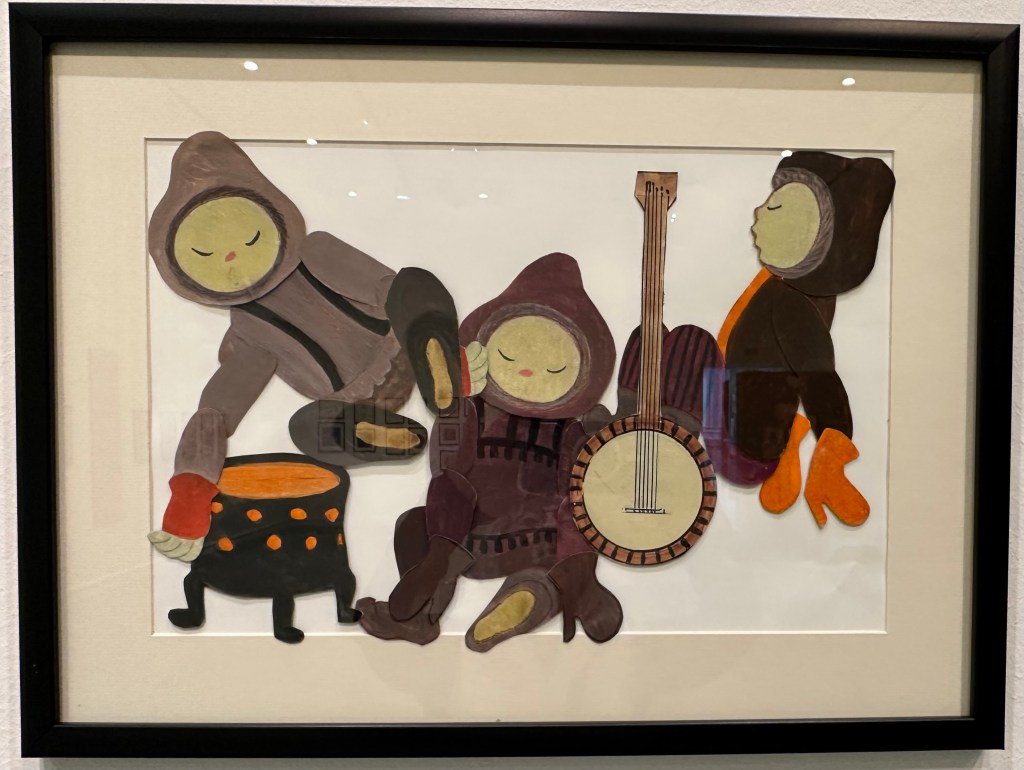
Family Picnicking. Oil on waxcloth. Niko Pirosmanashvili. Nikoláy Aslánovich Pirosmanashvíli or Niko Pirosmani simply referred to as Nikala, 1862 – 1918, was a Georgian painter who posthumously rose to prominence.Carousal in a Vine Pergola. Oil on waxcloth. Niko Pirosmanashvili (1862 – 1918)Songs and Rhymes. Paper, Watercolor, Application.Eskimo Dreams. Paper, Watercolor, Application.
Thamar de Létay-Vachnadze was a versatile artist who worked in many different areas, from ballet productions to theater and fashion design. Her talent and creativity were showcased in exhibitions held in prestigious galleries in Paris, including the “Gallery of the XVI arrondissement” and the “Salon Sofitel Group 36. The emigrant Georgian artist created several sketches for the French fashion house Dior in the 20th century.
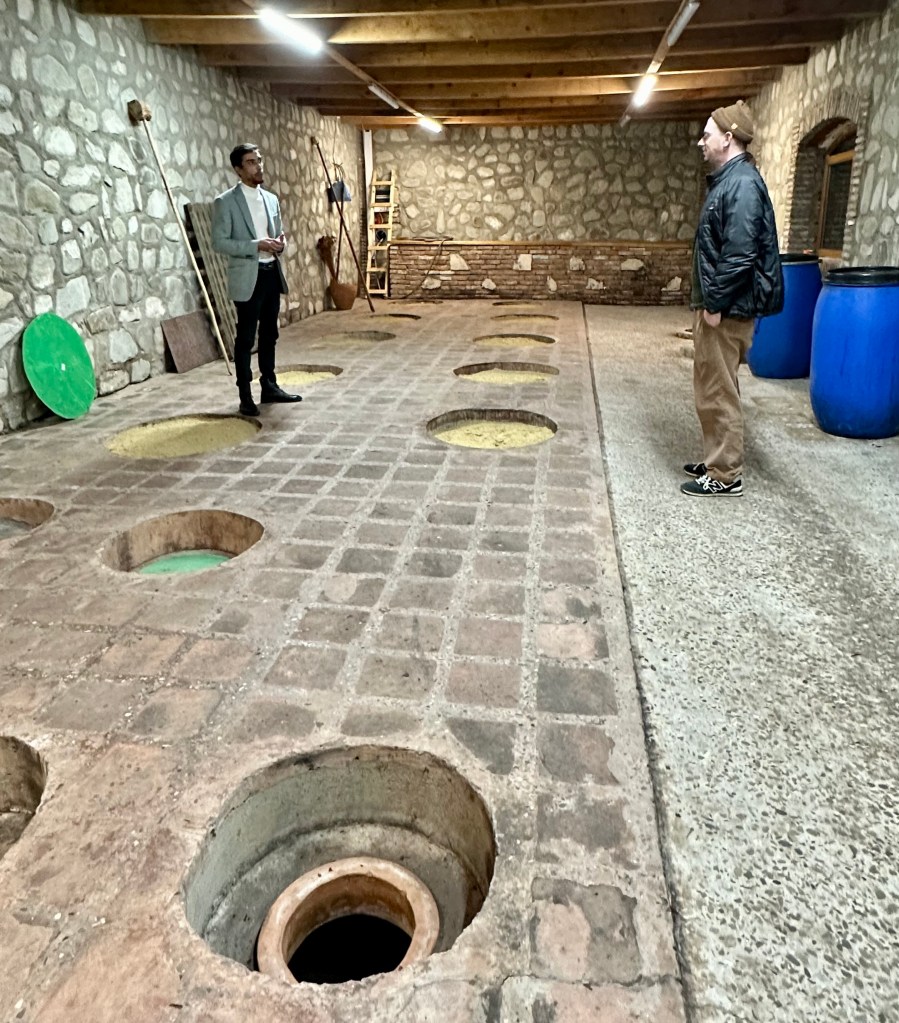
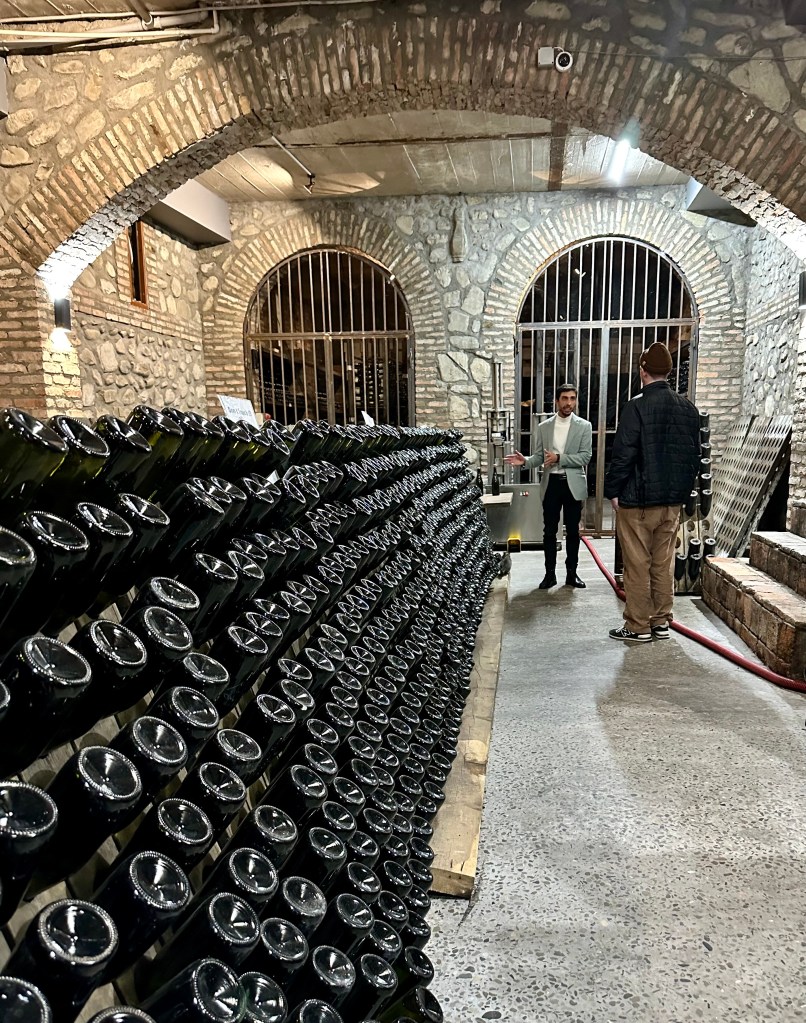
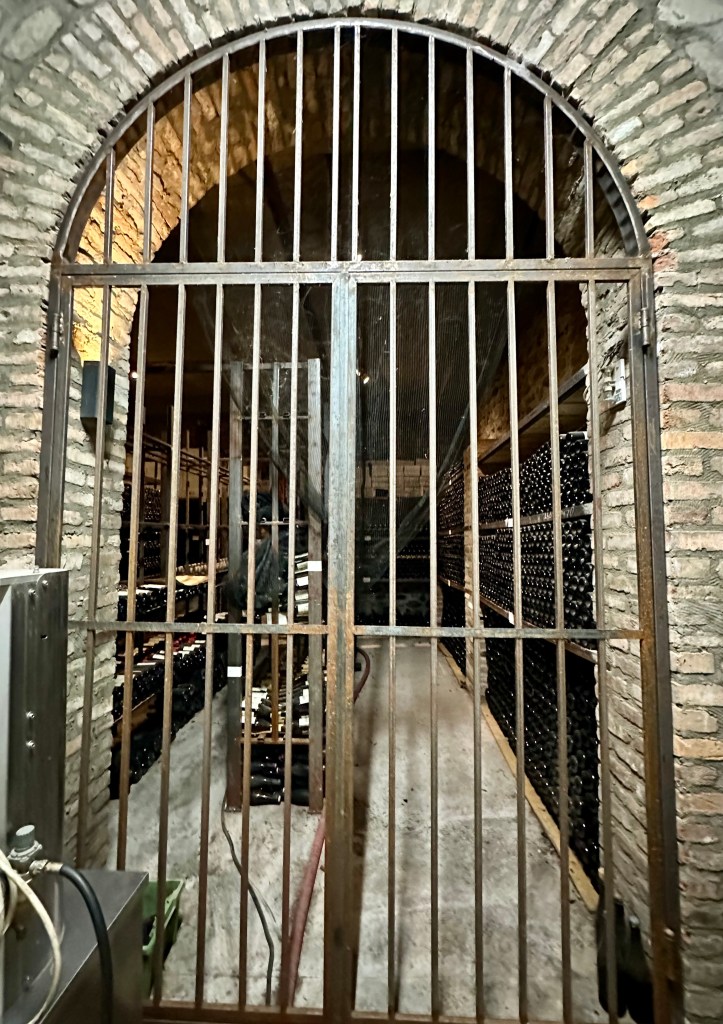
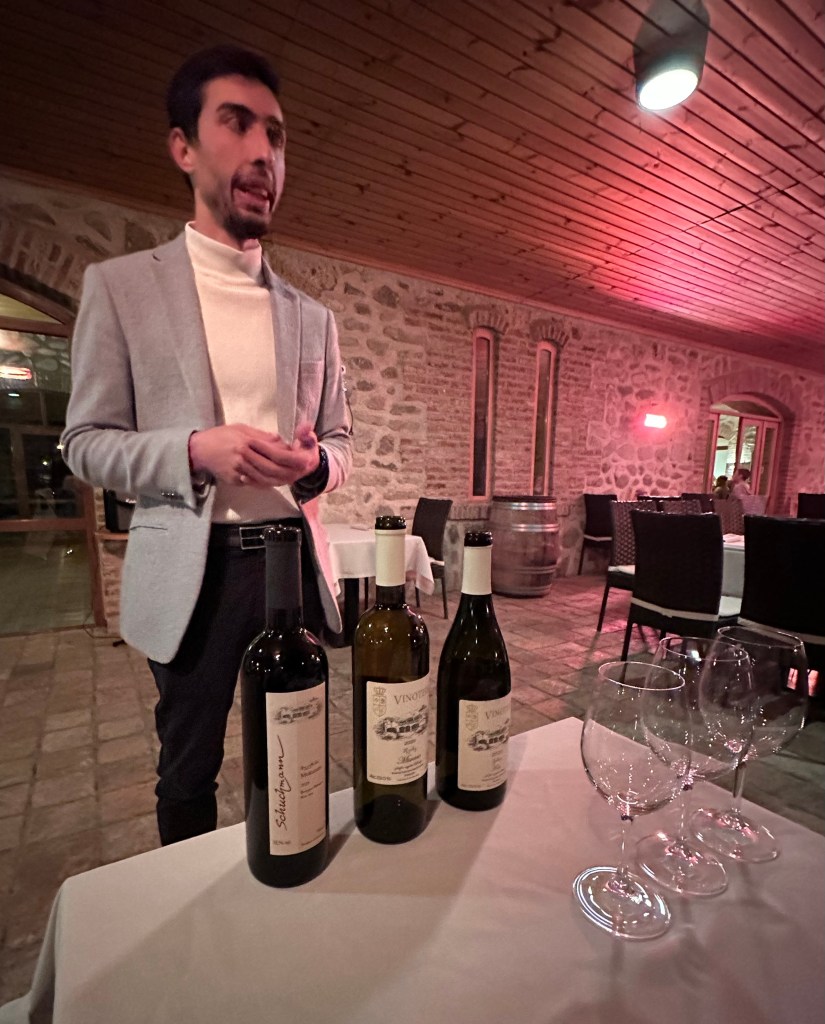
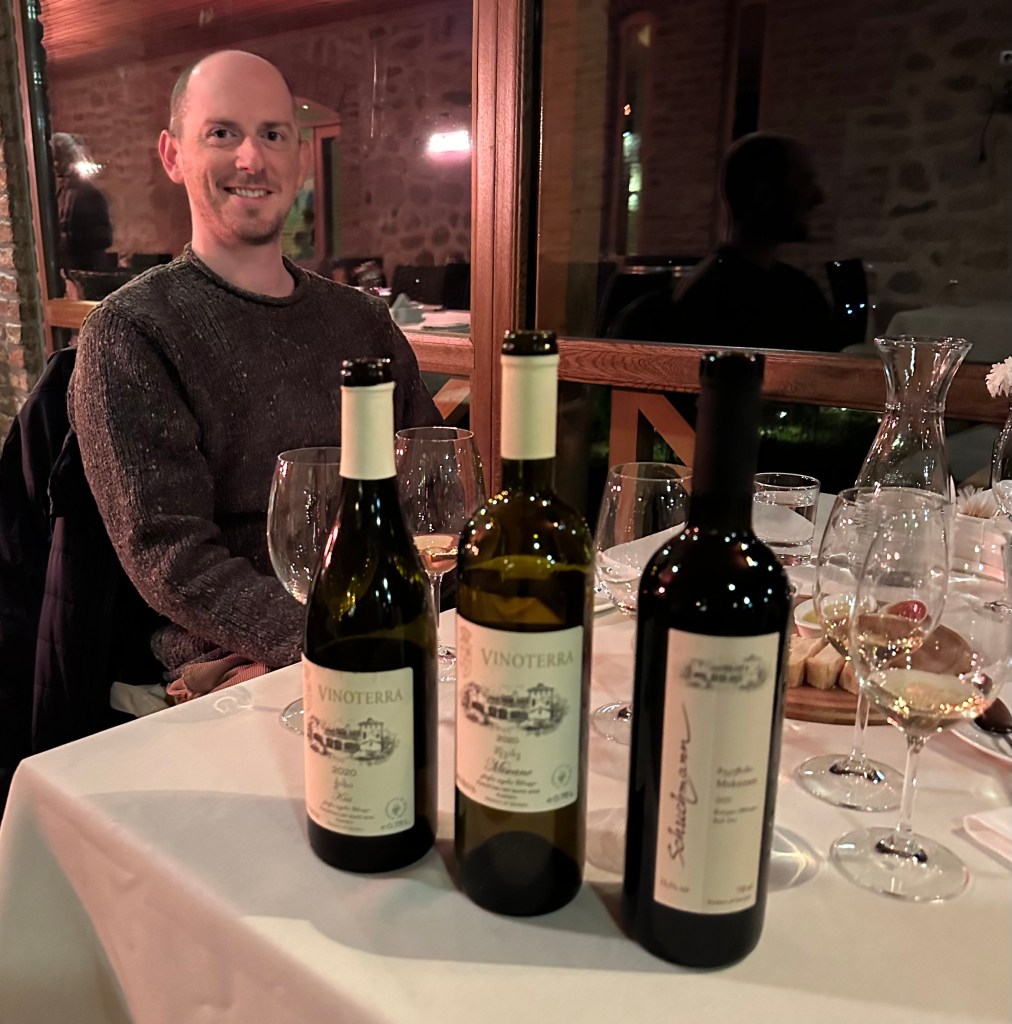
My view this morning.My new best friend.Back massage with hot stones for me.One of the qvevri rooms. Schumann Wines produces wines out of three distinct vineyard sites, Napareuli, Tsinandali and Kindzmarauli. And in three styles: Georgian, European and a hybrid of both.A section of the wine cellar.The reserve wines.Our sommelier.Mike getting ready to taste.
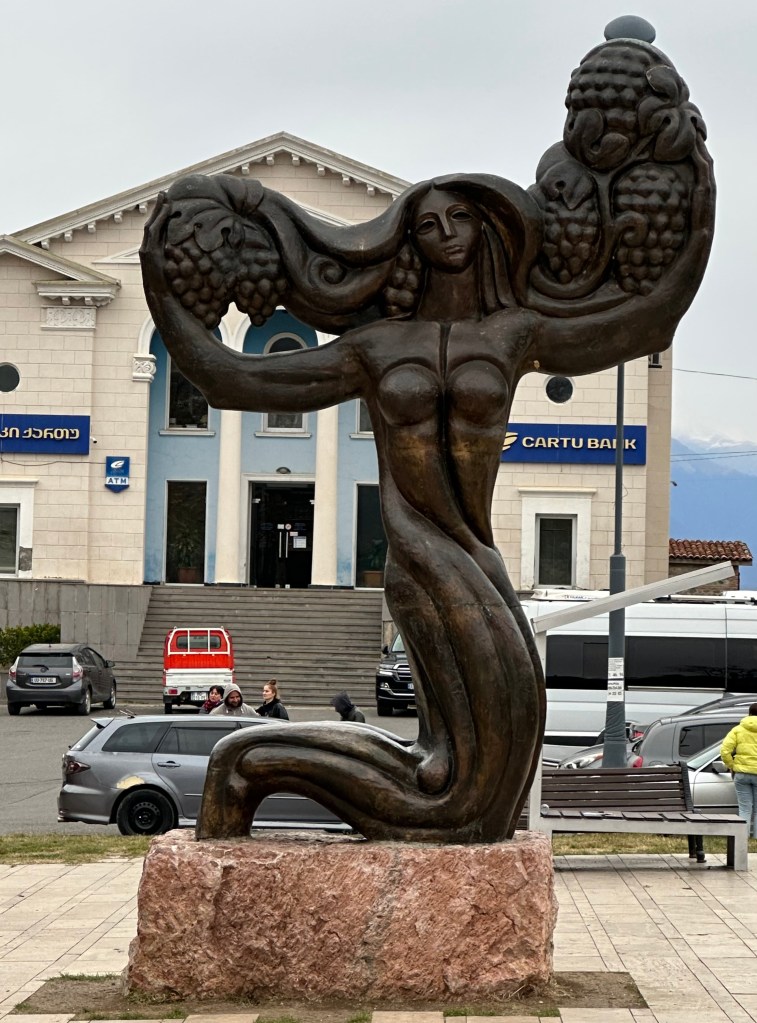
Mike and I left early for Telavi. Telavi is the main city and center of Georgia‘s eastern province of Kakheti. Kakheti is Georgia’s foremost wine region (previous post—Sighnaghi is also located in the Kakheti region). Again, it produces nearly three-quarters of the country’s wine grapes, which are grown on land that has been dedicated to viticulture for thousands of years. Telavi is located on the foothills of the Tsiv-Gombori Range at 500–800 m (1,600–2,600 ft) above sea level.
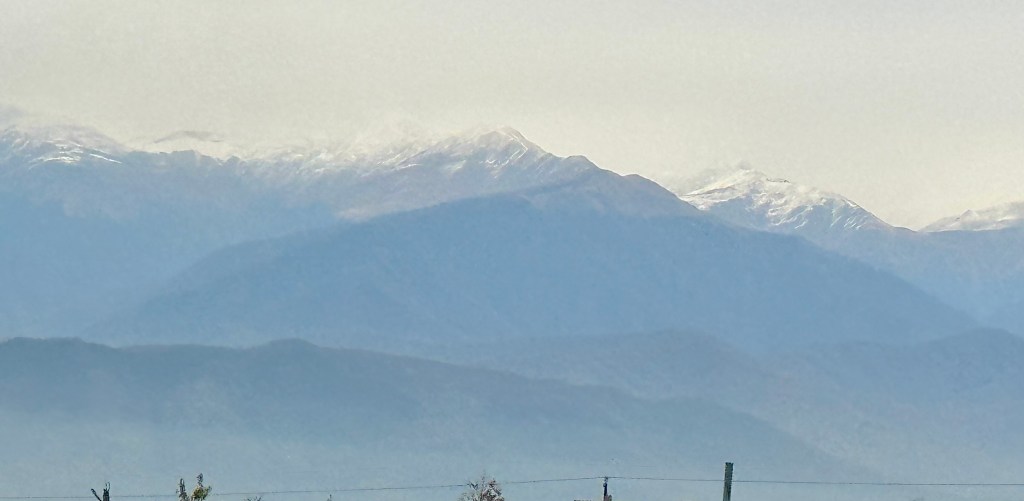
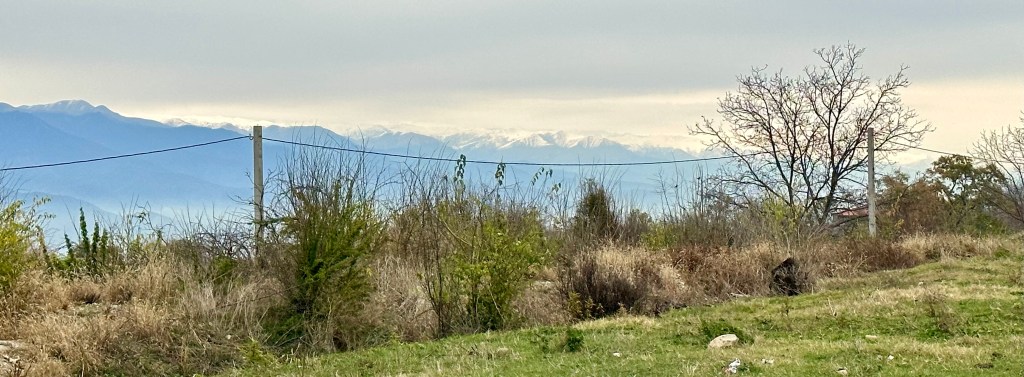
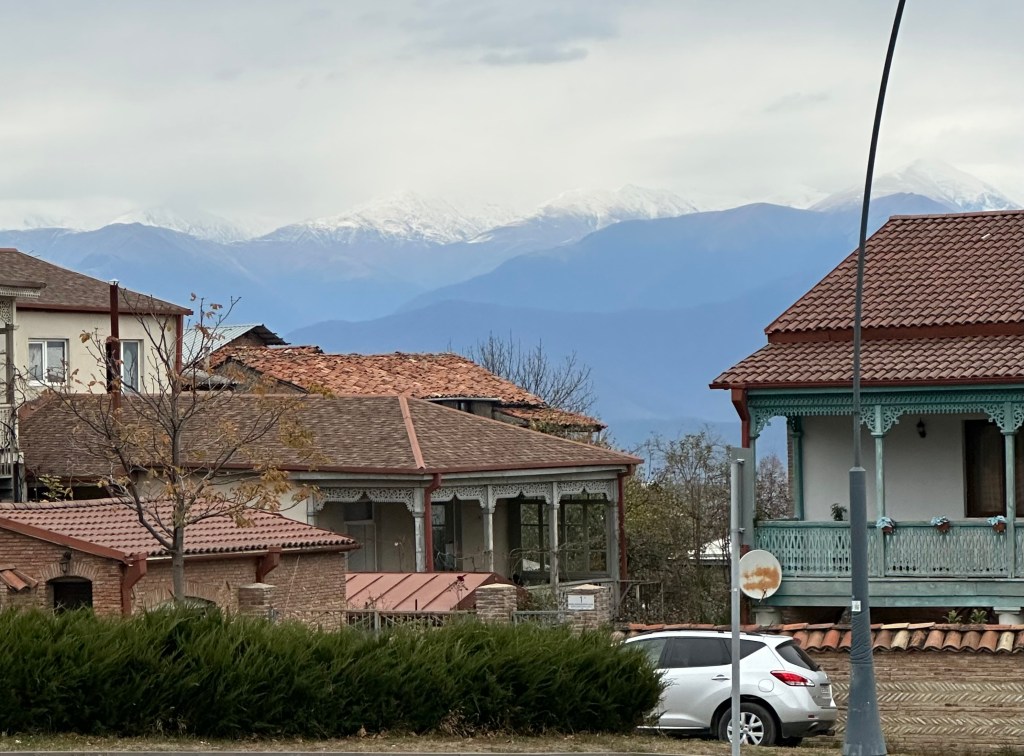
Our way to Telavi. Russia is on the other side of these snow-capped mountains.
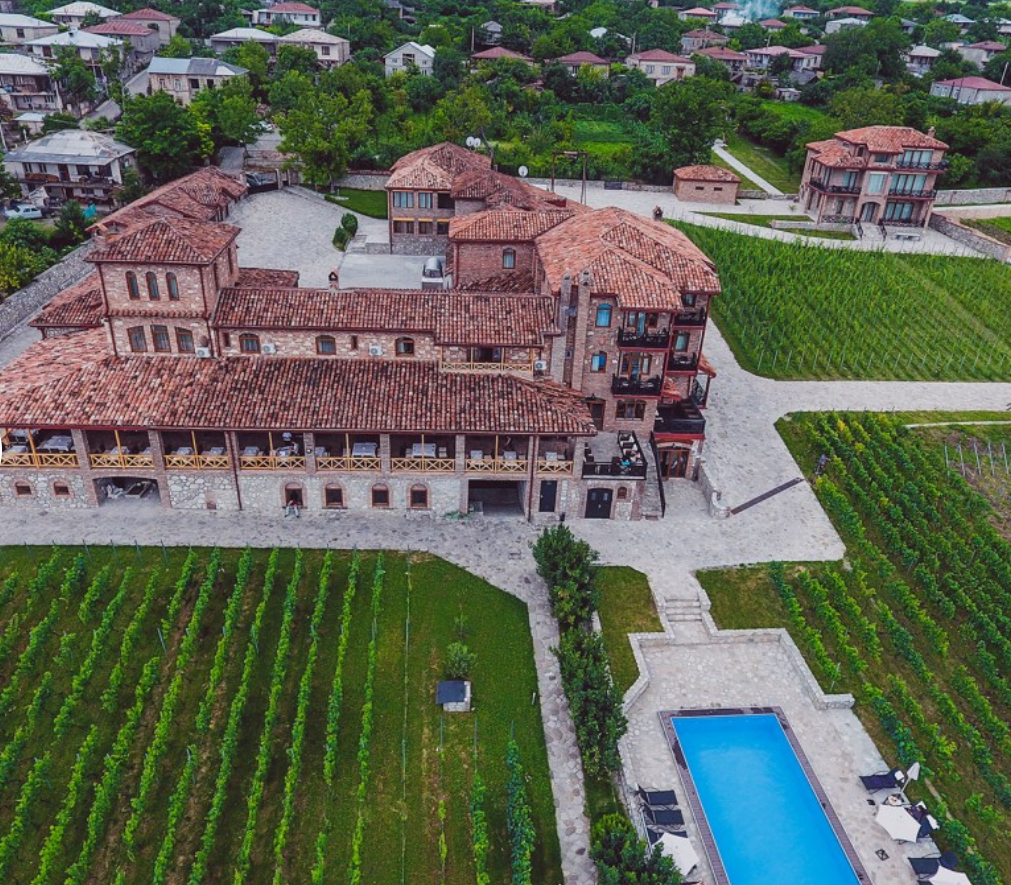
Fermenting grapes for wine is a custom that’s been practiced in Georgia from as early as 6,000 BC. At the heart of the operation has always been the qvevri: the rotund clay vessel with a tapered bottom that’s buried up to its neck in the earth. Grapes are plucked by hand and crushed by foot in a satsnakheli winepress, then channelled — seeds, skins, stems and all — into the qvevri to ferment. Mike and I are going to Schumann Wines Chateau, Villas and Spa. They produce wines Georgian style, European style and a combination.
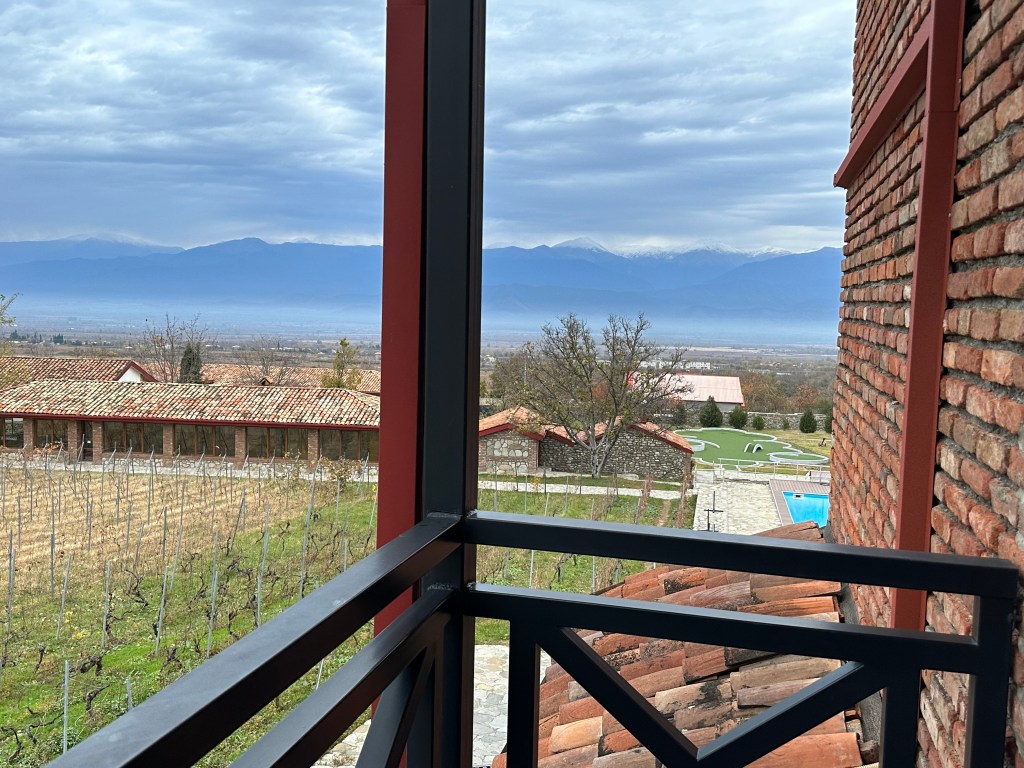
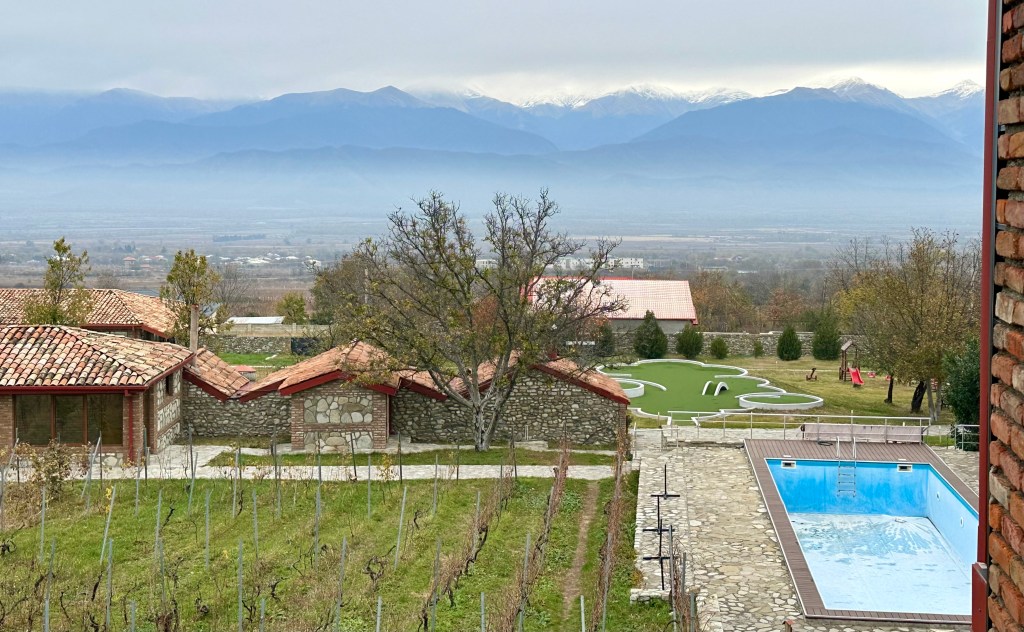
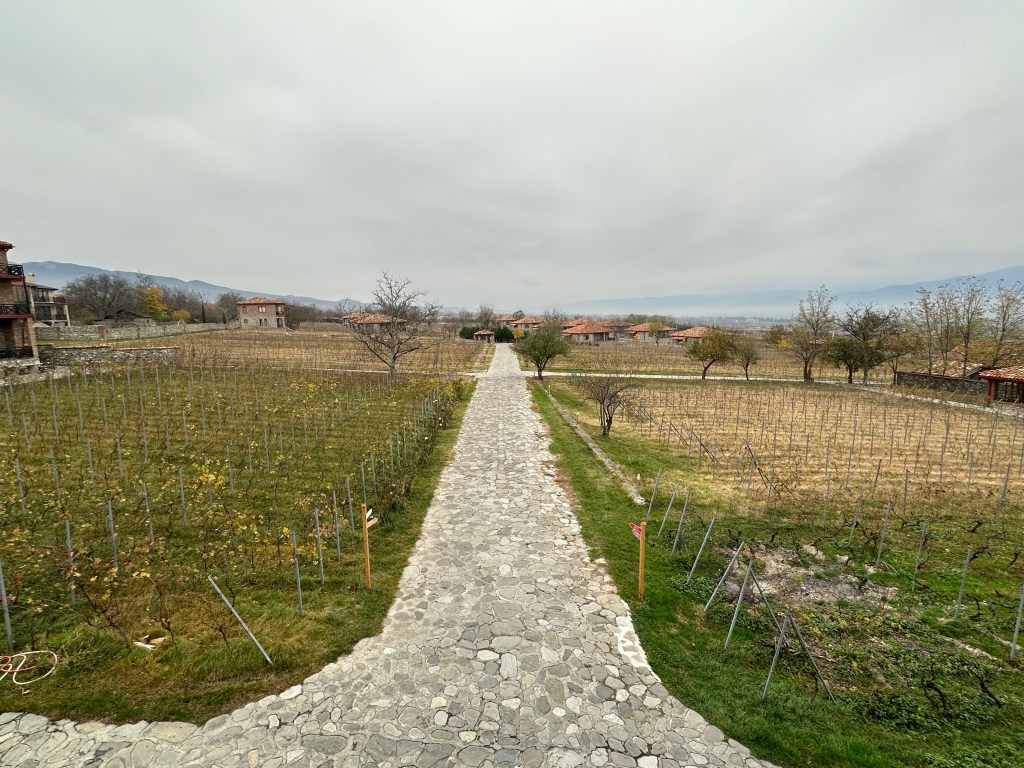
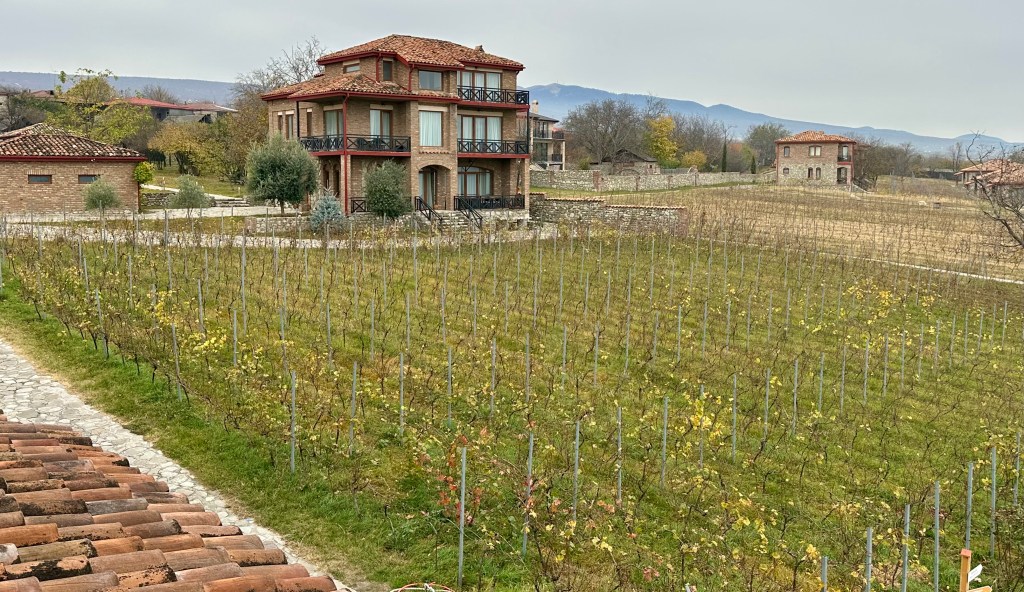
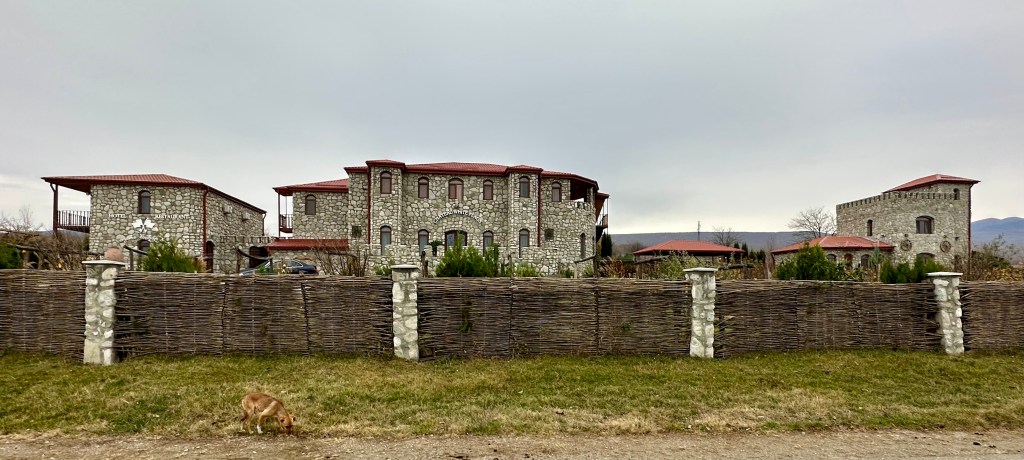
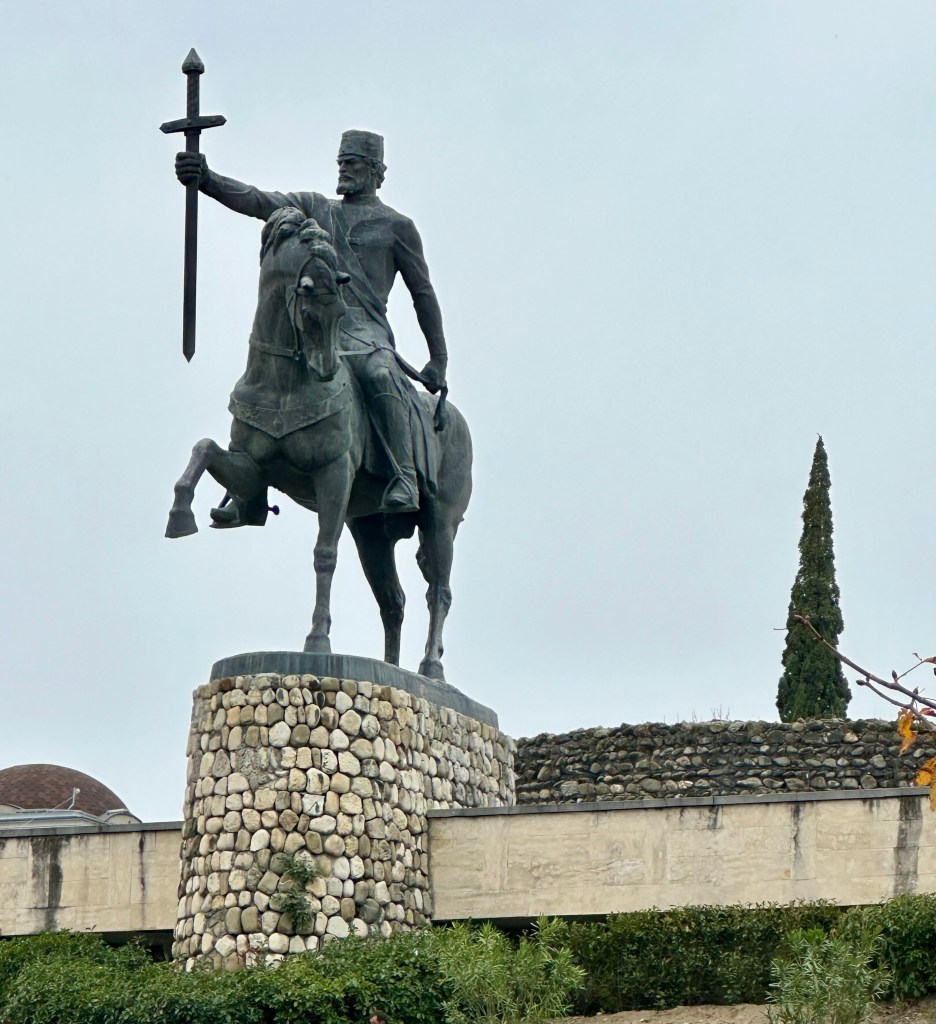
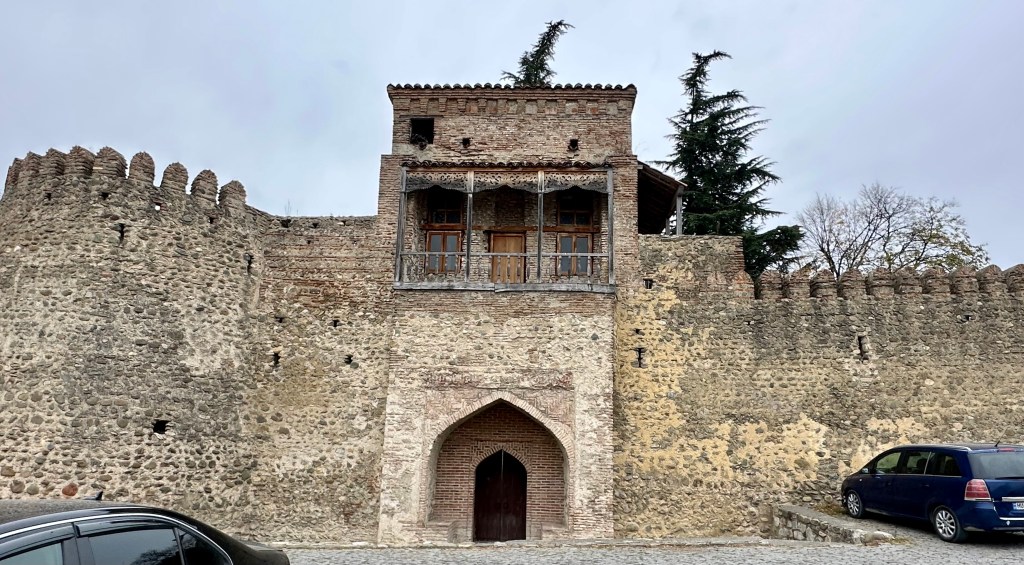
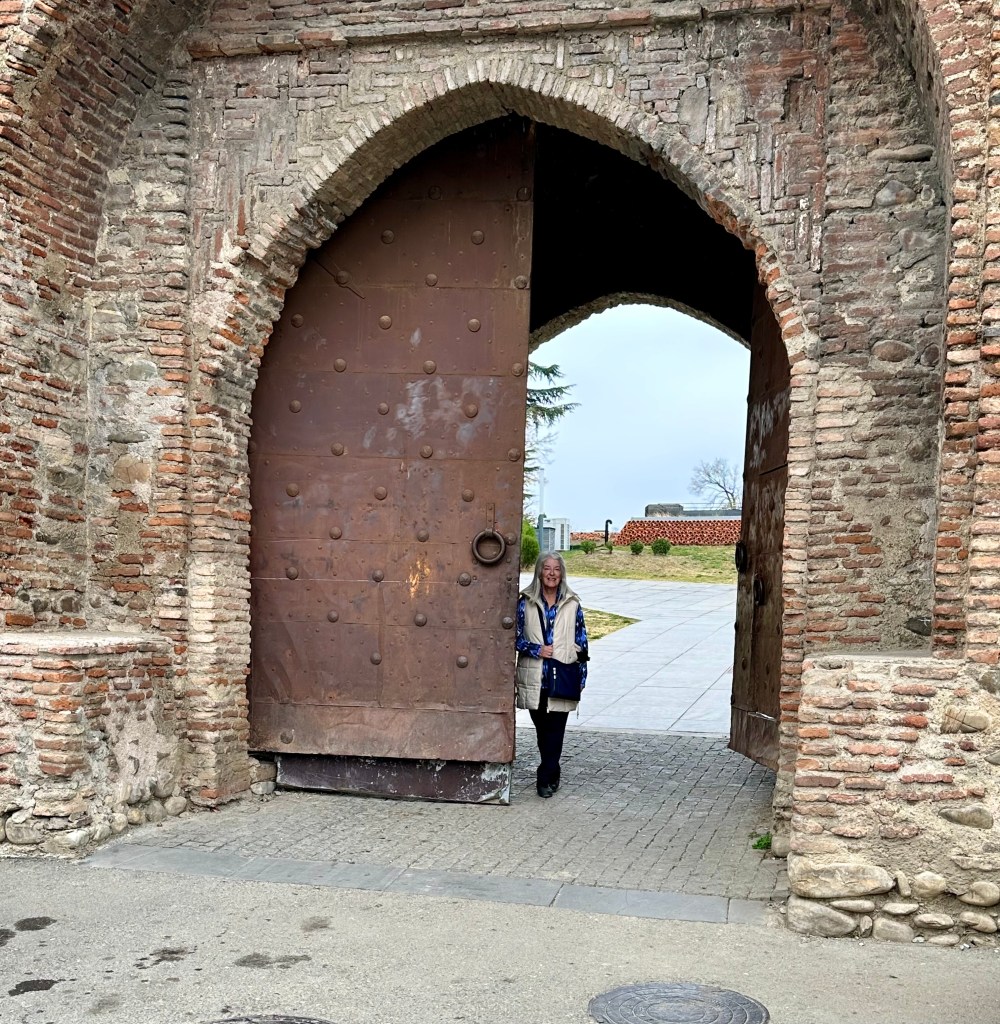
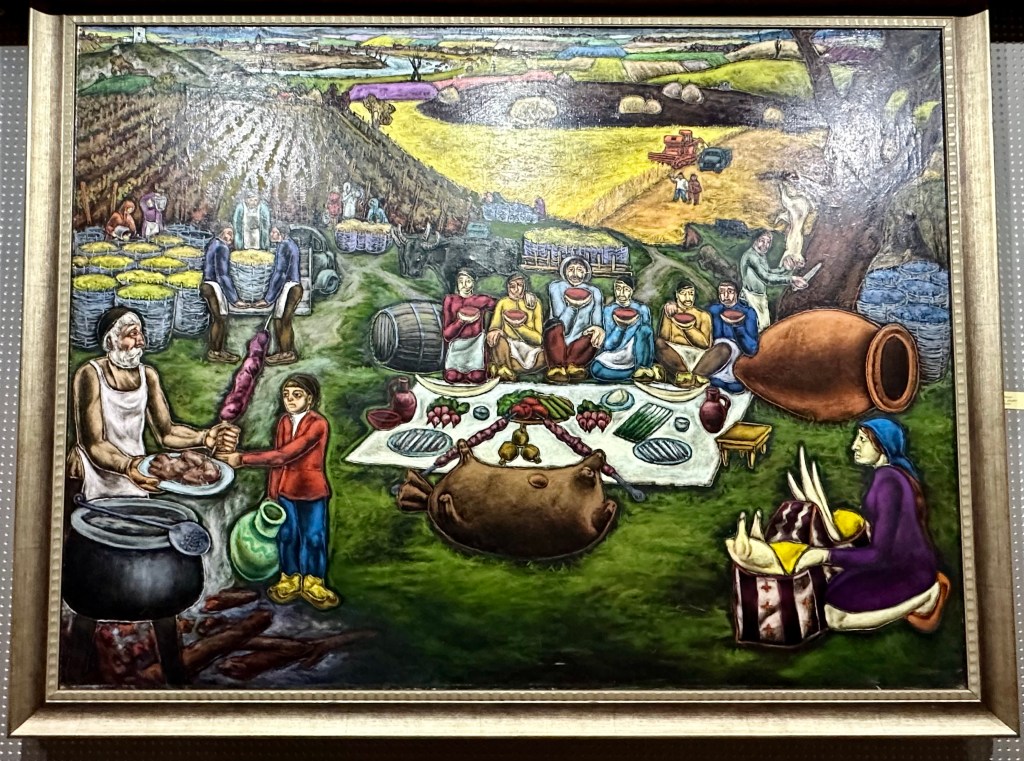
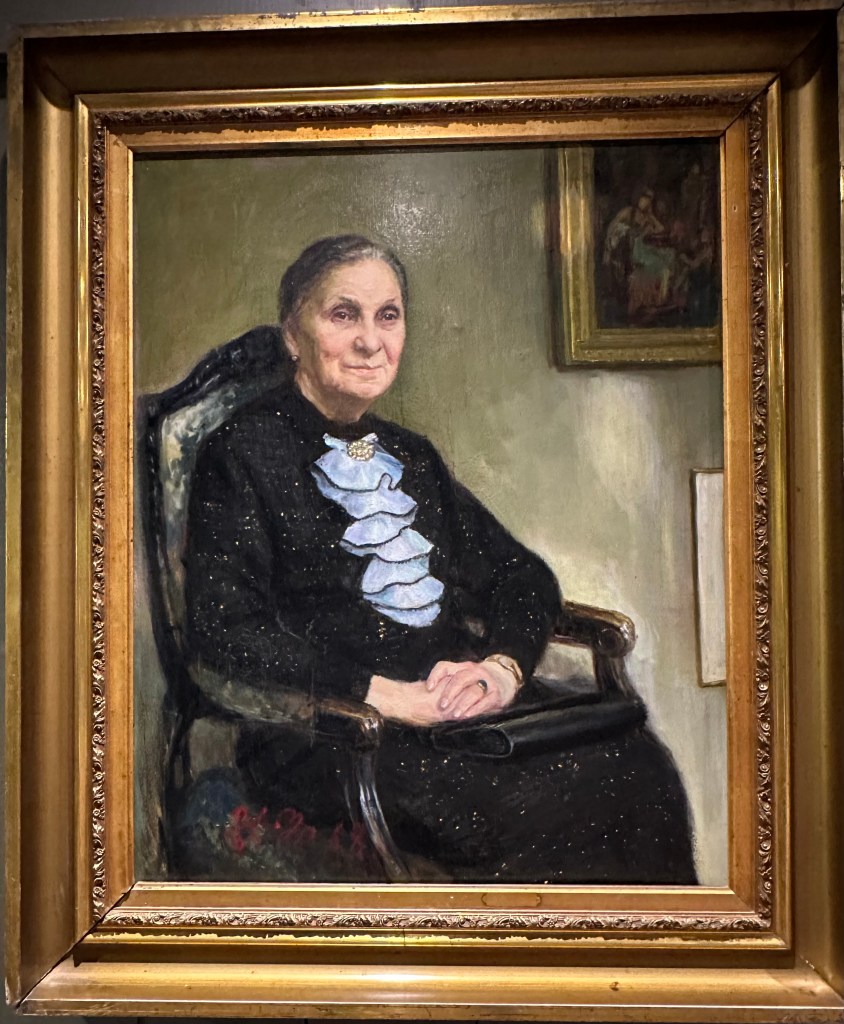
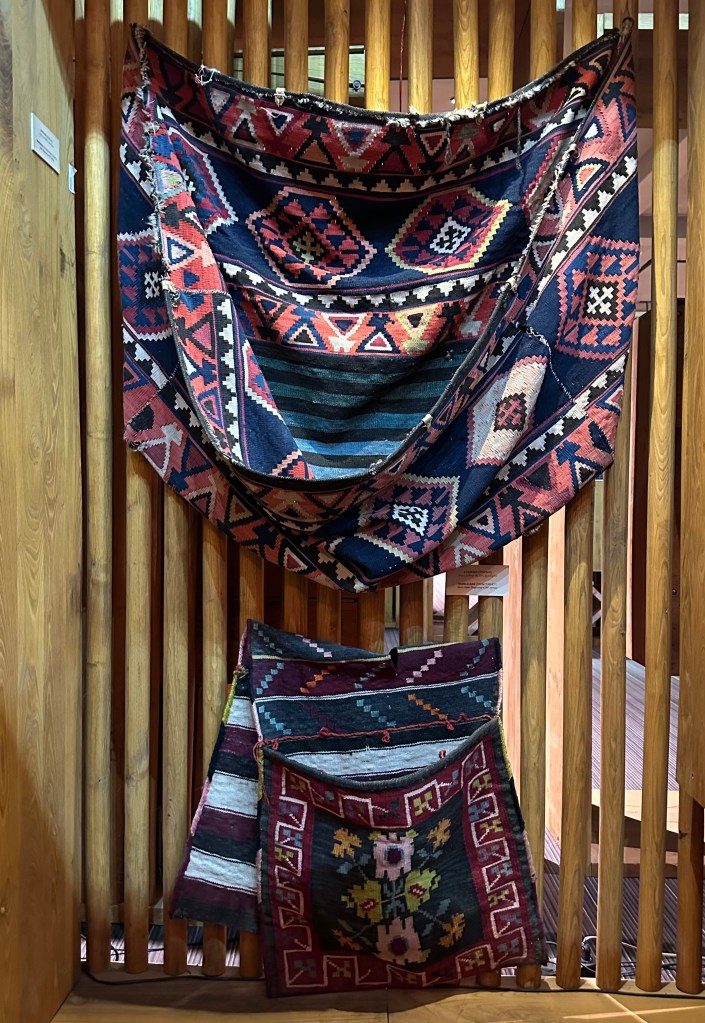
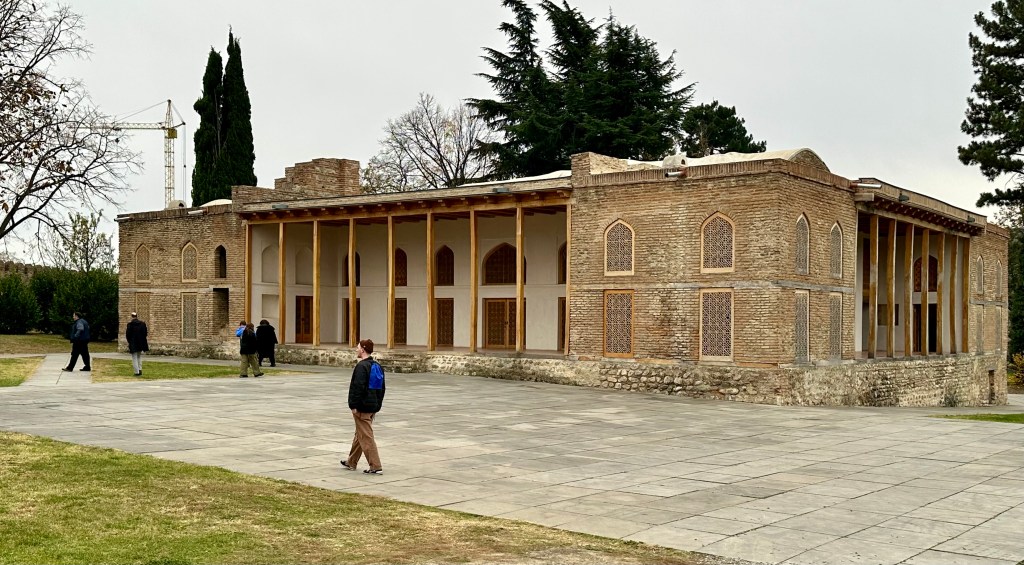
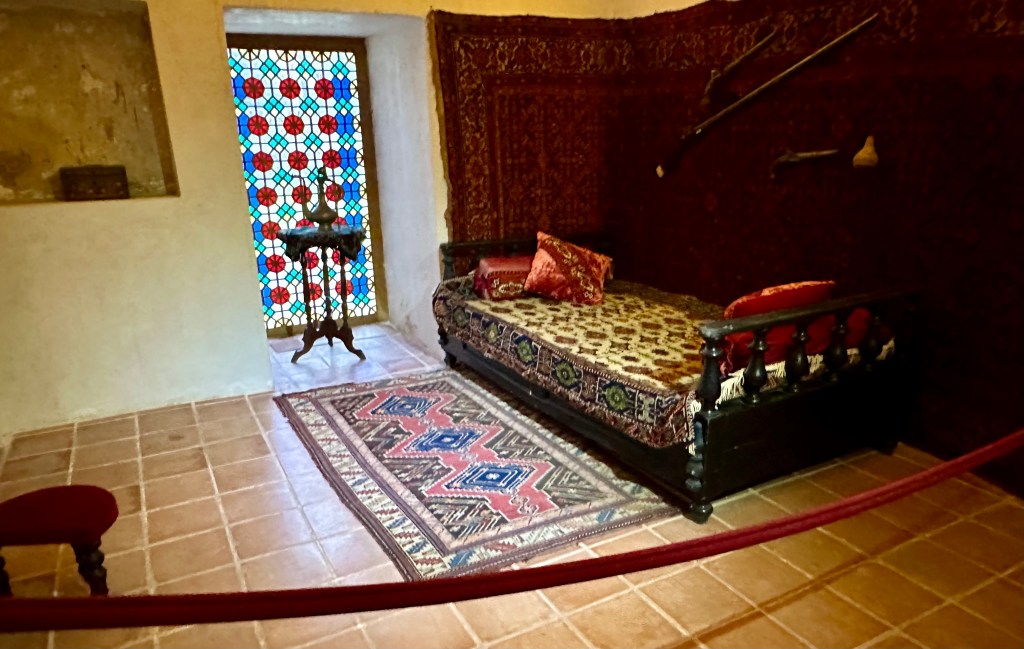
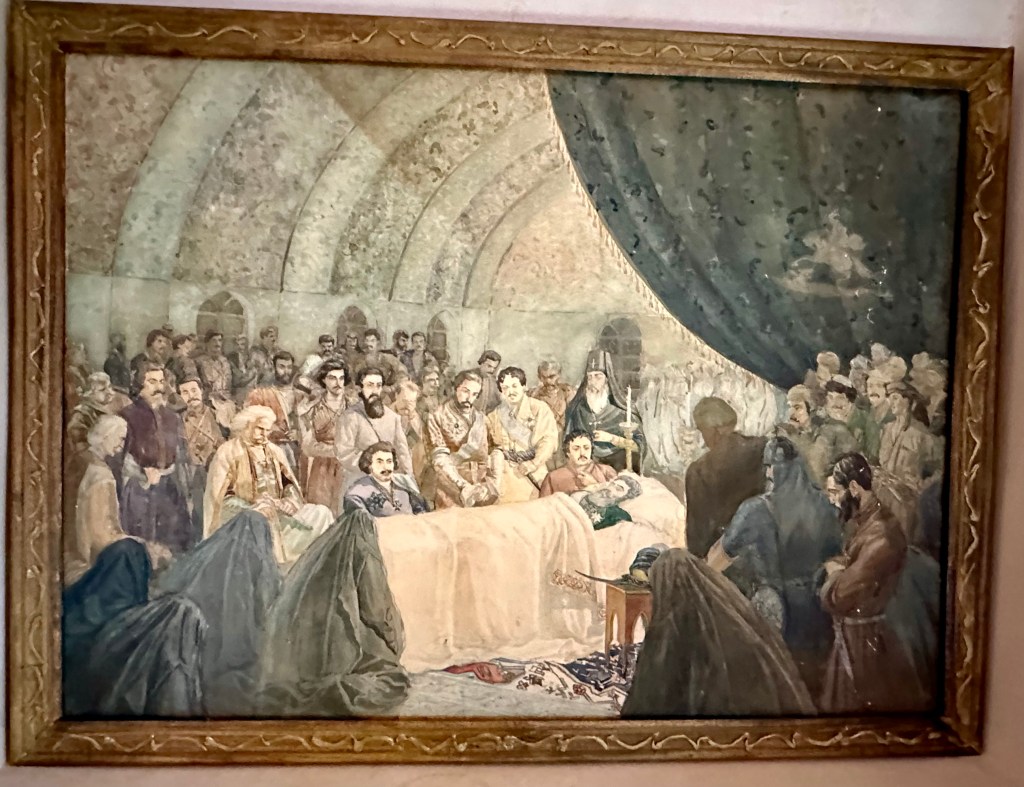
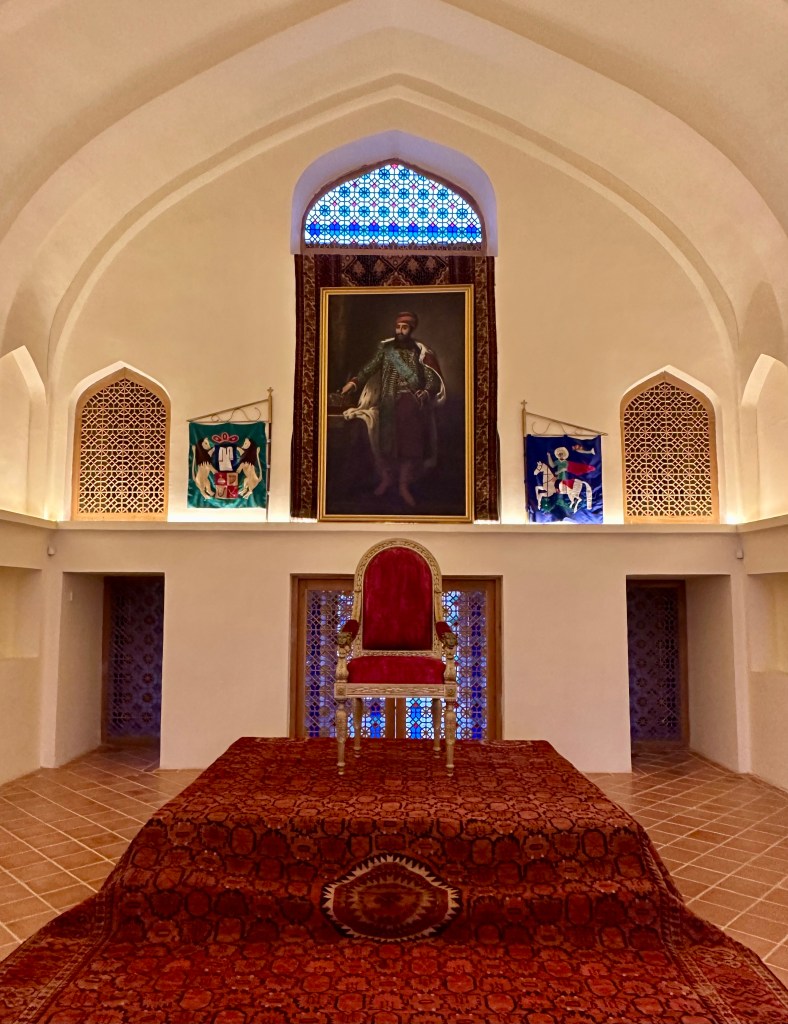
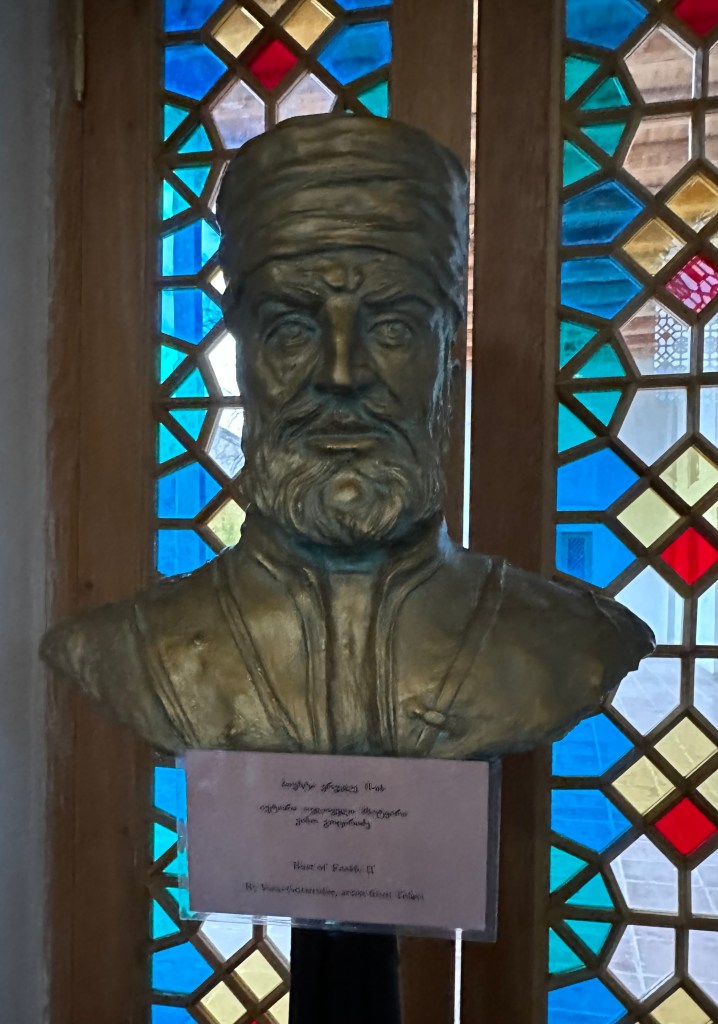
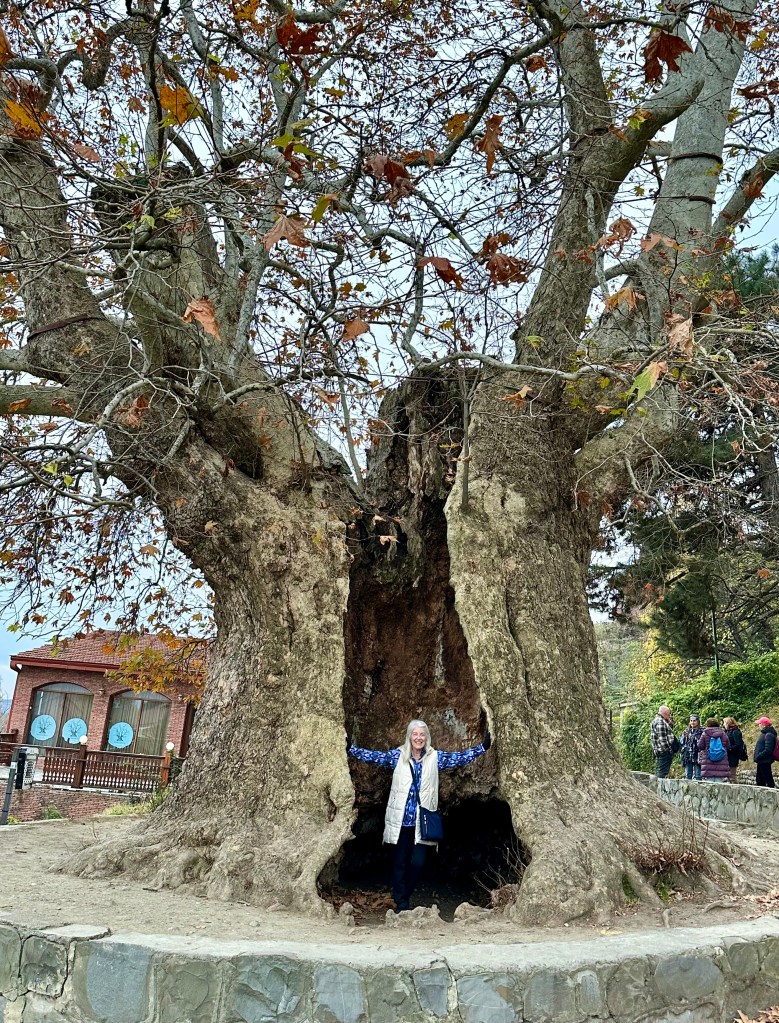
Schuchmann Wines Chateau, Villas and Spa.From my balcony. No swimming this time of year.A peek at the vineyards.Still from my balcony.Our walk into Telavi from the chateau.Another vineyard along our walk into Telavi.Snow-capped mountains. Again, Russia is on the other side of these mountains.Along our walk.Telavi. We made it. King Erekle II’s castle and monument. Reminder, the Georgians love this guy.Entrance to the palace.Outside the palace gate.Entering the palace grounds.This history museum is inside the palace gates.Autumn in Kakheti, J. Khutsishvili. Oil on canvas.Portrait of Ketevan Iashvili. Grigol Jashi (1914 – 1996). Oil on canvas. From 1963 to 1977, Ketevan Iashvili donated her entire collection – about 200 exhibits to the Telavi Historical Museum. On May 11, 1963, an exhibition was opened in Telavi, where painted canvases and antiques were presented, a total of 45 exhibitsMaprasha (kit-bag from Tusheti). Telavi. Beginning of the 20th century.King Erekle II’s palace. The complex includes this renovated Persian-style palace where Erekle II was born and died, two small churches, the royal baths, and a state-of-the-art combined history and art museumIn this room in 1720 King Erekle II was born and in 1798 he died in this room.Painting of the mourning of King Erekle II.The throne.Getting ready to head back to the chateau.This giant tree is more than 900 years old. Height: 46m; diameter: 3.6m; width: 12m. What a photo op.
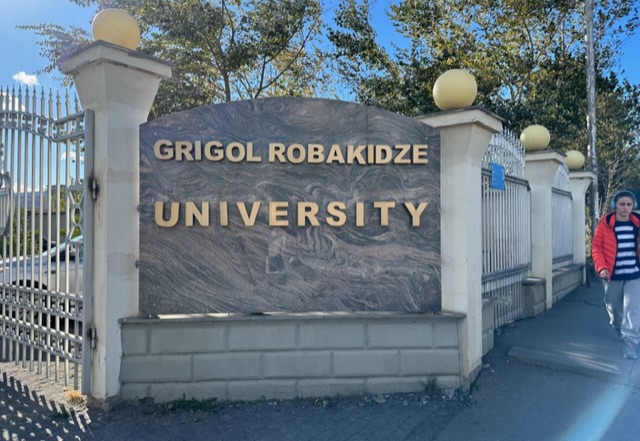
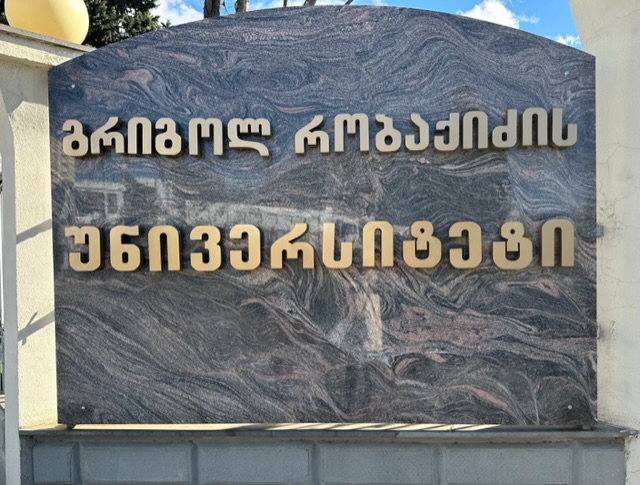
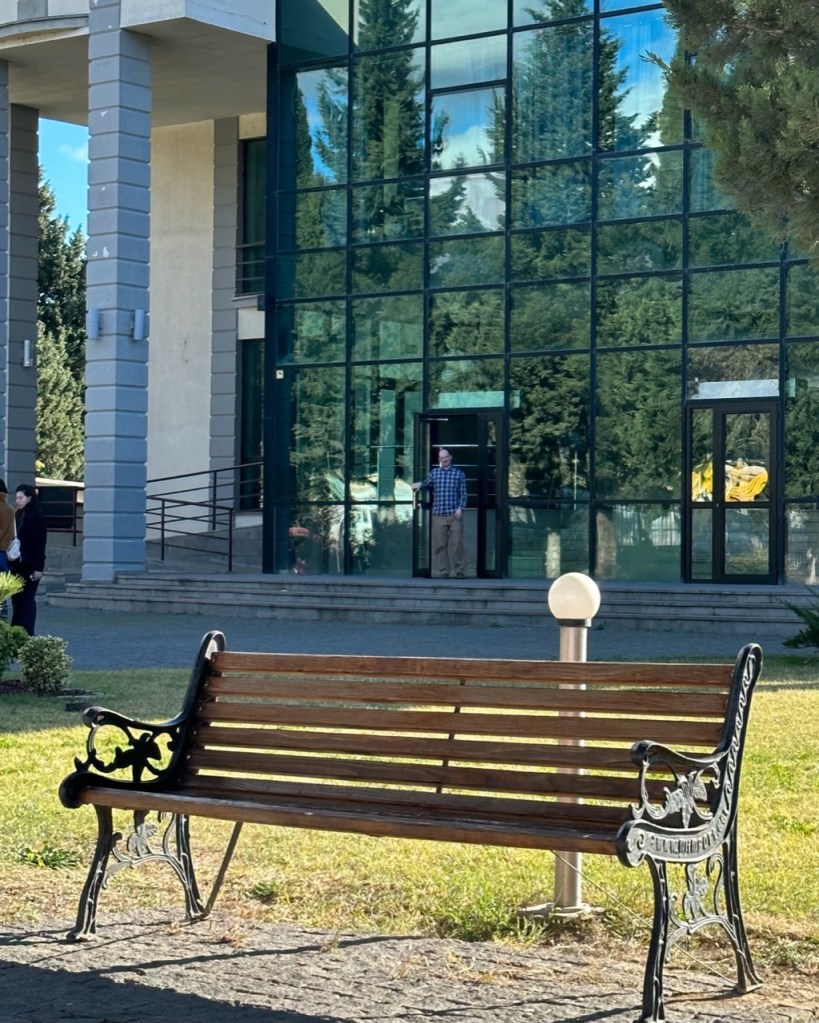
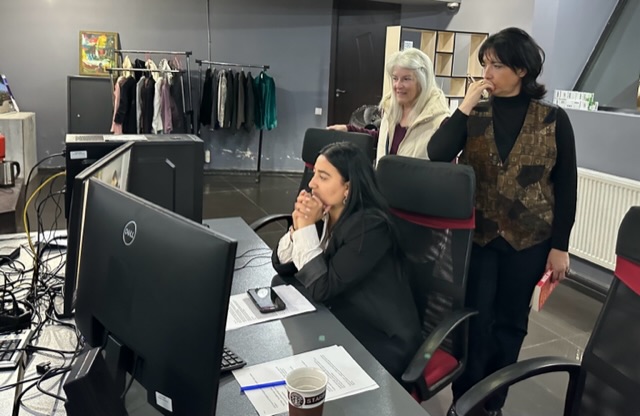
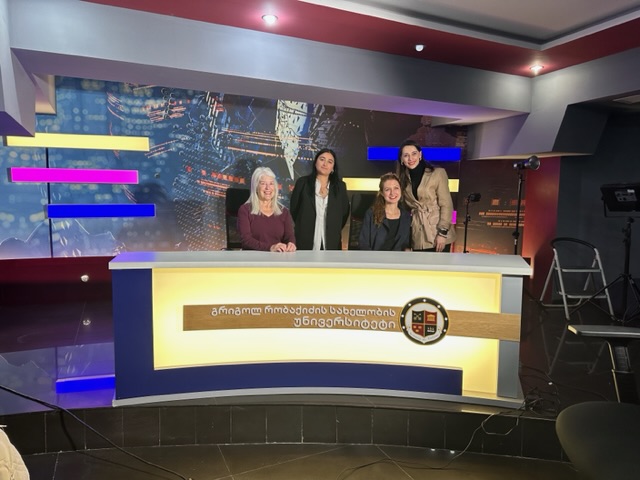
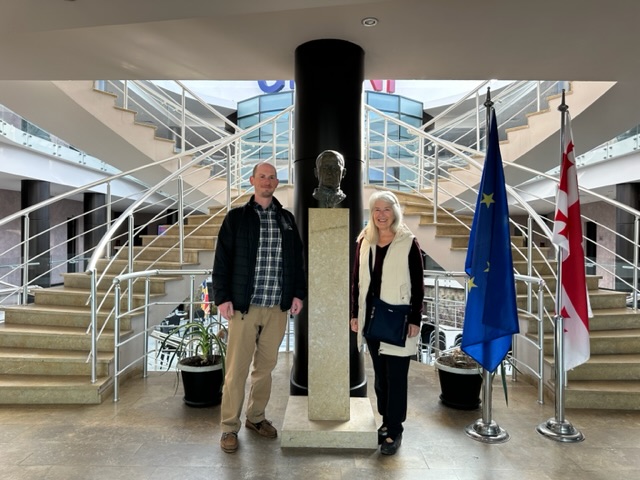
Grigol Robakidze (1880 – 1962) was a Georgian writer, publicist and public figure primarily known for his prose and anti-Soviet activities.Say that three times. ; )Mike coming out to greet me.Journalism department. The university has about 5,000 students and both undergraduate and graduate programs.L to R: me, journalism student, Bethany (Anna’s friend), Anna—Mike’s co-teacher. Anna took us on a tour of the school; we got to see a journalism student editing their morning show. They let us sit at the news desk.Mike and I with Grigol.
The university has a large criminology department. But, the gun range and forensic lab was closed this afternoon.
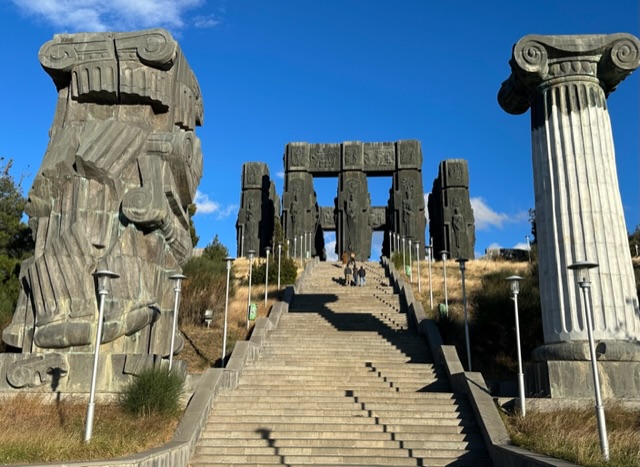
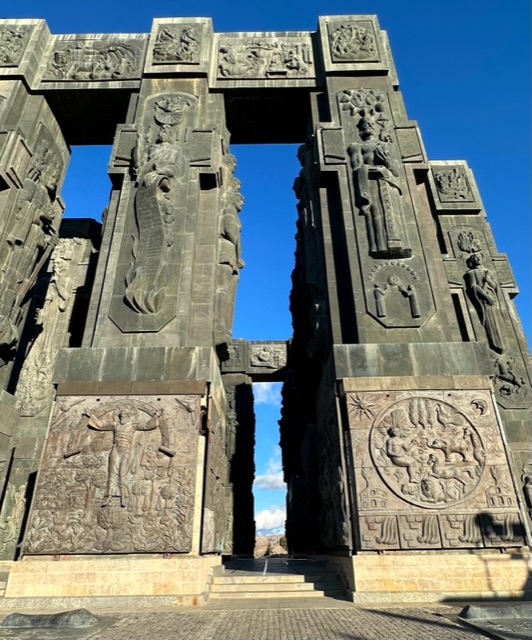
Chronicles of Georgia
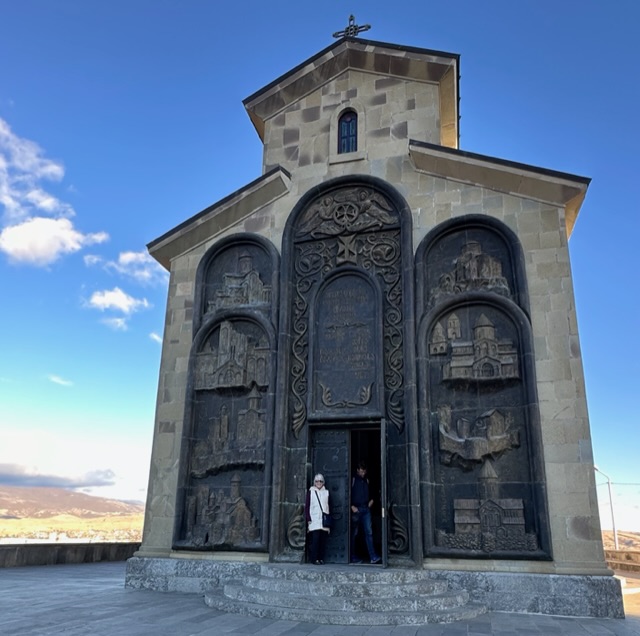
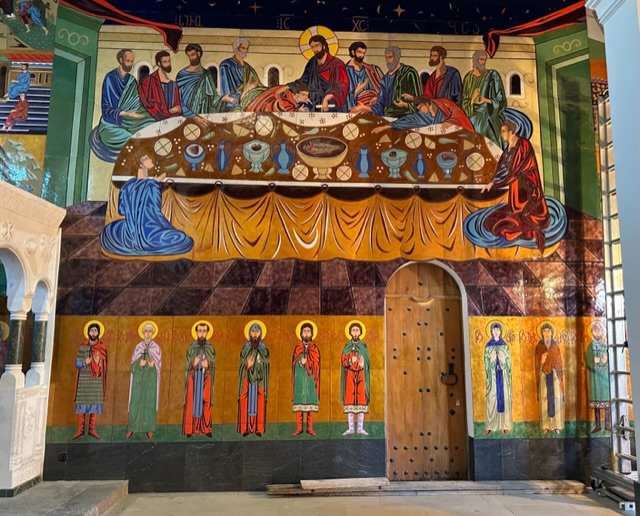
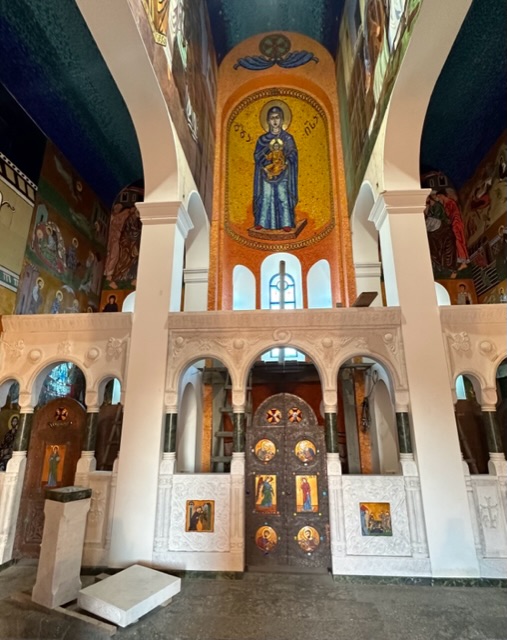
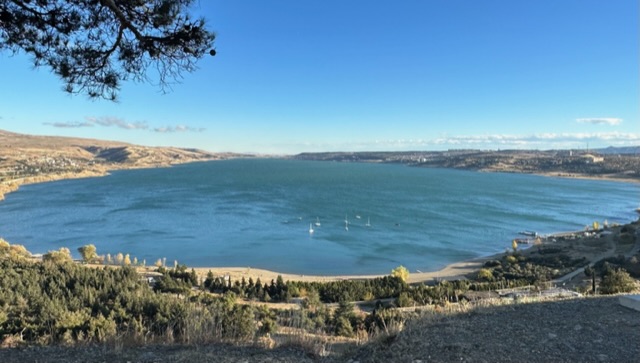
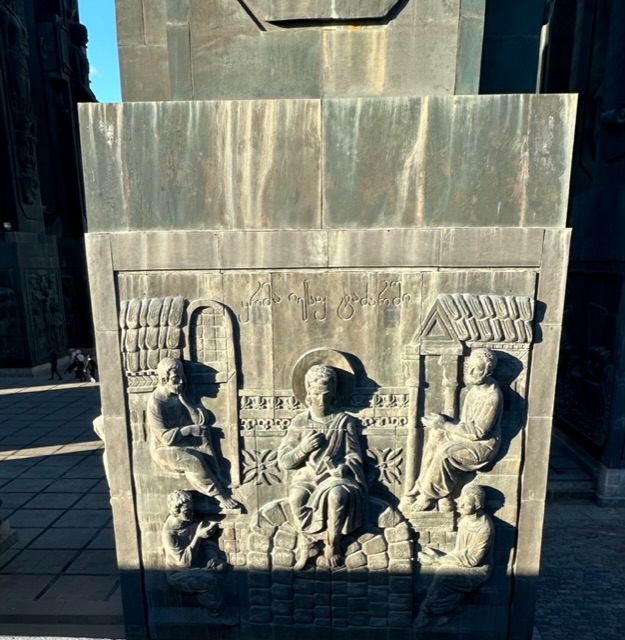
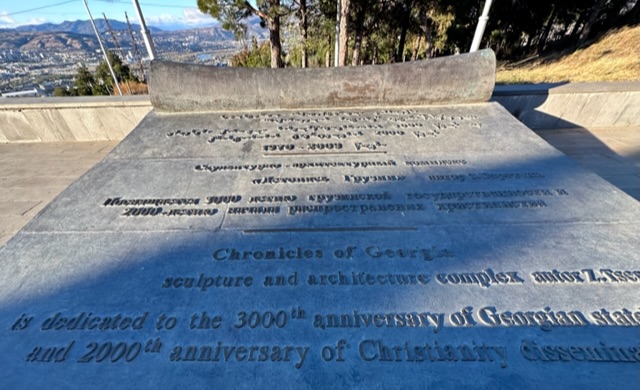
Speechless, and not only because I couldn’t catch my breath after all these steps, but this place is enormous and impressive. 16 massive pillars depicting the history of Georgia and its rulers as well as scenes from the life of Jesus.The Chronicle of Georgia was designed by their local artist, Zurab Tsereteli to commemorate 3000 years of Georgian sovereignty and 2000 years of Christianity in Georgia. The work started in 1985 and is still not finishedBeside the pillars is a small church dedicated to St. Nino (apparently the most important Georgian saint who brought Christianity to the country). St. Nino, the enlightener of Georgia, was a woman who preached Christianity in Georgia. The grapevine cross is her symbol.Cloisonne enamelwork inside the Chronicles of Georgia churchEvery wall and the entire ceiling is covered with vivid murals of Biblical scenes. A beautiful view of the Tbilisi Sea as well as some residential neighborhoods. This is the city’s largest reservoir and main water source. Tbilisi sits in a valley that is why there are so many cable cars and funiculars. And great views when you get to the top.A close up of a piece of one of the pillars.Dedication scroll.
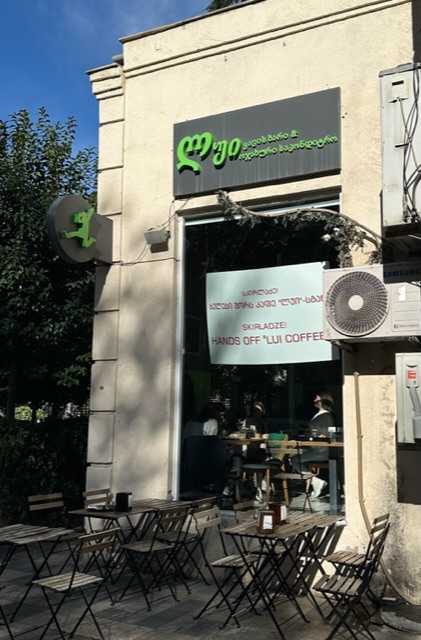
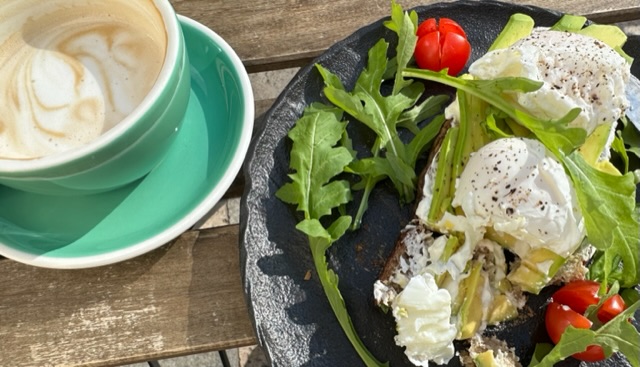
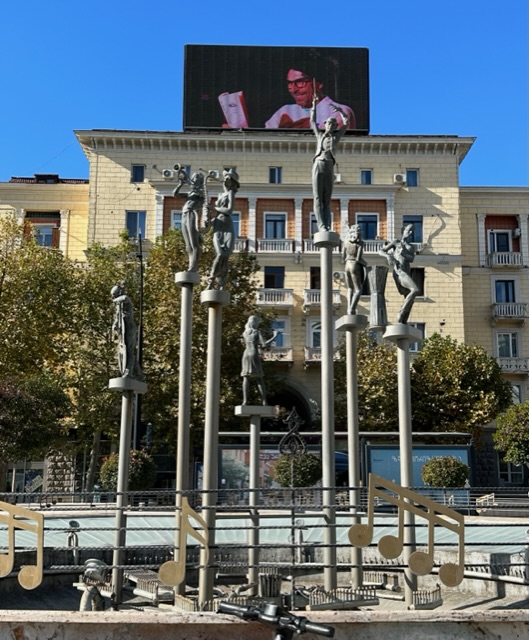
One of my go-to coffee shops.Latte and avocado toast with poached eggs. Yum.Music Square. There is a music school nearby.
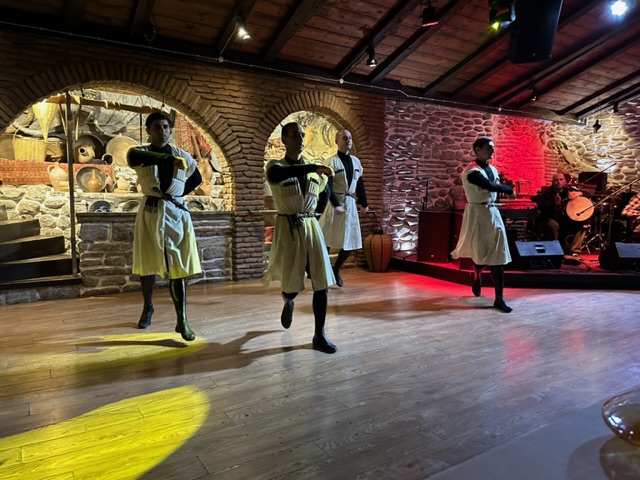
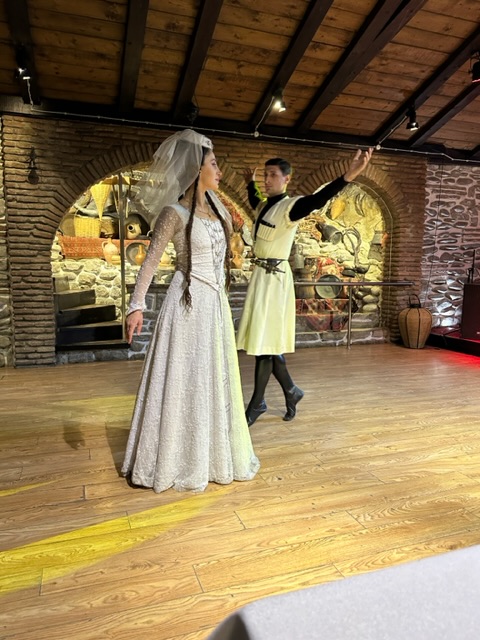
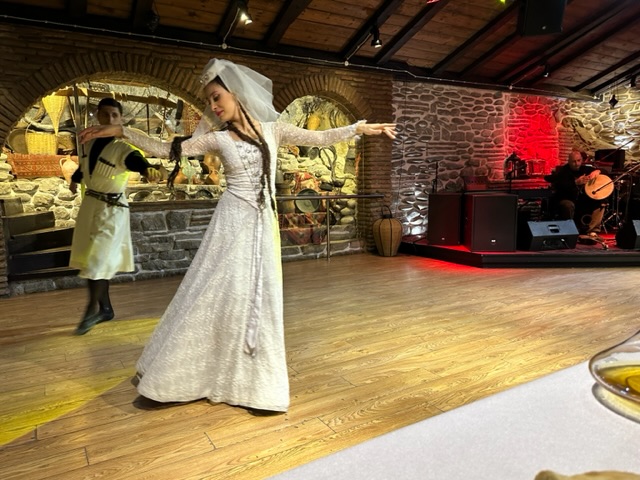
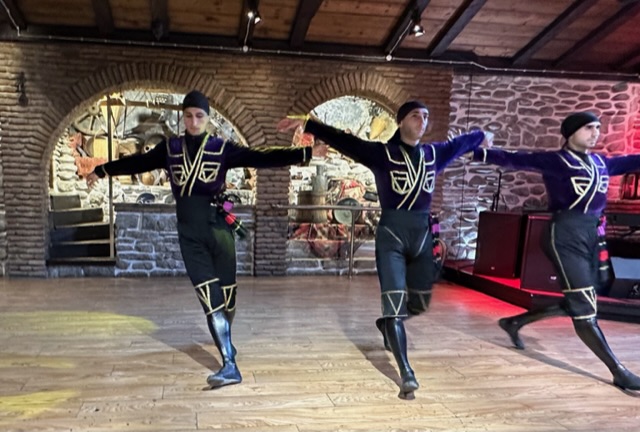
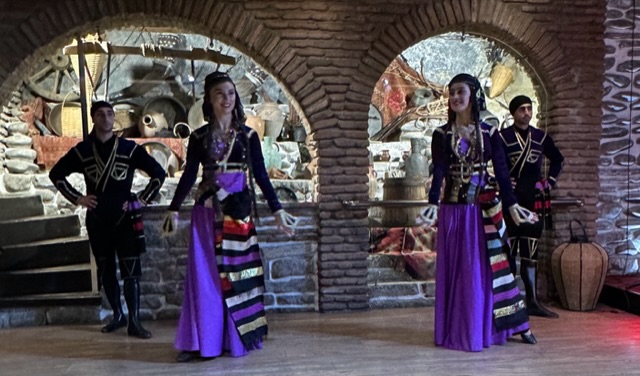
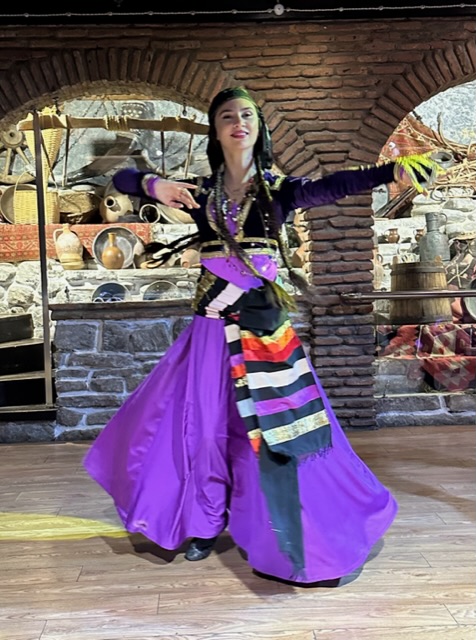
Folk dancing.
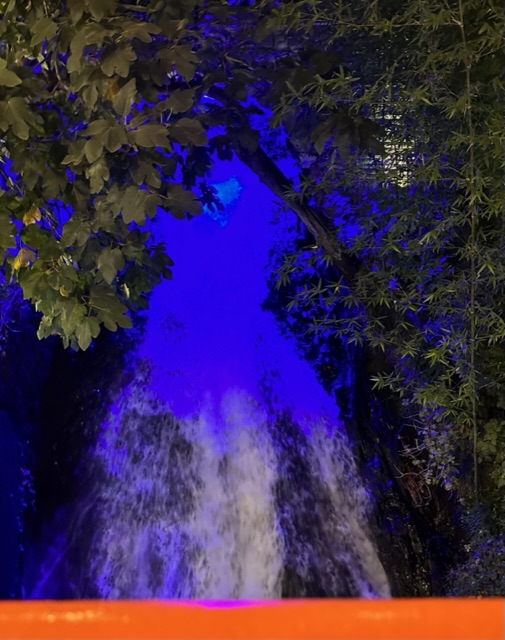
Ethno Tsiskvili is on Beliashvili Street. An impressive exterior is created by the natural waterfall and an old water mill, pure Georgian bricks and preserved rock in the interior shape leaves an unforgettable impression.
This is the waterfall. It was amazing.
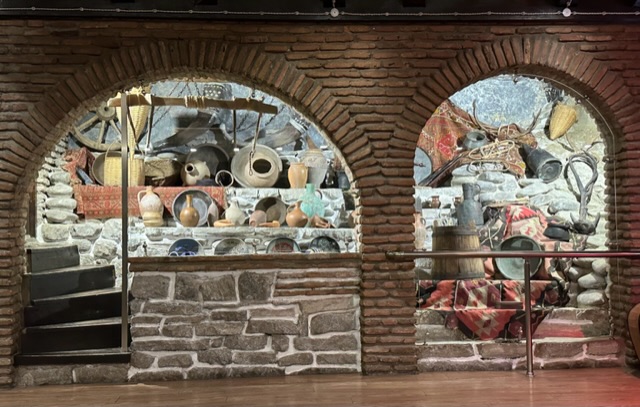
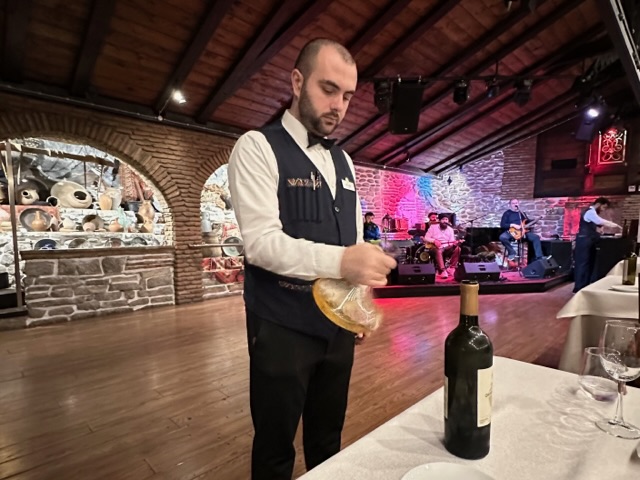
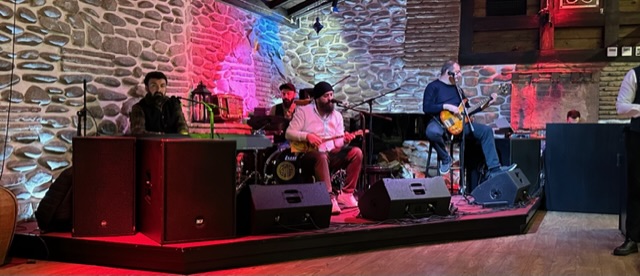
Ethno Tsiskvili’s distinguishing features is its various concept halls, where ancient museum exhibits are displayed and give it a unique restaurant/museum importance. Its main mission is to spread centuries old Georgian history and hospitality, revive ancient traditional cuisine and share Georgian culture by promoting national folk music and dances every evening. Vintage Georgian balconies, traditional pottery and various medieval items allow guests from around the world imagine ancient Georgia. A little bit Atlantic City or Las Vegas. But tasteful.
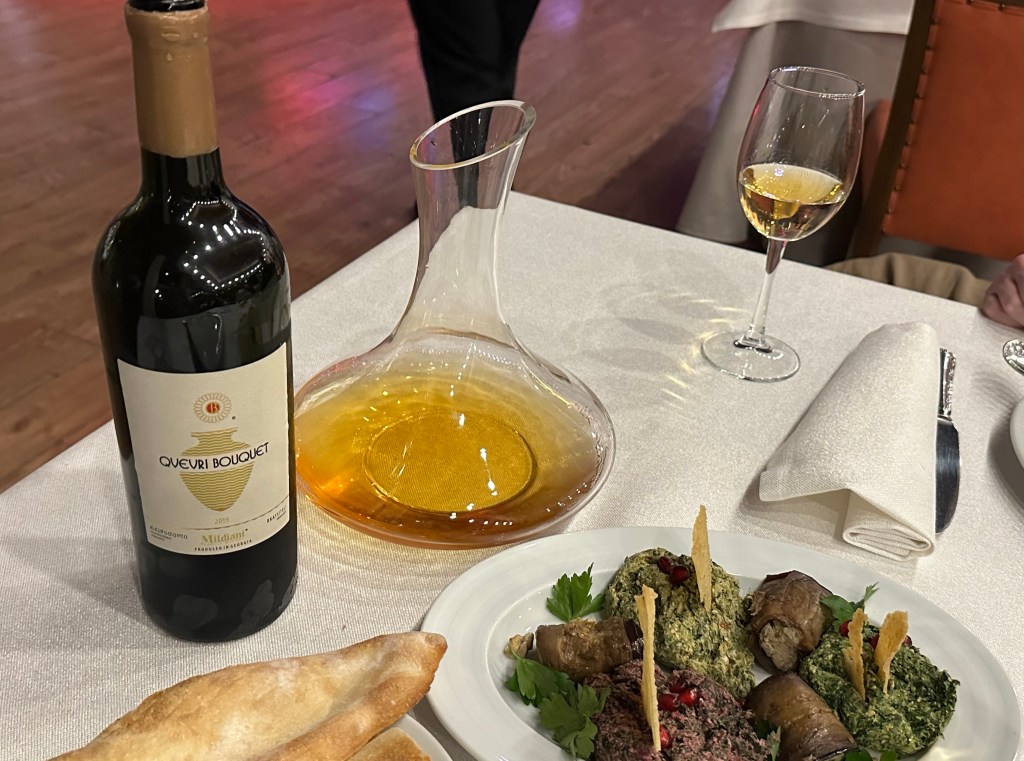
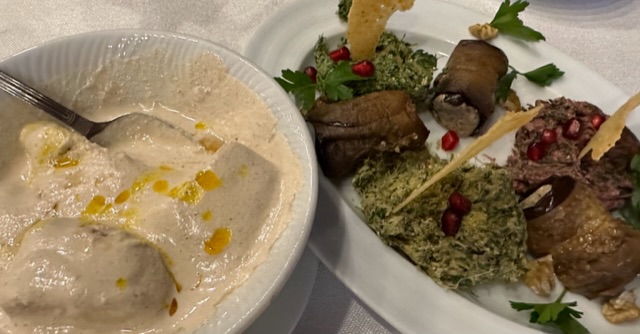
One of their displays of qvevri pottery and other medieval wine tools.Our waiter. Food was good . . . not amazing, but good.Band. Great—Georgian folk music. I love this Georgian lute like instrument. It is called a panduri, it is a three-stringed instrument from eastern Georgia, usually played by strumming.Pkhali platter. Spinach, beetroot, green bean and eggplant with walnuts and mchadi chips. The eggplant rolls with walnuts are a very popular Georgian dish. Georgian eggplant rolls are called, nigvziani badrijani (I think). And a very nice rkatsiteli qvevri.Poached salmon and, of course, a walnut cream sauce.Dancers. First dance.Kartuli, Georgian dance in English. The couples dance.Second dance.Exquisite.
We had fun. I am so glad we went. Tonight is when I was kinda sorry I didn’t pay for the version that allows me to post videos.

 Dream to Travel from NCM